


 US Officials See China Taiwan Invasion Before 2028 as Less Likely
  Israeli Settlers Attack West Bank Village, Block Palestinian Family’s Return
  Russia Warns NATO of Nuclear Response Over Kaliningrad
  New Zealand Election Raises Policy Uncertainty for Investors
  Netanyahu Vows Probe Into Foiled Flydubai Crash Attempt
  Netanyahu Says Israel May Join Flydubai Crash Attempt Probe
  Tim Scott Blames Democrats as CLARITY Act Stalls in Senate
  Polymarket Traders Bet on Trump AI Rename to ‘Super Intelligence’
  Israel Tightens Pilot Security After Flydubai Incident
  US Troops Set to Complete Iraq Withdrawal as Iran Influence Grows
  Trump Eyes $54 Billion South Korean Investment in Alaska LNG
  Trump Says He Raised Political Prisoners With Xi
  CNN, Politico and MS NOW Seek Court Order Blocking Trump White House Ban
  Trump Demands Powell Resign Over Fed Renovation Cost Overruns
  TRUMP Memecoin Launches New Dinner Contest
  Trump Praises Boeing 737 Max After Flydubai Crash Attempt
  UN Condemns Myanmar Airstrike That Kills 50 in Rakhine


 Add as a preferred source on Google
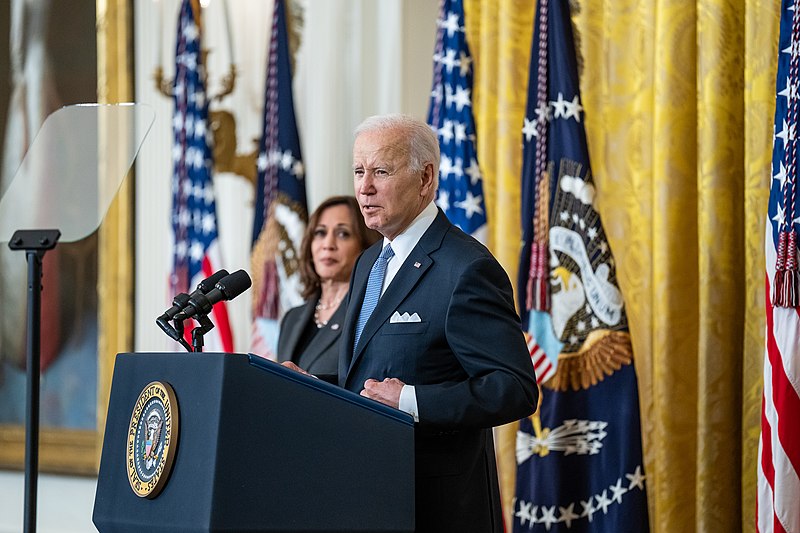
This week, the Biden administration announced that it would be providing $400 million for expanding internet access to rural areas in the country. This provision is part of President Joe Biden’s effort to expand internet access all over the country.
Speaking with reporters Thursday, infrastructure coordinator Mitch Landrieu said the $401 million provided would help people in rural areas get access to high-speed internet. The $401 million in loans and grants is coming from the ReConnect Program dispersed by the Agriculture Department.
“With this money, we are one step closer to President Biden’s ambitious goal of affordable and reliable internet for all,” said Landrieu.
The money will be used to support internet access expansion in 11 states: Alaska, Arizona, Arkansas, California, Colorado, Idaho, Montana, New Mexico, Nevada, North Dakota, and Texas, according to the USDA.
Vice President Kamala Harris will also be travelling to New York to unveil the formation of the Economic Opportunity Coalition, made up of 23 companies and foundations. The coalition aims to invest billions into low-income communities.
The White House said the coalition will “address economic disparities and accelerate economic opportunity in communities of color and other underserved communities.”
Among the founding members of the coalition are Ariel Investments, Bank of America, BNY Mellon, Capital One, Citi, Discover, Ford Foundation, Goldman Sachs, Google, Key Bank, Kresge Foundation, Mastercard, McDonald’s, McKinsey & Company, Micron, Momentous Capital, Moody’s, Netflix, Paypal, PNC, The Rockefeller Foundation, TIAA, and Upstart.
Meanwhile, Senate Democrats are set to reach a budget reconciliation deal on legislation that has provisions for the climate. The legislation, brokered by Senators Chuck Schumer and Joe Manchin, was praised by clean energy advocates even as the legislation was a watered-down version of the previous legislation.
In a summary released by Schumer’s office, the bill would cut carbon emissions by 40 percent by 2030, as well as a “methane emissions reduction program” to cut leaks of potential greenhouse gas methane from the drilling of natural gas.
Manchin said the legislation would invest in hydrogen, nuclear power, renewables, fossil fuels, and energy storage. More than $60 billion would be invested into environmental justice programs to fight pollution and address public health issues in disadvantaged communities.
$20 billion would be invested into “climate-smart” agriculture practices and $10 billion for tax credits in building clean energy manufacturing plants for EVs, wind turbines, and solar panels.







