


 Yemen Violence Displaces 130,000 as Civilian Toll Rises
  Judge Orders Trump to Restore White House Access for CNN, MS NOW and Politico
  France Defends Netanyahu Airspace Clearance Despite ICC Warrant
  Trump Asks Supreme Court to Restore Third-Country Deportations
  Netanyahu’s Brief US Trip Highlights Strains With Trump
  Saudi Arabia, Turkey and Pakistan Plan Urgent Defence Talks Over Houthi Attacks
  EU Defence Build-Up Too Slow for 2030 Russia Readiness Goal
  North Korea Rejects Nuclear Test Warning, Calls Nuclear Status Irreversible
  Netanyahu Defends Israel at UN as Delegates Stage Walkout
  Najib Razak Seeks Stay of 15-Year 1MDB Prison Sentence
  Mexico-US Trade Talks Delayed to October as Tariff Negotiations Continue
  Abbas Reaffirms November 28 Palestinian Elections
  Xi Calls for Deeper U.S.-China AI Cooperation in Trump Talks
  Taiwan Thanks US for Support Ahead of Trump-Xi Summit
  Pezeshkian Says US Must Choose When Iran War Ends
  US Senate Rejects Iran War Powers Resolution in 50-49 Vote
  Netanyahu Takes Aim at Mamdani as Israel Election Nears


 Add as a preferred source on Google
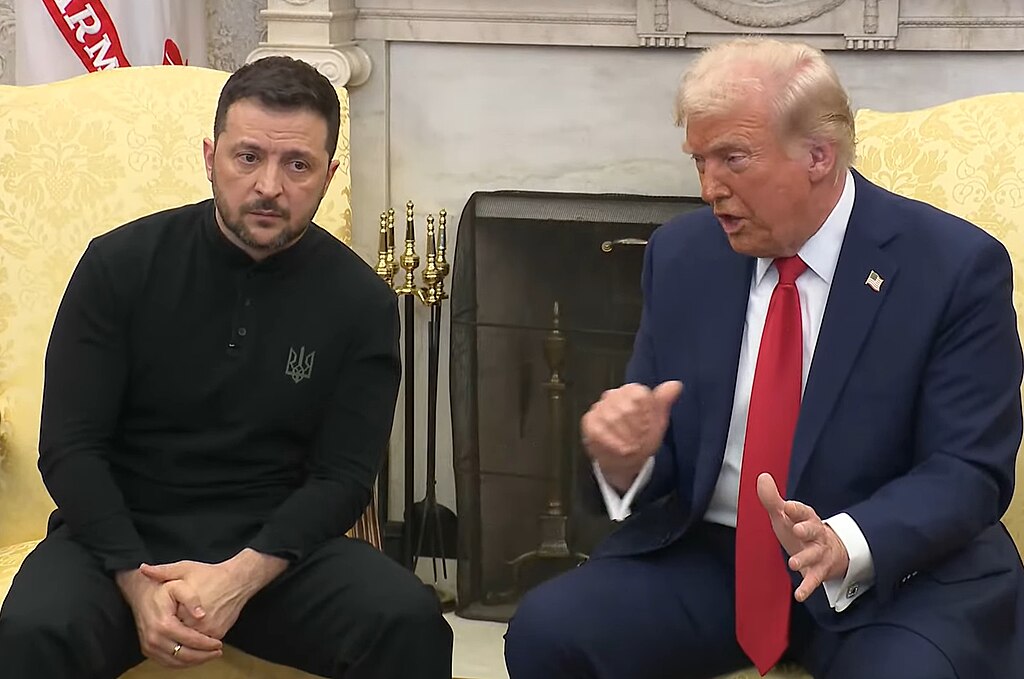
The United States has, for the first time, publicly backed a broad coalition of Ukraine’s allies in pledging security guarantees aimed at deterring future Russian aggression. The commitment emerged from a high-level summit in Paris involving the so-called “coalition of the willing,” made up primarily of European nations seeking to strengthen Ukraine’s security framework in the event of a ceasefire with Russia.
The meeting marked a notable shift, as U.S. envoys Steve Witkoff and Jared Kushner, alongside America’s top general in Europe, Alexus Grynkewich, joined European and Ukrainian leaders. Their presence was widely seen as a signal of renewed U.S. engagement in shaping post-war security arrangements for Ukraine. Witkoff said President Donald Trump strongly supports security protocols designed both to deter future attacks and to defend Ukraine if deterrence fails, calling them among the strongest ever proposed.
Kushner stressed that any final peace deal must provide Ukraine with robust, long-term security, including credible deterrence and reliable backstops to prevent renewed conflict. Coalition leaders also said allies would participate in a proposed U.S.-led ceasefire monitoring and verification mechanism, likely using drones, satellites, and sensors rather than American troops on the ground.
Ukrainian President Volodymyr Zelenskiy welcomed the talks as a serious signal of commitment from Europe and its partners but noted that key details remain unresolved, including how monitoring would function and how Ukraine’s military would be funded and supported. He thanked the United States for its willingness to act as a backstop not only for security guarantees but also for ceasefire monitoring and reconstruction efforts.
While the final statement was not formally endorsed by Washington and toned down earlier language on direct U.S. capabilities, European leaders hailed U.S. involvement as evidence of transatlantic unity. Attention has now shifted toward legally binding security guarantees that could include military assistance, intelligence sharing, logistics, diplomatic action, and additional sanctions if Russia attacks again.
France and Britain also signaled readiness to deploy troops after a ceasefire, paving the way for a European-led multinational force to help rebuild Ukraine’s armed forces and strengthen deterrence. The proposals, however, face uncertainty, as Russia has shown no public willingness to accept peace terms involving such guarantees or foreign troops in Ukraine.







