


 Lula Meets Mamdani in New York as Elections Approach
  Taiwan Vows to Advance US Arms Sales Ahead of Trump-Xi Meeting
  Kremlin Says No Grounds Yet for Ukraine Peace Talks
  Trump Meets Venezuela’s Delcy Rodriguez at UN Assembly
  US Plans Two New Military Bases in Greenland Under Arctic Deal
  Vietnam, US Trade Deal Could Be Signed Soon, To Lam Says
  Trump Board of Peace Unveils $2.45 Billion Gaza Recovery Plan
  US, Denmark and Greenland Set to Sign Arctic Security Deal
  US, Japan and South Korea Back Taiwan Ahead of Trump-Xi Summit
  Russian Strikes Kill Eight Across Ukraine as Energy Sites Hit
  Burnham Eyes UK Leadership Role in AI Ahead of Trump Meeting
  China Tightens Fentanyl Rules Ahead of Trump-Xi Summit
  Iran Vows ‘Crushing’ Response as US Talks Continue
  Lula and Flavio Bolsonaro Tied in Brazil Runoff Poll
  Trump Scales Back Endangered Species Act Protections
  Carney Condemns Belleville Synagogue Shooting That Wounded Police Officer
  Zelenskiy Meets CIA Chief John Ratcliffe at Ireland’s Shannon Airport


 Add as a preferred source on Google
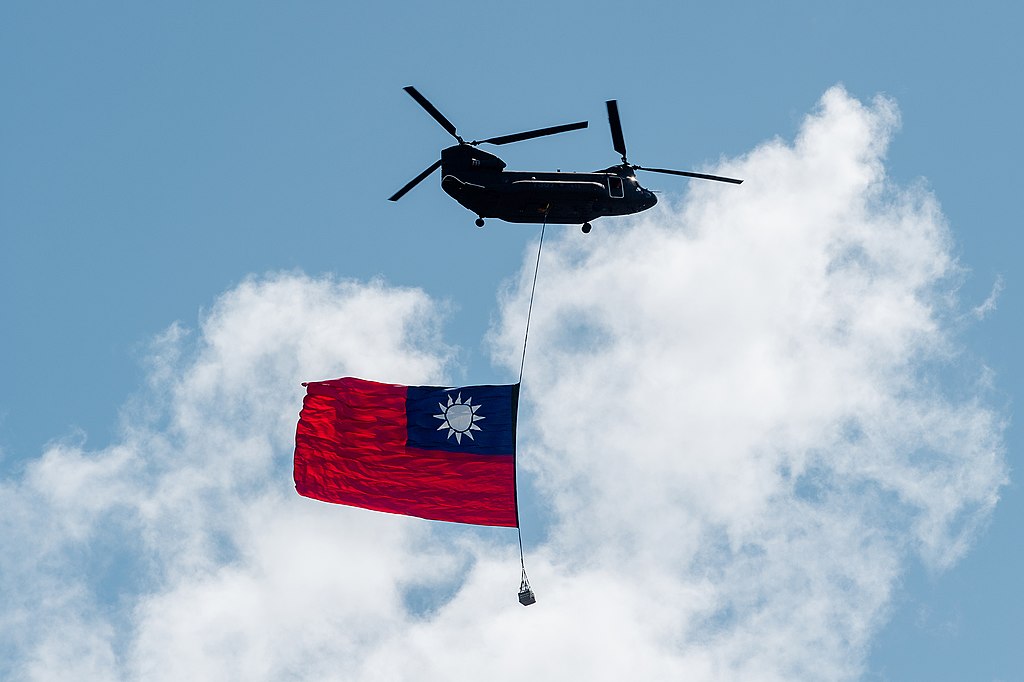
Taiwan will test its ability to relocate weapons production and convert civilian factories for military manufacturing during its annual Han Kuang military exercises next month, as the island strengthens its defense preparedness against the growing threat from China.
Scheduled from August 5 to August 14, the Han Kuang drills will simulate a scenario in which China disguises preparations for a full-scale invasion under the cover of routine military exercises. The exercise will assess how quickly Taiwan’s armed forces can raise combat readiness and sustain military operations if key defense facilities and supply hubs come under attack.
A major objective of the drills is to evaluate whether Taiwan can maintain weapons production by dispersing manufacturing across multiple locations. According to the Ministry of National Defense, the exercise will include the simulated wartime relocation of the Armaments Bureau’s 202nd Arsenal in Taipei while mobilizing civilian factories capable of handling complete weapons assembly after emergency orders are issued.
Taiwan’s defense planners believe China would likely target command centers, logistics hubs, ports, and defense industry facilities during the early stages of any military conflict. Beijing continues to claim Taiwan as part of its territory, while Taiwan rejects those claims and maintains it is already a sovereign, self-governing nation.
Major General Lu Wen-yuan, head of the Joint Operations Division, said the drills are designed to simulate Chinese forces using their annual military exercises to conceal preparations for a large-scale amphibious assault before launching an invasion.
The military will also test its ability to secure vital sea lanes and safeguard shipments of essential supplies. Taiwan’s navy and coast guard will conduct joint operations involving live personnel, equipment, and ammunition, including coastal strike missions, maritime law enforcement, escort operations, and coast guard vessel support.
The exercises come as Taiwan reports increased Chinese coast guard activity around the island, raising concerns that Beijing could intensify pressure on Taiwan’s Pacific coast and disrupt critical supply routes.
For the first time, Taiwan will also intentionally reduce mobile internet speeds during the 10-day exercise to examine how government agencies, emergency responders, and civilians would communicate if bandwidth became limited during natural disasters or a potential Chinese invasion.







