


 Fed’s Hammack Says Bond Yield Surge Is Not Driven by Inflation Fears
  Australia Unemployment Hits Five-Year High Despite Strong Jobs Growth
  China Agrees to Buy 20 Million Tons of U.S. Coal
  Gold Prices Fall as Treasury Yields Rise on Fed Rate Hike Bets
  Canadian Dollar Faces Pressure as Fed-BoC Policy Gap Widens
  European Stocks Fall as Bond Yields and Geopolitical Risks Weigh
  US Stock Futures Fall as Treasury Yields Surge Ahead of Trump-Xi Summit
  Trump, Xi Focus on Trade and AI at White House Summit
  Japanese Bank Stocks Surge as Bond Yields Fuel Rate Hike Bets
  Dollar Falls as Oil Eases, Yen Jumps on Intervention Signals
  Fed Unveils Stablecoin Rules Under GENIUS Act
  Wall Street Ends Flat as Oil, Treasury Yields and Fed Jitters Rattle Markets
  Fed Unveils Stablecoin Rules Under GENIUS Act
  RBI Uses $10 Billion Currency Swaps to Drain Excess Rupee Liquidity
  US Comfortable With Canada Trade Standoff as Import Bans Loom
  Asian Stocks Fall as Surging Bond Yields Rattle Markets
  Japanese Yen Rebounds as Trump Flags Currency Weakness


 Add as a preferred source on Google
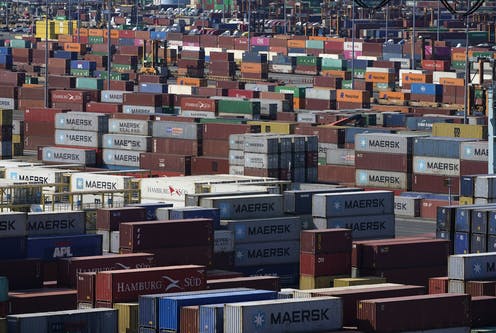
South Korea's exports rose for a second consecutive month in March, signaling resilience but also revealing cracks amid growing global trade tensions. According to government data, outbound shipments reached $58.24 billion, marking a 3.1% year-on-year increase. However, the figure fell short of the 3.5% growth forecast in a Reuters poll, underscoring a softer-than-expected outlook.
Export growth was driven by semiconductors, which surged 11.9%—the strongest in three months—while automobiles rose 1.2%, boosted by hybrid vehicle sales despite a decline in electric vehicles. In contrast, steel exports plunged 10.6%, the steepest drop since June 2024, following a 25% U.S. tariff imposed last month. The U.S. is South Korea’s third-largest steel market.
Economists warn that fresh U.S. tariffs on automobiles and potential levies on chip imports could hit South Korean manufacturers hard. Chun Kyu-yeon of Hana Securities noted that while there may be a temporary boost in chip exports, high-end products remain vulnerable, and automakers may be forced to raise prices.
SK Hynix confirmed that some chip orders were front-loaded ahead of new U.S. duties, while Hyundai Motor is reviewing its pricing strategy in response to the tariffs.
Despite challenges, South Korea’s export orders showed strength. A separate survey revealed that while factory activity contracted in March due to weak domestic demand, export orders surged at the fastest pace in over a year, particularly from the U.S. and Asia-Pacific.
By region, exports to the U.S. rose 2.3%, the EU saw a 9.8% gain led by ship sales, and Southeast Asia climbed 9.1%. However, shipments to China, South Korea’s top trading partner, declined 4.1%.
Imports increased 2.3% to $53.29 billion, resulting in a trade surplus of $4.99 billion. Per working day, exports were up 5.5%.







