


 Second DOJ Lawyer Exits Trump Probe
  UK Police Probe Foreign State Link in RAF Fairford Plot
  Iran Holds Firm on Hormuz Reopening Terms Despite Trump Rejection
  UN Experts Urge US to Halt Third-Country Migrant Deportations
  US Troops Set to Complete Iraq Withdrawal as Iran Influence Grows
  Swiss Voters Reject Stricter Neutrality Rules in Referendum
  Malaysia Begins Deportation of 1,500 Myanmar Nationals
  Senate Democrats Say Tether USDT Helps Iran Evade Sanctions
  Trump Denies Offering Iran Sanctions Relief for Nuclear Concessions
  Taiwan Pushes Back on China’s World War Two Narrative After Trump-Xi Summit
  China, US Extend Trade Truce Through January 10 After Trump-Xi Summit
  National Rally Secures French Senate Caucus for First Time
  South Korea Demands Ukraine Apology Over North Korean POW Disclosure
  Pope Leo Urges Europe to Pursue Peace Through Compromise
  Rubio Warns Cuba to Change Course as US Pressure Mounts
  Iran Warns US Against Renewed Attacks as Hormuz Tensions Rise
  White House Blames Democrats as CLARITY Act Stalls


 Add as a preferred source on Google
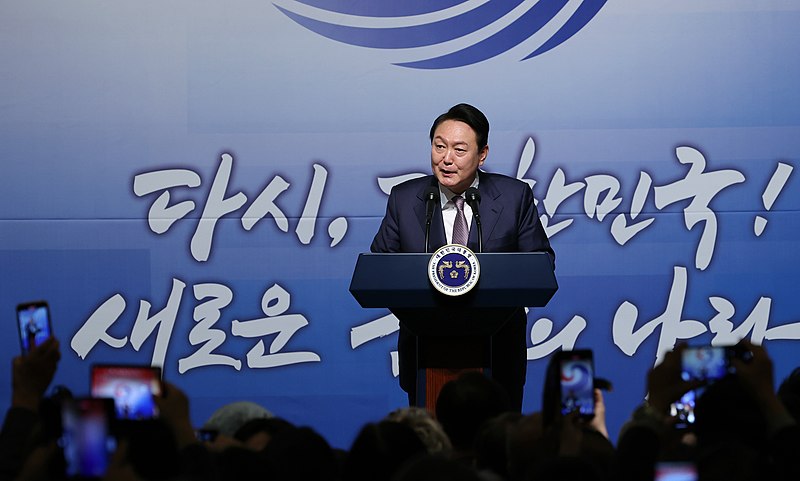
The South Korean government has proposed an annual spending cut in an effort to scale back the pandemic stimulus. The annual government spending by the South Korean government would be cut down by six percent.
The South Korean finance ministry unveiled the first budget proposal under Conservative President Yoon Suk-yeol’s administration Tuesday. The government expenditure was unveiled at ₩639 trillion or $473 billion for 2023, six percent smaller than the budget for this year after two supplementary budgets.
This also marks the first government spending cut South Korea has done in 13 years.
“The government is shifting its fiscal policy stance completely to ‘sound financing’ to secure fiscal sustainability, improve external credit standing, and spend responsibly for future generations,” the finance ministry said in a statement.
In order to reach the spending cut, the government plans to “transfer some public projects to the private sector” and cut down the wages of senior officials at the highest levels of the government.
Government spending on infrastructure would also be cut down by 10.2 percent and subsidies and spending for small to medium businesses would go down by 18 percent in 2023.
Not including the extra budget, this means South Korea’s government spending for 2023 would grow by 5.2 percent, which is the slowest since 2017.
The move to lower spending shifts away from the aggressive fiscal spending under Yoon’s liberal predecessor Moon Jae-in and from the major stimulus measures that were taken during the pandemic to help the economy.
The Bank of Korea has also raised interest rates by two percentage points since August last year.
Despite the cuts, the budget also anticipates an increase in social welfare expenses for low-income earners and the vulnerable, as demand for welfare will only likely grow in an ageing economy. Last year, South Korea’s birth rate dropped to a new low of 0.81 children per woman.
South Korea’s deputy trade minister Ahn Sung-il Tuesday raised concerns with the United States over the $7,500 electric vehicle tax credit that would make vehicles assembled outside North America ineligible.
The USTR said Ahn met with deputy US trade representative Sarah Bianchi, and both officials agreed to keep in touch over the issue in the coming weeks.







