


 Trump Denies Offering Iran Sanctions Relief for Nuclear Concessions
  White House Blames Democrats as CLARITY Act Stalls
  Judge Blocks Trump Election Conditions on Counterterrorism Grants
  Russian Bomb Strike on Kharkiv Injures 22, Including Children
  UK Police Probe Foreign State Link in RAF Fairford Plot
  South Korea Demands Ukraine Apology Over North Korean POW Disclosure
  Republicans Flood Safe House Races With Cash as Midterm Risks Rise
  Rubio Warns Cuba to Change Course as US Pressure Mounts
  Taiwan Pushes Back on China’s World War Two Narrative After Trump-Xi Summit
  Haiti Gang Retaliation Kills at Least 11 in Artibonite
  Russian Drone Strikes Kill Nine Across Ukraine, Hit Kyiv Science Academy
  UK Police Arrest Five in RAF Fairford Terror Probe
  Second DOJ Lawyer Exits Trump Probe
  Iran Warns US Against Renewed Attacks as Hormuz Tensions Rise
  China, US Extend Trade Truce Through January 10 After Trump-Xi Summit
  China Cuts Tariffs on U.S. Farm Goods but Excludes Soybeans
  Tim Scott Blames Democrats as CLARITY Act Stalls in Senate


 Add as a preferred source on Google
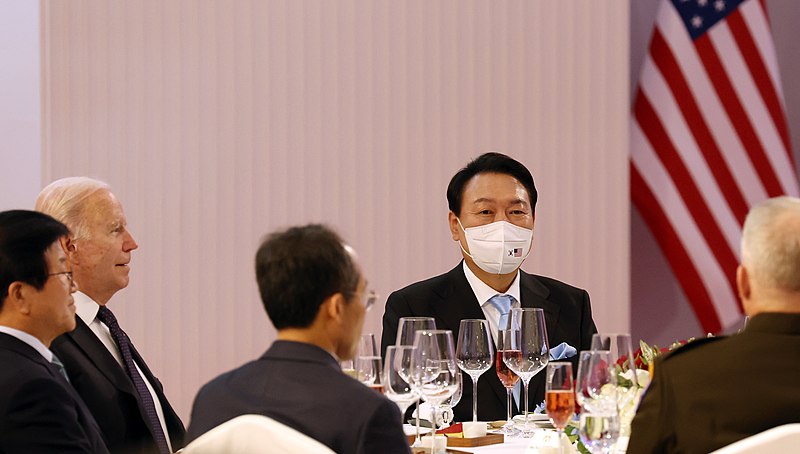
South Korean President Yoon Suk-yeol this week ordered an update on plans to address the growing threat posed by North Korea in nuclear arms and missiles. This comes amidst tensions in the peninsula, as Pyongyang continues to develop its nuclear program.
Yoon’s office said Thursday that he requested updates on the South Korean military’s operational plans to address North Korea’s nuclear and missile threats. Yoon gave the order during his first visit to a military bunker in Seoul that would become a command post in the event of a war.
Yoon said that the military drills this year were being done amidst a changed scenario and the operational plans reflected the growing threats posed by North Korea.
“We need to urgently prepare measures to guarantee the lives and property of our people, including updating operational plans against North Korea’s nuclear and missile threats that are becoming a reality,” said Yoon.
Yoon’s visit also took place at the same time as South Korea and the United States kicked off their military drills, the largest in years. The annual summer military drills, now known as the Ulchi Freedom Shield, are set to finish on September 1.
The drills this week involve the first field training between both countries since 2017 when it was scaled back considerably due to the pandemic and Yoon’s predecessor, Moon Jae-in’s attempts to improve relations with North Korea.
Yoon, who took office in May, pledged to boost overall readiness against North Korea and called for bolstering the military’s capability to independently counter North Korean missiles while reinforcing the US extended deterrence that included its nuclear umbrella.
The new South Korean envoy for North Korean human rights Wednesday has called on China not to deport North Korean defectors. China has been criticized for deporting North Korean defectors, whom Beijing describes as illegal migrants trying to flee their country for economic reasons.
The new envoy, Lee Shin-hwa, said quiet diplomacy may be needed to convince China to comply with the principle of non-refoulment, which obliges host countries to refrain from returning migrants seeking asylum or refugees to a place where their lives may be at risk.







