


 China Cuts Tariffs on U.S. Farm Goods but Excludes Soybeans
  Tim Scott Blames Democrats as CLARITY Act Stalls in Senate
  Bitcoin Slides Below $84K as Trump Signals Possible New Iran Strikes
  China Says U.S. Shares Responsibility for AI Governance
  Judge Blocks Trump Election Conditions on Counterterrorism Grants
  Senate Democrats Say Tether USDT Helps Iran Evade Sanctions
  Second DOJ Lawyer Exits Trump Probe
  US Troops Set to Complete Iraq Withdrawal as Iran Influence Grows
  Trump Denies Offering Iran Sanctions Relief for Nuclear Concessions
  Rubio Warns Cuba to Change Course as US Pressure Mounts
  Denmark Expects Long-Term NATO Presence in Greenland, Arctic
  UK Police Arrest Five in RAF Fairford Terror Probe
  Republicans Flood Safe House Races With Cash as Midterm Risks Rise
  UN Experts Urge US to Halt Third-Country Migrant Deportations
  Swiss Voters Reject Stricter Neutrality Rules in Referendum
  California Bans Memecoins Issued by Public Officials Under New Law
  National Rally Secures French Senate Caucus for First Time


 Add as a preferred source on Google
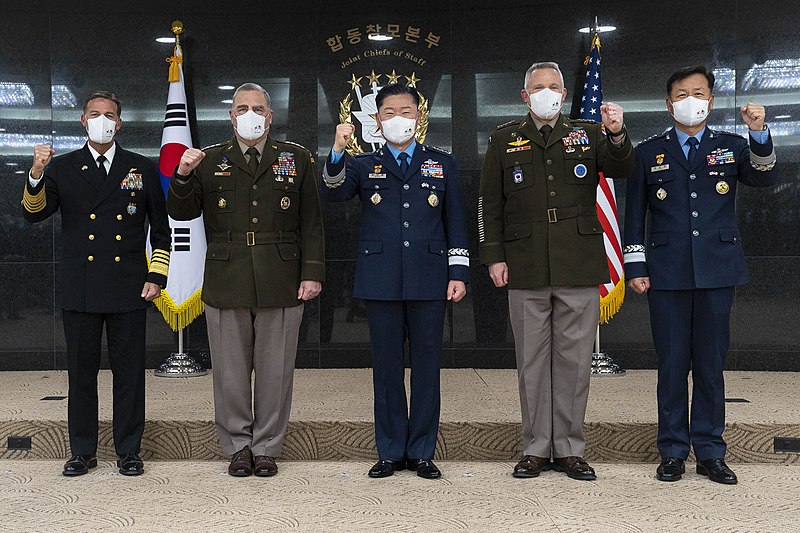
Amidst tensions in the Korean peninsula, South Korea and the United States are keen to boost deterrence against the numerous missile and weapons tests that North Korea has carried out so far this year. Seoul and Washington will be resuming live field training in the annual joint military exercises this year.
South Korea’s defense ministry announced Friday last week that South Korea and the United States will be resuming their live field training during their joint military exercises this year.
This comes as the two countries are set to start their annual joint military exercises next month, following the pledge by South Korean President Yoon Suk-yeol to bolster deterrence against North Korea by normalizing joint drills with the US.
The defense ministry said the two countries plan to carry out 11 field exercises, including one brigade-level drill in the summer. The two countries are aiming to hold more joint regiment-level drills or higher.
“We plan to stage combined air carrier strike group training and drills for amphibious operations at an early date among others,” South Korean defense minister Lee Jong-sup told reporters.
South Korea and the US scaled back their joint military drills in an effort to lower tensions with North Korea. However, this comes at a time when Pyongyang is expected to carry out its first nuclear test this year, the first since 2017. Yoon previously said North Korea could carry out its nuclear test at any time.
The South Korean defense ministry also said that it plans to improve missile detection capabilities and push for an early deployment of an interceptor system.
On the same day, South Korea’s foreign ministry voiced its objections to Japan’s claims on contested islets. The islets, named Dokdo in South Korea and Takeshima in Japan, were claimed by Tokyo in its annual white paper.
The ministry then demanded that Japan walk back its claims over the islets.
The South Korean government “strongly protests Japan’s repetition of sovereignty claim over Dokdo, clearly an integral part of the Korean territory in terms of history, geography, and international law, and urges it to immediately scrap it. Such a move is of no help to efforts for building ‘future-oriented’ bilateral relations,” said the South Korean foreign ministry spokesperson Choi Young-sam in a statement.







