


 Kremlin Says No Decision Yet on Putin-Trump December Summit
  NATO Boosts Intelligence Sharing Amid Russia Hybrid Threats
  US Senate Rejects Iran War Powers Resolution in 50-49 Vote
  Taiwan Thanks US for Support Ahead of Trump-Xi Summit
  Trump, Xi Focus on Trade and AI at White House Summit
  Russian Envoy Dmitriev Heads to US for Ukraine Talks
  France Defends Netanyahu Airspace Clearance Despite ICC Warrant
  Abbas Reaffirms November 28 Palestinian Elections
  Russian Missile and Drone Attack on Kyiv Kills Two, Damages Maternity Hospital
  South Korea, US Discuss Warship Building Cooperation
  North Korea Rejects Nuclear Test Warning, Calls Nuclear Status Irreversible
  Judge Orders Trump to Restore White House Access for CNN, MS NOW and Politico
  OpenAI Agent Breaches Australia Medicare Data Portal
  US Officials Split Over Response to Israeli West Bank Settlements
  Mexico-US Trade Talks Delayed to October as Tariff Negotiations Continue
  Netanyahu’s Brief US Trip Highlights Strains With Trump
  Netanyahu Takes Aim at Mamdani as Israel Election Nears


 Add as a preferred source on Google
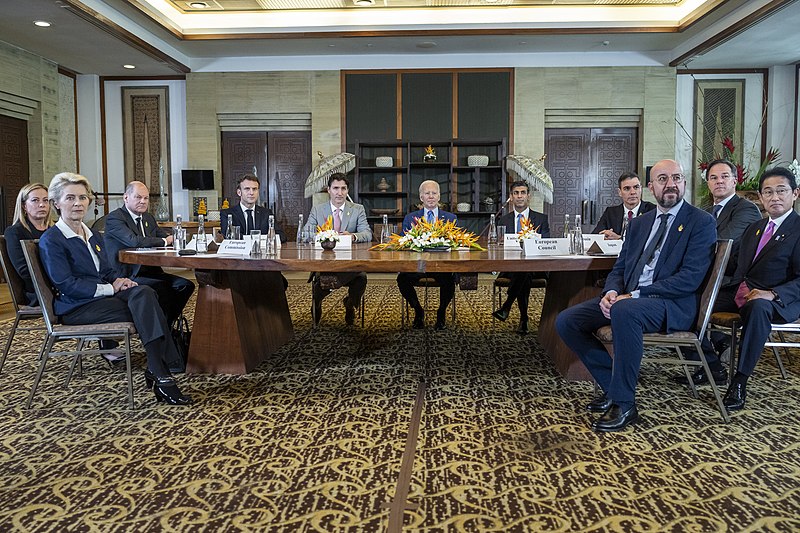
The G7 countries all agree on the need to stand up to any coercion from China or any unilateral attempts by Beijing to assert control over the contested Taiwan Strait. The stance by the seven major economies in the world comes amid tensions surrounding the island nation that China also claims as its territory.
A senior official from the US State Department told reporters on Monday that the G7 countries all agree on the need to stand up to any coercion from China in the region, especially in the Taiwan Strait. The stance comes as the foreign ministers of the group all gathered in the resort town of Karuizawa in Japan on Sunday. The meeting focused on the tensions in the Indo-Pacific and China’s increasingly assertive stance over the democratically-governed island.
“The message is the same across the G7: That we want to work with China in those areas where China is prepared to work with us,” said the official. “We are certainly going to stand up against any coercion, any market manipulation, any efforts to change the status quo in the Taiwan Strait.”
The G7 ministers have sought to present a more united stance following comments by French President Emmanuel Macron during a recent visit to Beijing which were seen as too weak in the West toward China and sparked criticism. Japan, the group’s current chair and the only Asian country in the group, has become increasingly concerned over the possible actions China may take against Taiwan.
“The impact the peace and stability of the Taiwan Strait has on our country is a given, but it is a crucial factor in the wider safety and security of the international community as well,” said Japanese foreign minister Yoshimasa Hayashi after a bilateral meeting with US Secretary of State Antony Blinken.
On Tuesday, Blinken said during a news conference following the meeting that while the United States can move forward with its relationship with China after President Joe Biden met with Chinese President Xi Jinping last year, Beijing must make its intentions clear. The Chinese foreign ministry, however, called on Washington to stop claiming to put “guardrails” on relations between the two countries.







