


 China vs. NASA: The New Moon Race and What's at Stake by 2030
  SpaceX Pivots Toward Moon City as Musk Reframes Long-Term Space Vision
  FDA Pilot Program Eases Rules for Nicotine Pouch Makers
  Trump Administration to Launch Autism Initiatives Targeting Acetaminophen Use and New Treatment Options
  NASA's Artemis II Crew Arrives in Florida for Historic Moon Mission
  Cogent Biosciences Soars 120% on Breakthrough Phase 3 Results for Bezuclastinib in GIST Treatment
  Eli Lilly’s Inluriyo Gains FDA Approval for Advanced Breast Cancer Treatment
  Trump and Merck KGaA Partner to Slash IVF Drug Costs and Expand Fertility Coverage
  Blue Origin New Glenn Rocket Explodes During Launch Pad Test, Delaying Space Ambitions
  Blue Origin’s New Glenn Achieves Breakthrough Success With First NASA Mission
  SpaceX Delays Starship V3 Launch Ahead of Potential Record IPO


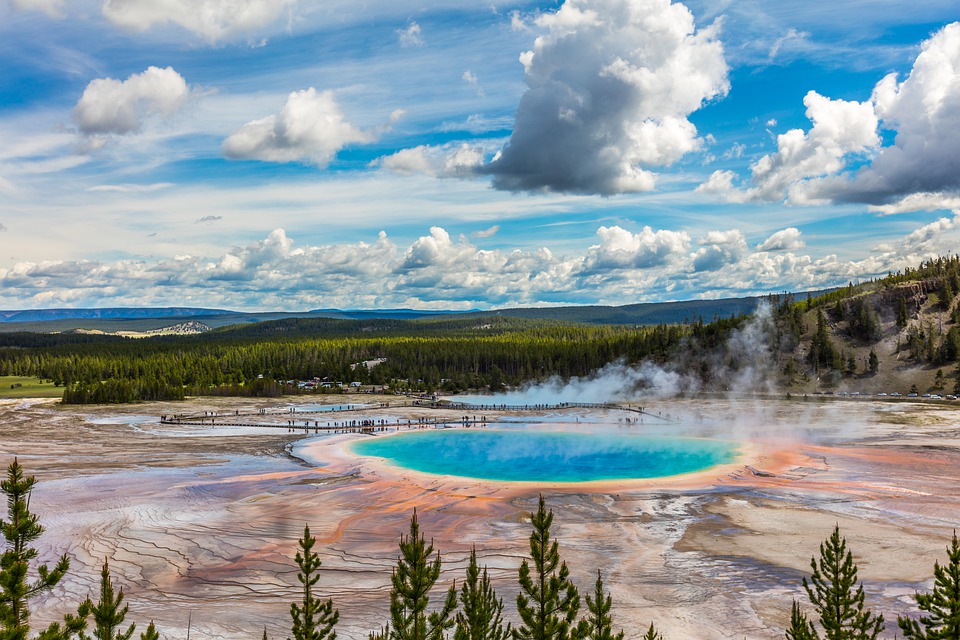
Volcanologists have kept tabs on the Yellowstone volcano in the United States as an eruption from the said volcano would have disastrous consequences especially to those who live near it. A study on the volcano’s two biggest eruptions suggests that its power may be winding down.
Express reports that researchers studied the two major eruptions that the Yellowstone volcano has had over time. One of these major eruptions also happens to be the most powerful eruption that Caldera has had. The scientists made use of bulk chemistry, radio-isotopic dates as well as magnetic data to be able to determine the eruptions that spanned tens of thousands of kilometers and resulting in changing the Earth’s climate.
The study’s lead author, volcanologist Dr. Thomas Knott of the University of Leicester said that the deposits they analyzed came not from a series of smaller eruptions as it was initially believed, but from volcanic material from major eruptions that occurred in both 9.0 and 8.7 million years ago respectively.
The Grey’s Landing super-eruption is the more recent one of the two but is the biggest recorded event at the Snake-River-Yellowstone region. “It’s one of the top five eruptions of all time. The Grey’s Landing eruption enameled an area the size of New Jersey in searing-hot volcanic gas that instantly sterilized the land surface,” said Dr. Knott.
Following its major eruptions throughout history, the researchers found that the volcano’s power may have been on a decline with every eruption it has. To be specific, an eruption from the Yellowstone volcano diminishes its power by a factor of three. According to Dr. Knott, this decrease is a significant decline.
Previously, the volcano’s steamboat geyser, according to those who are monitoring its activity, is in its active state. But compared to similar geysers like Old Faithful and Porkchop geysers which are linked to one another, this particular geyser has its own rhythm, leading scientists to speculate whether there is magma accumulating under the surface.
One theory among scientists is that the Steamboat geyser has a more complex system that also runs deep, possibly connected into the deepest levels of the Yellowstone volcano. However, experts have said more observations are needed to see why the Steamboat geyser behaves the way it does.







