


 Senate Sets December 8 Vote on Trump’s NASA Nominee Jared Isaacman
  Cogent Biosciences Soars 120% on Breakthrough Phase 3 Results for Bezuclastinib in GIST Treatment
  Trump Administration to Launch Autism Initiatives Targeting Acetaminophen Use and New Treatment Options
  Is space worth the cost? Accounting experts say its value can’t be found in spreadsheets
  Trump Administration Releases New UFO Files and Apollo Mission Records
  Blue Origin’s New Glenn Achieves Breakthrough Success With First NASA Mission
  SpaceX Delays Starship V3 Launch Ahead of Potential Record IPO
  SpaceX’s Starship Completes 11th Test Flight, Paving Way for Moon and Mars Missions
  Blue Origin New Glenn Rocket Explodes During Launch Pad Test, Delaying Space Ambitions
  Tabletop particle accelerator could transform medicine and materials science
  SpaceX Pivots Toward Moon City as Musk Reframes Long-Term Space Vision
  SpaceX Prioritizes Moon Mission Before Mars as Starship Development Accelerates


 Add as a preferred source on Google
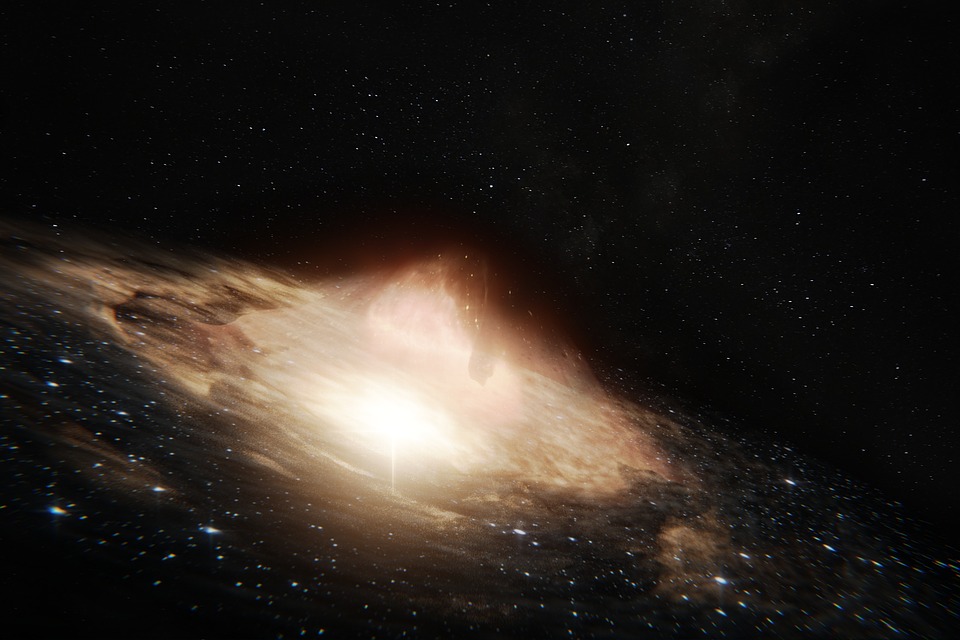
Black holes are found in the very middle of the galaxies, and many scientists try and understand these celestial phenomena the more discoveries are made. Recently, space agency NASA managed to capture one black hole’s outburst of radiation thousands of light-years away.
Express reports that the agency captured one black hole in the midst of an outburst back in November 2019, emitting a flare of radiation through their OSIRIS-REx spacecraft, which was collecting samples on the asteroid Bennu. The spacecraft was also equipped with an X-ray imager and thus was able to capture the incident found in the Columba constellation. At the time of the discovery, the spacecraft was on a routine orbit around the asteroid.
This was the first time the researchers witnessed this occurrence as, according to Harvard research scientist Branden Allen, there were no previous recorded incidents in that part of space. Upon closer analysis, the outburst of x-rays was an X-ray binary. This is a kind of star or black hole that emits bright x-ray radiation flares in space. These outbursts usually happen when a black hole pulls material towards itself from a neighboring star. As the material that is pulled in falls deeper within the black hole, it produces a large amount of energy resulting in flares of x-ray radiation.
Prior to NASA, the MAXI telescope in Japan was the first to spot this incident but was later identified by NASA’s NICER telescope or Neutron star Interior Composition Explorer. Both of these telescopes are mounted at the International Space Station or ISS.
Black holes are known to have a gravitational pull that is so strong, not even light can escape. However, it was previously reported that one supermassive black hole exploded with immense power that it resulted in the usually closed fields around the event horizon to tear open. The blast from this black hole is believed to be the most destructive explosion in space since the Big Bang that signaled the creation of the universe.
The hole, in particular, was described to be as large as 15 milky ways in diameter. This was also referred to as a crater in space, having been punched into a very hot medium known as a cluster plasma.







