


 Cogent Biosciences Soars 120% on Breakthrough Phase 3 Results for Bezuclastinib in GIST Treatment
  SpaceX Delays Starship V3 Launch Ahead of Potential Record IPO
  Blue Origin New Glenn Rocket Explodes During Launch Pad Test, Delaying Space Ambitions
  FDA Adds Fatal Risk Warning to J&J and Legend Biotech’s Carvykti Cancer Therapy
  Jared Isaacman Confirmed as NASA Administrator, Becomes 15th Leader of U.S. Space Agency
  Trump Administration Releases New UFO Files and Apollo Mission Records
  Neuralink Expands Brain Implant Trials with 12 Global Patients
  China vs. NASA: The New Moon Race and What's at Stake by 2030
  Tabletop particle accelerator could transform medicine and materials science
  Blue Origin’s New Glenn Achieves Breakthrough Success With First NASA Mission
  SpaceX Pivots Toward Moon City as Musk Reframes Long-Term Space Vision


 Add as a preferred source on Google
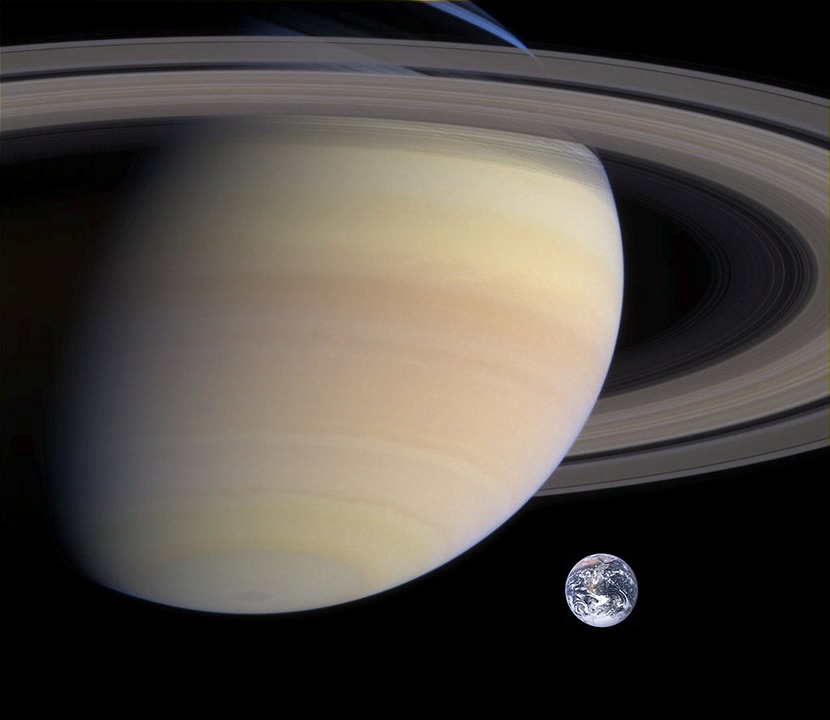
Scientists have studied the ringed planet Saturn and its moons for decades. However, a recent discovery revealed that one of its moons, Titan, is slowly moving away from its planet.
Researchers have found that Titan is moving away from Saturn a lot faster than it was previously believed to be. Scientists made use of the data from NASA’s Cassini spacecraft, which has monitored Saturn since 2004. As of late, Titan orbits Saturn from a distance of 759,000 miles, however, scientists believe that it was a lot closer to Saturn billions of years ago. This discovery suggests that the Solar System actually expanded faster than theorized. Scientists also found that the outer moons migrate at almost the same rate as the inner moons as they go into an orbit pattern that is connected to the wobble of the planet, thus bringing them outwards.
Saturn has 62 confirmed moons out of 150, and Titan is the biggest moon from those 62 moons. Because it is 886 million miles away from the Sun, the surface temperature on Titan would be around -179 degrees Celsius.
According to California Institute of Technology professor and co-author of the study Jim Fuller, “Most prior work had predicted that moons like Titan or Jupiter’s moon Callisto were formed at an orbital distance similar to where we see them now... This implies that the Saturnian moon system, and potentially its rings, have formed and evolved more dynamically than previously believed. “
Meanwhile, going back to Earth, space weather forecasters previously predicted that the planet is caught in a solar storm with solar winds hitting Earth at a rate of 1.5 million kilometers per hour or 425 kilometers per second. Researchers have revealed that these solar winds are coming from a hole in the Sun’s upper atmosphere. These solar winds that hit the Earth’s magnetic field would produce auroras in the polar regions of the planet - aurora borealis and aurora australis.
Auroras are just one of the side-effects of a solar storm, as the solar winds or particles may affect satellite-based technology such as GPS navigation and cable television. It may also cause power overloads, but this is a rare occurrence.







