


 US Immigration Arrests Surge as Deportations Lag Behind
  UK PM Andy Burnham Set for First Trump Meeting in New York
  Bill Gates Warns Governments Are Unprepared for AI Disruption
  Ovechkin Faces Scrutiny Over United Russia Campaign Video
  U.S. Imposes New Visa Restrictions Over South Africa Policies
  Mahmoud Khalil Sues Columbia Over Alleged Pro-Palestinian Harassment
  Nvidia CEO Jensen Huang Expected at Trump-Xi State Dinner
  Houthi Red Sea Gains Strengthen Iran’s Leverage Over Gulf States
  Kim Jong Un Pledges Deeper Russia Cooperation
  China’s Global Times Slams Anthropic CEO’s AI Slowdown Plan as ‘Cold War’ Strategy
  Trump Open to Chinese Automakers Building Cars in US
  Europe can’t achieve space sovereignty alone. Here’s why
  Lula, Flavio Bolsonaro Deadlocked in Brazil Election Polls
  Trump Rejects Calls for Tougher AI Regulation
  Takaichi-Backed Koja Wins Okinawa Governor Race
  Philippines Holds Historic Bangsamoro Election Amid Tight Security
  Trump Touts $5,000 Checks if Republicans Win Congress


 Add as a preferred source on Google
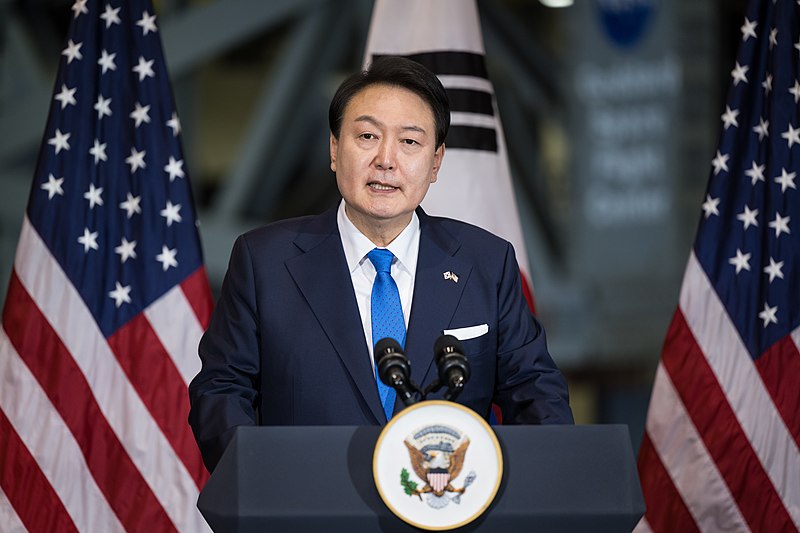
South Korean President Yoon Suk-yeol said that while it was important to make sure that Russia does not succeed, Seoul was also considering options regarding sending lethal aid to Ukraine. This comes as Yoon previously suggested that South Korea may consider expanding the aid it would provide Ukraine.
During a state visit to the United States last week, Yoon marked the 70th anniversary of the United States-South Korea alliance by delivering a speech at Harvard University’s Kennedy School. In his remarks, Yoon said Russia’s invasion of Ukraine was a violation of international law and human rights. Yoon was also pressed on whether South Korea was going to provide lethal aid to Ukraine.
“We should prove such attempts will never reach success, to block further attempts being made in the future,” said Yoon, according to translations of his speech.
“We are closely monitoring the situation that’s going on the battlefield in Ukraine and will take proper measures in order to uphold the international norms and international law,” said Yoon. “Right now we are closely monitoring the situation and we are considering various options.”
The week prior to leaving for Washington, Yoon told Reuters in an interview that Seoul may extend the support it is providing to Ukraine beyond humanitarian and economic aid should Kyiv come under a large-scale civilian attack. This marked a shift in Yoon’s stance against providing weapons to Ukraine for the first time.
Also last week, NATO Secretary General Jens Stoltenberg said that 98 percent of the combat vehicles Ukraine’s allies in the West pledged have already arrived in Ukraine. This included 1,550 armored vehicles and 230 tanks for Ukrainian forces to form units as it gears up for a counteroffensive to reclaim captured territories. Stoltenberg added that NATO allies have trained over nine Ukrainian units, with over 30,000 troops estimated to make up the units.
Ukraine’s allies have also provided Kyiv with “vast amounts of ammunition,” and some partner countries of the NATO alliance have also provided armored vehicles to Kyiv. Stoltenberg said that the scale of military aid provided to Ukraine was “unprecedented” but noted that Russia should not be underestimated, citing Moscow’s mobilization of ground forces and its willingness to “send in thousands of troops with very high casualty rates.”







