


 Kremlin Says No Grounds Yet for Ukraine Peace Talks
  Burnham Eyes UK Leadership Role in AI Ahead of Trump Meeting
  Lula and Flavio Bolsonaro Tied in Brazil Runoff Poll
  US Officials Split Over Response to Israeli West Bank Settlements
  Trump Says U.S.-Iran Peace Deal Near After UN Talks
  Canada Unveils Bill to Fast-Track Major Resource Projects
  South Korea, US Discuss Warship Building Cooperation
  Trump to Press Xi on Release of US Nuclear Expert Held in China
  Venezuela Promises Elections as Delcy Rodriguez Pledges Democratic Transition
  Trump Meets Venezuela’s Delcy Rodriguez at UN Assembly
  Trump Board of Peace Unveils $2.45 Billion Gaza Recovery Plan
  Taiwan Vows to Advance US Arms Sales Ahead of Trump-Xi Meeting
  Russian Strikes Kill Eight Across Ukraine as Energy Sites Hit
  Russian Envoy Dmitriev Heads to US for Ukraine Talks
  Vietnam, US Trade Deal Could Be Signed Soon, To Lam Says
  Trump Says ‘Freedom’ Is Coming to Cuba
  Macron Challenges Trump’s Gaza Peace Claims at UN


 Add as a preferred source on Google
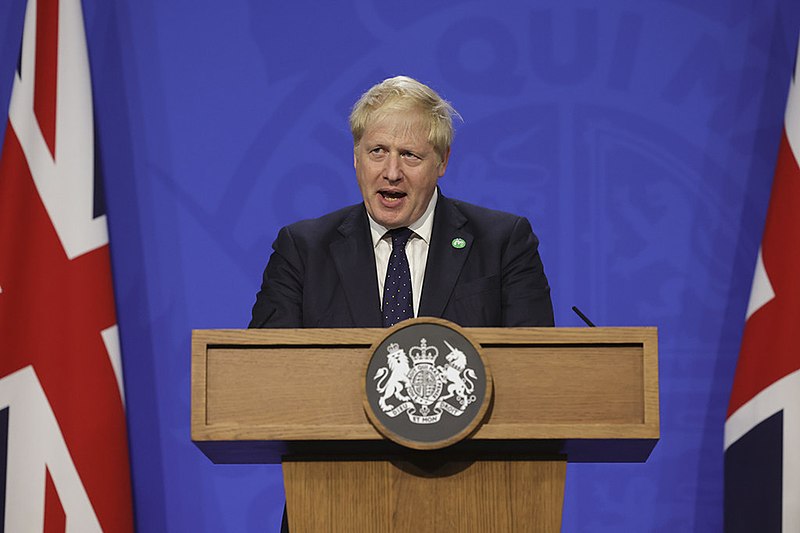
Outgoing British Prime Minister Boris Johnson said that cutting down reliance on Russian energy would be a good outcome of the war in Ukraine. This follows efforts by the West to reduce buying of Russian energy products.
Speaking at the site of a nuclear power plant in the eastern UK, Johnson said that in the midst of the ongoing war, one of the good things that would come out of the conflict is that Europe would rely on Russian energy products less.
Johnson added that by cutting down reliance on Russian energy products, the region would not be beholden to Vladimir Putin.
“Out of this catastrophe, of Putin’s war, I think good is going to come, in that Europe will wean itself off Russian hydrocarbons,” said Johnson. “We will no longer be subject, vulnerable, to his blackmail, and in this country, we will have greatly accelerated long overdue reforms and steps to become energy independent, in particular, by rectifying the damage we’ve done to our nuclear industry.”
The foreign ministers of the European Union Wednesday agreed to complicate travel rules for Russians looking to visit Europe but remained divided on whether to issue a widespread visa ban.
While the bloc was divided on a blanket visa ban for Russians, it had yet to be determined what unilateral measures Finland, Estonia, Latvia, Lithuania, and Poland would take as the five countries share a land border with Russia.
The five countries welcomed a suspension of the visa facilitation deal. However, four out of the five countries have called for more action to be taken to significantly limit the visas that would be issued to Russians travelling to the EU following Russia’s invasion of Ukraine back in February.
Czech foreign minister Jan Lipavsky said the bloc’s executive commission would look into other ways to go further on the step. This would include what Lipavsky cited were around 12 million Schengen visas that were already issued for Russians.
EU foreign policy chief Josep Borrell said the suspension of the visa facilitation program would already have a real impact.
“This will significantly reduce the number of visas issued by the EU member states. It’s going to be more difficult, it’s going to take longer,” said Borrell.







