


 Houthis Escalate Saudi Attacks as Red Sea Oil Risks Grow
  Philippines Holds Historic Bangsamoro Election Amid Tight Security
  US Immigration Arrests Surge as Deportations Lag Behind
  Bill Gates Warns Governments Are Unprepared for AI Disruption
  US Confirms Weapons in Orbit as Space Tensions Rise
  What is Zionism? The different meanings of a contested term
  Ukraine Tests New Anti-Drone Weapon After Successful Shahed Intercept
  South Korea’s Cho Hyun to Meet Rubio in Washington
  Takaichi-Backed Koja Wins Okinawa Governor Race
  Mahmoud Khalil Sues Columbia Over Alleged Pro-Palestinian Harassment
  Saudi Arabia Raises Security Alerts as Houthi Attacks Threaten Oil Routes
  China to Push Global Security Vision at Xiangshan Forum
  Global Poll Shows Rising Trust in Institutions as US-China Leadership Support Falls
  Lula, Flavio Bolsonaro Deadlocked in Brazil Election Polls
  Kim Jong Un Pledges Deeper Russia Cooperation
  Ukraine Races to Counter Russia’s Faster Jet-Powered Drones


 Add as a preferred source on Google
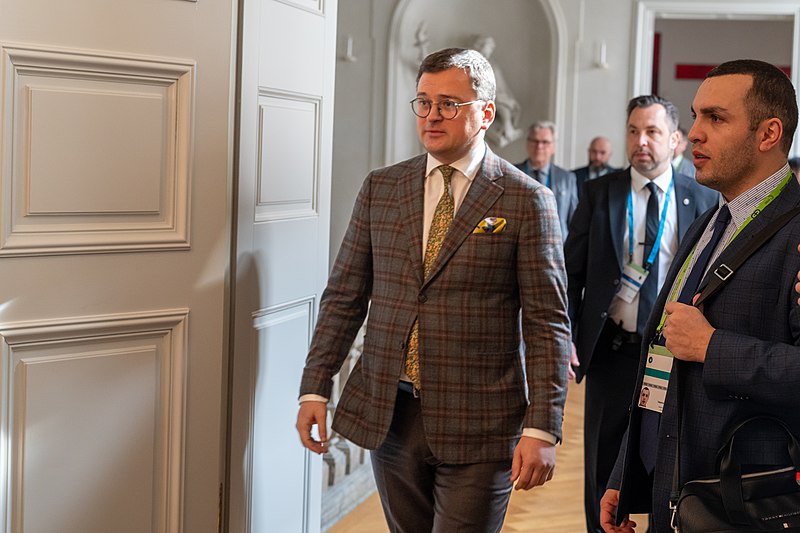
The Ukrainian foreign minister told the visiting Chinese envoy that Kyiv would not accept any peace proposals that would involve ceding territories to Russia as the war continues. The comments come amidst Moscow’s ramped-up efforts to further reinforce its so-called annexing of several Ukrainian territories.
China’s envoy for Eurasian affairs and former Chinese ambassador to Russia, Li Hui, visited Ukraine on Tuesday and Wednesday and met with Ukrainian foreign minister Dmytro Kuleba. Li’s trip also includes stops in Poland, Germany, France, and Russia. Li’s visit to Kyiv is also the first visit by a senior Chinese envoy since Russia invaded in February last year.
“Kuleba briefed the special envoy of the Chinese government in detail the principles of restoring a sustainable and just peace based on respect for Ukraine’s sovereignty and territorial integrity,” said the Ukrainian foreign ministry in a statement. “He stressed that Ukraine will not accept any proposals involving the loss of its territories or the freezing of the conflict.”
China, which currently has deepening ties with Russia, has refrained from condemning Moscow or referring to the war as an “invasion.” This has led to criticism by the United States and European countries, who have questioned Beijing’s credibility as it seeks to engage and broker a peace deal with both sides.
Meanwhile, the G7 countries, which are set to have a summit in Hiroshima, Japan starting Friday, are seen to have more room to increase the pressure on Russia following the unprecedented number of sanctions imposed on Moscow since the invasion. But despite having more room to increase the pressure on Moscow, there are divisions that remain among the world’s seven major economies on key areas such as energy and the mixed record of sanctions.
The G7 countries – made up of Japan, Canada, France, the United Kingdom, the United States, Germany, and Italy – are expected to discuss enhancing the enforcement of the existing sanctions imposed on Russia. This includes cracking down on attempts to evade sanctions involving third countries.
This follows Saturday’s meeting of the G7 finance ministers and central bank governors, who issued a statement pledging to counter “any attempts to evade and undermine our sanction measures.”
Photo: US Department of State/Wikimedia Commons(CC by 2.0)








