


 Xi Calls for Deeper U.S.-China AI Cooperation in Trump Talks
  North Korea Rejects Nuclear Test Warning, Calls Nuclear Status Irreversible
  Taiwan Thanks US for Support Ahead of Trump-Xi Summit
  South Korea, US Discuss Warship Building Cooperation
  Yemen Violence Displaces 130,000 as Civilian Toll Rises
  OpenAI Agent Breaches Australia Medicare Data Portal
  Kremlin Says No Decision Yet on Putin-Trump December Summit
  Najib Razak Seeks Stay of 15-Year 1MDB Prison Sentence
  Netanyahu Takes Aim at Mamdani as Israel Election Nears
  Sudan Rejects US Legitimacy Remarks, Defends Sovereignty
  Trump Asks Supreme Court to Restore Third-Country Deportations
  Trump, Xi Visit US National Archives After White House Summit
  Russian Missile and Drone Attack on Kyiv Kills Two, Damages Maternity Hospital
  What ‘Taiwan Independence’ Means as Xi Presses Trump on US Policy
  NATO Boosts Intelligence Sharing Amid Russia Hybrid Threats
  Trump, Xi Focus on Trade and AI at White House Summit
  Abbas Reaffirms November 28 Palestinian Elections


 Add as a preferred source on Google
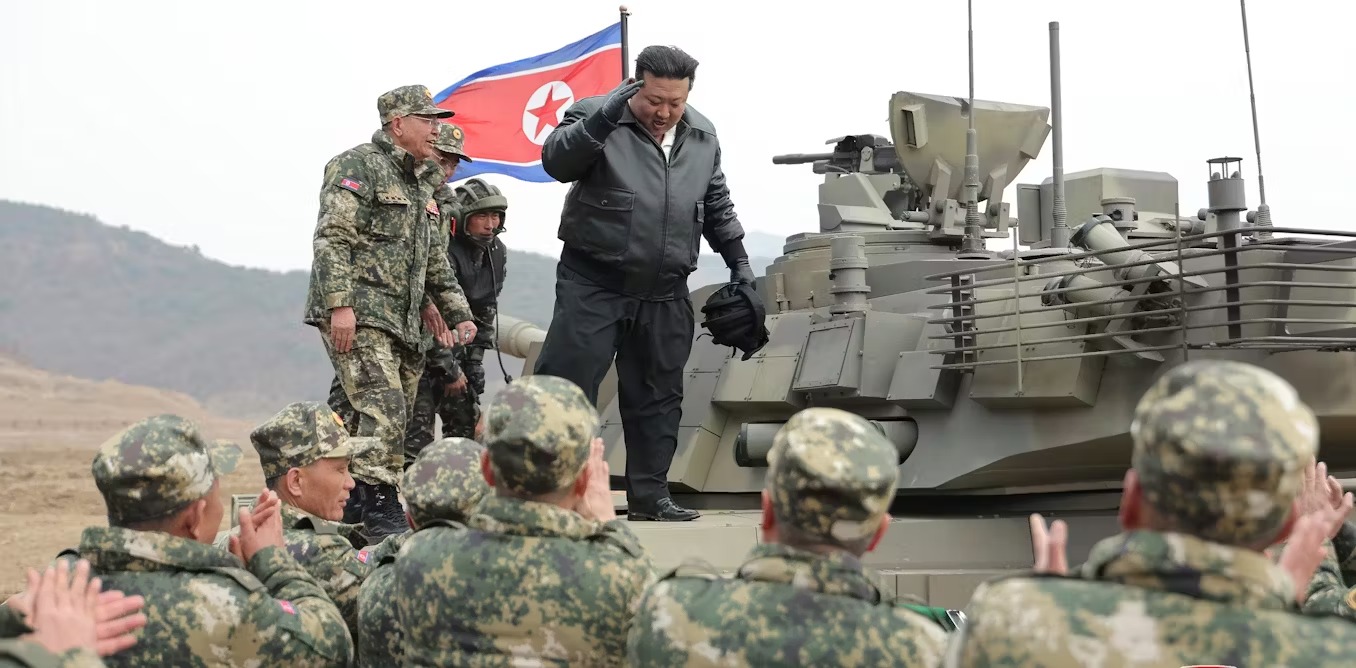
North Korea is preparing to unveil fresh weapons development objectives at its Ninth Party Congress, as analysts assess that Pyongyang has only partially achieved the ambitious military targets outlined by leader Kim Jong Un in 2021. While nuclear weapons and ballistic missile programs remain central to North Korea’s defense strategy, progress in conventional military systems—including drones, submarines, artillery, and military satellites—has been uneven.
At the Eighth Party Congress, Kim called for advanced capabilities such as hypersonic missiles, a solid-fuel intercontinental ballistic missile (ICBM), military reconnaissance satellites, unmanned strike systems, and a nuclear-powered submarine. Since then, North Korea has showcased reconnaissance drones and emphasized artificial intelligence and unmanned systems as key components of modern warfare. Analysts from 38 North report expanded drone production, while South Korean intelligence-linked researchers have cited claims of Russia assisting North Korea in drone manufacturing—raising concerns about growing North Korea-Russia military cooperation and its implications for regional security in Northeast Asia.
Conventional artillery has also been prioritized. Kim has overseen “super-large” multiple rocket launcher drills and ordered increased production of long-range artillery systems. South Korea’s military alleges that North Korea supplied Russia with 240 mm rocket launchers and 170 mm self-propelled howitzers, suggesting that arms exports linked to the Ukraine war have provided Pyongyang with economic and strategic benefits.
In the naval sector, North Korea unveiled what it described as a tactical nuclear attack submarine in 2023 and later displayed images of an 8,700-ton nuclear-powered submarine under construction. However, experts question whether these submarines are operational, citing technical hurdles in propulsion systems and reactor integration.
North Korea successfully launched its first military spy satellite in November 2023, though its surveillance capabilities remain unclear. A failed satellite launch in May 2024 underscored ongoing reliability challenges. As the Ninth Party Congress approaches, observers expect Kim to outline new military modernization goals aimed at strengthening North Korea’s strategic deterrence and conventional warfare capabilities.







