


 Taiwan Thanks US for Support Ahead of Trump-Xi Summit
  Abbas Reaffirms November 28 Palestinian Elections
  EU Defence Build-Up Too Slow for 2030 Russia Readiness Goal
  Sudan Rejects US Legitimacy Remarks, Defends Sovereignty
  Netanyahu Defends Israel at UN as Delegates Stage Walkout
  Trump Asks Supreme Court to Restore Third-Country Deportations
  Netanyahu Takes Aim at Mamdani as Israel Election Nears
  Saudi Arabia, Turkey and Pakistan Plan Urgent Defence Talks Over Houthi Attacks
  Kremlin Says No Decision Yet on Putin-Trump December Summit
  North Korea Warns South Korea Over US-Led Defense Role
  Pezeshkian Says US Must Choose When Iran War Ends
  North Korea Rejects Nuclear Test Warning, Calls Nuclear Status Irreversible
  US Backs Musk in Fight Against EU’s €120 Million X Fine
  Ghana Says Western Support Growing for Slave Trade Reparations
  Mexico-US Trade Talks Delayed to October as Tariff Negotiations Continue
  Trump, Xi Visit US National Archives After White House Summit
  What ‘Taiwan Independence’ Means as Xi Presses Trump on US Policy


 Add as a preferred source on Google
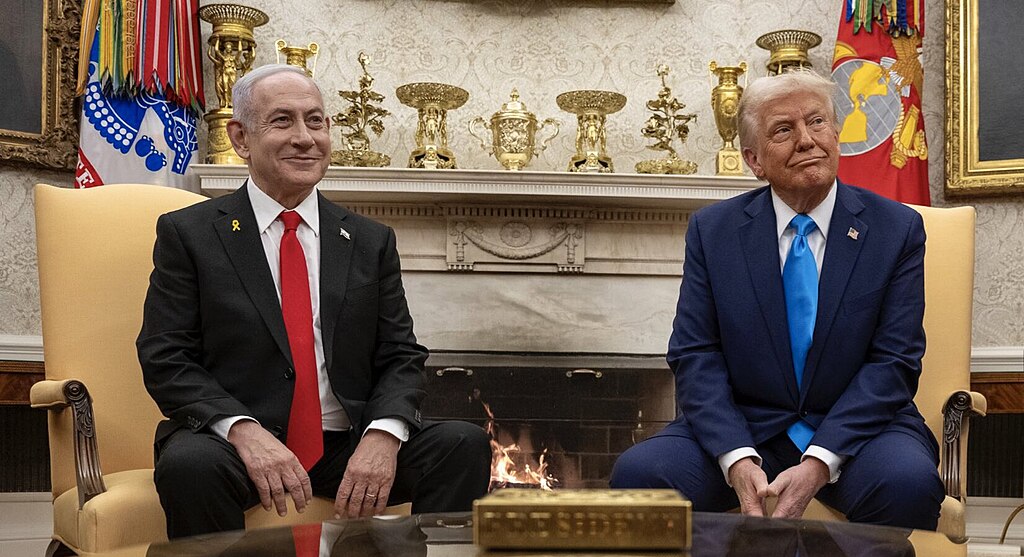
Israeli Prime Minister Benjamin Netanyahu said he will discuss Iran’s nuclear activities and regional security challenges during his visit next week to Washington, where he is scheduled to meet U.S. President Donald Trump. Speaking on Monday at a joint press conference in Jerusalem with Greek Prime Minister Kyriakos Mitsotakis and Cypriot President Nikos Christodoulides, Netanyahu emphasized that Israel remains closely monitoring Iran’s military actions and strategic intentions.
Netanyahu noted that Israel is aware Iran has recently conducted unspecified “exercises,” a remark that followed reports from Iranian state media confirming missile drills in several cities. These drills marked the second such exercise reported within a month. Western powers have long viewed Iran’s ballistic missile program as a significant threat to Middle East stability and a potential delivery system for nuclear weapons, should Tehran pursue atomic arms. Iran, however, continues to deny any intention to develop nuclear weapons.
Despite heightened tensions, Netanyahu stressed that Israel is not seeking confrontation with Iran. He said that Israel and the United States maintain consistent expectations, including a demand that Iran reduce its uranium enrichment levels. According to Netanyahu, these issues will “obviously” be part of his discussions with Trump, alongside broader regional concerns.
The prime minister added that his Washington talks will also focus on advancing the next phase of Trump’s Gaza plan, addressing security threats posed by Iran-backed Hezbollah in Lebanon, and countering the actions of Yemen’s Houthi forces, which Israel accuses of disrupting international shipping routes. Netanyahu reiterated Israel’s desire to see a stable and sovereign Lebanon free from militant influence.
Relations between Israel, Greece, and Cyprus have strengthened significantly over the past decade, driven by shared concerns over regional stability and Turkey’s influence. During the meeting, the three leaders agreed to deepen security cooperation and advance strategic infrastructure projects, including a proposed sea-and-rail corridor linking India to Europe via the Middle East. They also expressed commitment to an undersea electricity cable project aimed at integrating regional power grids with Europe and the Arabian Peninsula.
Greek Prime Minister Mitsotakis highlighted Greece’s growing role as a liquefied natural gas hub in southeastern Europe, underscoring the importance of energy interconnection projects. Israeli Energy Minister Eli Cohen described the trilateral meeting as timely, citing ongoing efforts by unnamed countries to undermine regional stability.







