


 Burnham Eyes UK Leadership Role in AI Ahead of Trump Meeting
  Kremlin Says No Grounds Yet for Ukraine Peace Talks
  Lula and Flavio Bolsonaro Tied in Brazil Runoff Poll
  Sudan Rejects US Legitimacy Remarks, Defends Sovereignty
  Russian Envoy Dmitriev Heads to US for Ukraine Talks
  US, China Extend Trade Truce to Jan. 10 Ahead of Trump-Xi Summit
  Taiwan Vows to Advance US Arms Sales Ahead of Trump-Xi Meeting
  Venezuela Promises Elections as Delcy Rodriguez Pledges Democratic Transition
  Europe Warns Russia Is Escalating Hybrid Attacks Across NATO
  China Tightens Fentanyl Rules Ahead of Trump-Xi Summit
  South Korea, US Discuss Warship Building Cooperation
  Macron Challenges Trump’s Gaza Peace Claims at UN
  Marco Rubio to Meet Russia’s Lavrov in New York
  US Invites Putin to Miami G20, Opening Door to Trump Summit
  Ghana Says Western Support Growing for Slave Trade Reparations
  Trump Says ‘Freedom’ Is Coming to Cuba
  Iran Vows ‘Crushing’ Response as US Talks Continue


 Add as a preferred source on Google
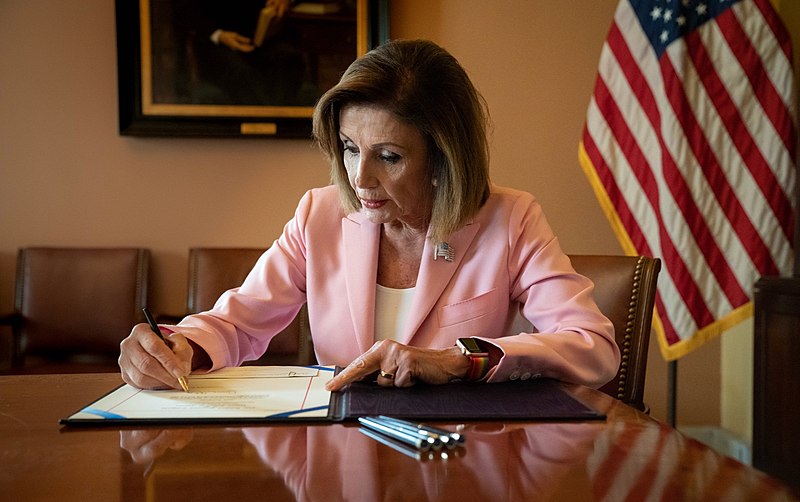
This week marks crunch time for Democrats in Congress as the House is set to vote on two important bills that would bring forward the agenda of US President Joe Biden. In a change from her previous stance, House Speaker Nancy Pelosi said that the bipartisan infrastructure bill must come to a vote even without the $3.5 trillion budget resolution.
Speaking with the Democratic caucus Monday, Pelosi told members of her party that the bipartisan infrastructure bill, which has already been approved by the Senate, must move forward and can no longer wait for the budget resolution bill. This is a shift from her previous stance that the House cannot vote on the infrastructure bill unless the Senate approves of the budget resolution that would put investments on social programs over ten years. Pelosi said that the budget resolution or social safety net bill is not yet ready to be voted upon, but progressives have threatened to vote against infrastructure.
During the private meeting, Pelosi said that the party has to make a difficult decision as the dynamics have now changed and that Democrats have not agreed to a spending level, according to people familiar with the matter.
“I told all of you that we wouldn’t go on to the [infrastructure bill until] we had the reconciliation bill passed by the Senate. We were right on schedule to do all of that, until 10 days ago, a week ago, when I heard the news that this number had to come down,” said the House Speaker during the meeting, according to the source. “It all changed so our approach had to change.”
Both centrist and progressive Democrats have said that both bills are incredibly important. However, the budget reconciliation bill faces a challenge in the evenly-divided Senate, where Senators Joe Manchin and Kyrsten Sinema have opposed the $3.5 trillion price tag but would not say how much they are willing to spend.
In other news, General Mark Milley, the Chairman of the Joint Chiefs of Staff, revealed more details in a conversation he had with Pelosi regarding the mental health of now-former President Donald Trump. During his testimony before the Senate Armed Services Committee. Milley said that Pelosi called him back in January, inquiring about the president’s authority to launch nuclear weapons.
“I sought to assure her that nuclear launch is governed by a very specific and deliberate process,” said Milley. While the top general said that Pelosi had expressed concerns regarding the president’s authority to launch nuclear weapons, Milley noted that while the president does have a unilateral authority to launch nuclear weapons, “he doesn’t launch them alone.”







