


 SoftBank Launches $11 Billion Bond Sale to Fund OpenAI Investment
  CNN, MS NOW and Politico Sue Trump Over White House Media Ban
  FAA Allows Boeing to Sell 35 More 777F Freighters Beyond 2028
  NASA and SpaceX Target Crew-11 Undocking From ISS Amid Medical Concern
  Is space worth the cost? Accounting experts say its value can’t be found in spreadsheets
  Blue Origin New Glenn Explosion Could Delay Launch Operations Until 2028
  FDA Pilot Program Eases Rules for Nicotine Pouch Makers
  US Federal Register Drops Alibaba Qwen AI Search Tool
  Neuralink Expands Brain Implant Trials with 12 Global Patients
  Petrobras Joins Brazil Diesel Subsidy Program
  Westinghouse Targets $50 Billion Valuation in U.S. IPO
  Telix to Acquire Germany’s ITM in $1.65 Billion Radiopharma Deal
  Novo Nordisk Weighs Direct NYSE Listing to Boost U.S. Profile


 Add as a preferred source on Google
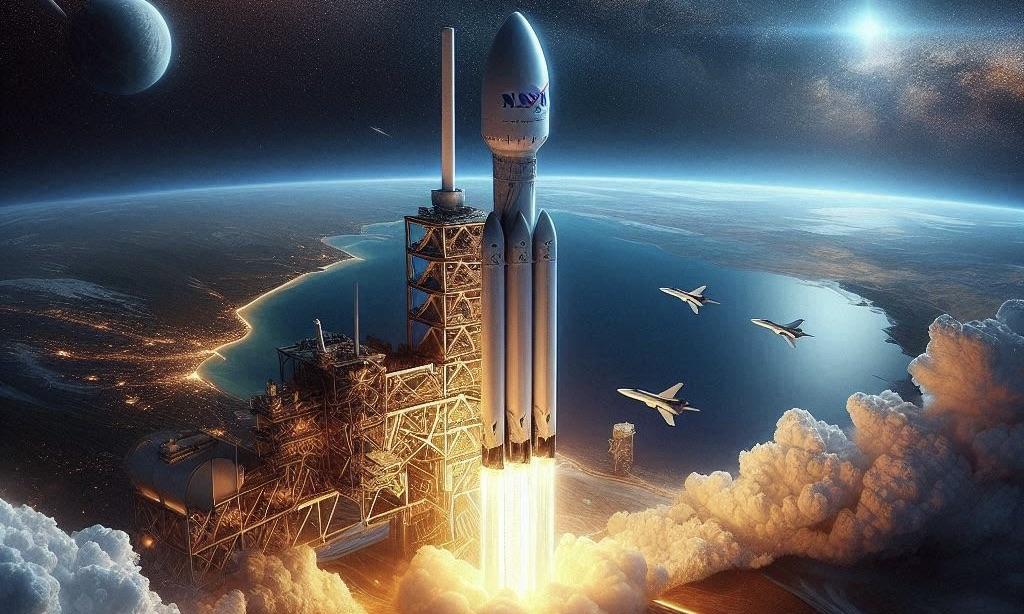
NASA’s Commercial Crew Program manager detailed the cause of a SpaceX Falcon 9 rocket anomaly that grounded launches earlier this month. The issue, traced to a defective clamp, has been resolved, allowing SpaceX to resume operations.
NASA Details SpaceX Falcon 9 Anomaly, Approves Resumption of Launches After Safety Clearance
NASA's program manager for the Commercial Crew Program provided further commentary on the causes of a rare SpaceX Falcon 9 second-stage anomaly earlier this month during a mission overview media conference for an impending Crew Dragon launch to the International Space Station (ISS). The anomaly resulted in the grounding of SpaceX's primary rocket. According to Wccftech, the company announced on July 25 that it is prepared to resume operations tomorrow, following the completion of the necessary investigations to assist the FAA in determining that the defect does not threaten human safety.
The briefing focused on NASA and SpaceX's Crew-9 mission, SpaceX's fourth Dragon launch of 2024, and the 45th Dragon mission to the ISS to date.
The second stage of the Crew 9 mission is in McGregor, Texas, where it will undergo a fire by the end of this month, as Stich disclosed during his opening remarks—SpaceX's modifications to its second-stage design after the anomaly will be thoroughly assessed through this examination. Stich also stated that NASA has been closely monitoring SpaceX's investigation with the FAA step-by-step. He commended SpaceX's transparency throughout the process. He noted that NASA teams have been 'involved in the investigation' and have maintained a record of all the modifications made to the rocket.
Subsequently, the NASA official provided additional information regarding the anomaly during the call. The failure was attributed to a defective clamp in a sense line in the second stage, according to a press release issued by SpaceX. The clamp ultimately resulted in a liquid oxygen leak on the rocket, which cooled the engine's components and damaged them during a second fire, as disclosed by SpaceX. This joint effort between NASA and SpaceX is a testament to the collaborative nature of space exploration.
SpaceX's Sarah Walker and NASA's Stich Explain Rocket Anomaly Caused by Minor Modification and Vibration Sensitivity
Sarah Walker, the director of Dragon mission management at SpaceX, disclosed that the malfunction occurred at a location with "two connections instead of one," which was prompted by a customer requirement for another mission.SpaceX "left it in that configuration for this flight," which resulted in the development of a minor crack in an area where liquid oxygen flows from the rocket's combustion chamber to enable a sensor to measure pressure. Walker further stated that this location is "a bit more susceptible to vibration as this rocket gimbals and fires," ultimately resulting in the liquid oxygen leaking and the anomaly.
NASA's Stich elaborated on Walker's explanation and stated it was compelling evidence of the "attention to detail necessary in spaceflight." He elaborated on the technical details, saying that "SpaceX made a minor modification to a different transducer. There was an in-house transducer pressure management system for this specific sense line attached to the sense line." These modifications were likely implemented without precisely understanding the area's vibration sensitivity additionally, how the insulation and fastener were fastened in a manner that was
While SpaceX removed the clamp and conducted an analysis, Stich disclosed that the analysis appeared satisfactory on the surface; however, the accident resulted from a combination of factors, including the tubing's fabrication and the materials used. Nevertheless, the NASA official went so far as to state that his agency had also 'considered the change and did not observe any issues on our end.' This incident has provided valuable lessons and insights that will guide future missions and ensure the safety of all involved.
He commended SpaceX for conducting qualification tests similar to those previously conducted but "possibly without the level of thoroughness that should have been applied."







