


 Abbas Reaffirms November 28 Palestinian Elections
  Europe Warns Russia Is Escalating Hybrid Attacks Across NATO
  South Korea, US Discuss Warship Building Cooperation
  Trump, Xi Focus on Trade and AI at White House Summit
  Mexico-US Trade Talks Delayed to October as Tariff Negotiations Continue
  Netanyahu’s Brief US Trip Highlights Strains With Trump
  NATO Boosts Intelligence Sharing Amid Russia Hybrid Threats
  North Korea Rejects Nuclear Test Warning, Calls Nuclear Status Irreversible
  Russian Envoy Dmitriev Heads to US for Ukraine Talks
  US Backs Musk in Fight Against EU’s €120 Million X Fine
  France Defends Netanyahu Airspace Clearance Despite ICC Warrant
  Taiwan Thanks US for Support Ahead of Trump-Xi Summit
  US Senate Rejects Iran War Powers Resolution in 50-49 Vote
  Russian Missile and Drone Attack on Kyiv Kills Two, Damages Maternity Hospital
  Pezeshkian Says US Must Choose When Iran War Ends
  US Invites Putin to Miami G20, Opening Door to Trump Summit
  Netanyahu Takes Aim at Mamdani as Israel Election Nears


 Add as a preferred source on Google
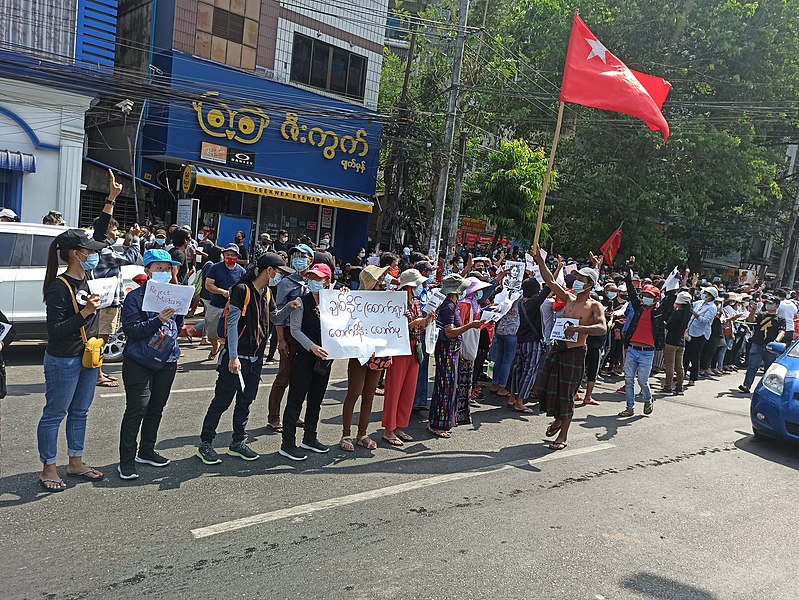
The United Nations Security Council adopted a resolution regarding Myanmar, demanding that its junta government end the violence. This marks the first adopted resolution on Myanmar since 1948.
The UN Security Council adopted its first resolution on Myanmar for the first time in 74 years, demanding that the violence be put to an end and that the junta release all of its political prisoners, including the country’s leader it ousted, Aung San Suu Kyi. Three members: Russia, China, and India, abstained from the vote, with the 12 members of the council voting in favor.
“Today we’ve sent a firm message to the military, that they should be in no doubt – we expect this resolution to be implemented in full,” said the United Kingdom’s UN ambassador Barbara Woodward following the vote. “We’ve also sent a clear message to the people of Myanmar that we seek progress in line with their rights, their wishes, and their interests.”
Chinese UN ambassador Zhang Jun told the council that there is no “quick fix” to the current situation in Myanmar. Zhang said the situation solely depends on the country itself. Zhang said he wanted the Security Council to adopt a formal statement on Myanmar rather than a resolution.
Russian UN ambassador Vassily Nebenzia said Moscow did not consider the situation in Myanmar as a threat to international security and, therefore, should not be addressed by the security council.
Negotiations for the adopted resolution began in September, with the initial draft seen by Reuters urging to end the transfer of arms to the junta and threatening sanctions. The resolution was welcomed by the group Burma Campaign UK but said that there would be “no practical impact” and that imposing an arms embargo should have been enforced instead.
A United Nations Committee blocked the junta from taking the country’s UN seat. Two diplomats familiar with the matter told AP that the UN Credentials Committee deferred the action on the junta’s request. The country’s current ambassador, appointed by the ousted government, will remain as Myanmar’s representative.
Requests from Afghanistan’s Taliban and Libya’s competing governments were also deferred, and their current ambassadors to the UN remain.







