


 NASA and Roscosmos Chiefs Meet in Florida to Discuss Moon and ISS Cooperation
  NASA Artemis II: First Crewed Moon Mission Since Apollo Takes Four Astronauts on 10-Day Lunar Journey
  SpaceX Delays Starship V3 Launch Ahead of Potential Record IPO
  SpaceX Prioritizes Moon Mission Before Mars as Starship Development Accelerates
  Is space worth the cost? Accounting experts say its value can’t be found in spreadsheets
  Neuralink Expands Brain Implant Trials with 12 Global Patients
  Tabletop particle accelerator could transform medicine and materials science
  Trump Signs Executive Order to Boost AI Research in Childhood Cancer
  FDA Adds Fatal Risk Warning to J&J and Legend Biotech’s Carvykti Cancer Therapy
  Trump Administration to Launch Autism Initiatives Targeting Acetaminophen Use and New Treatment Options


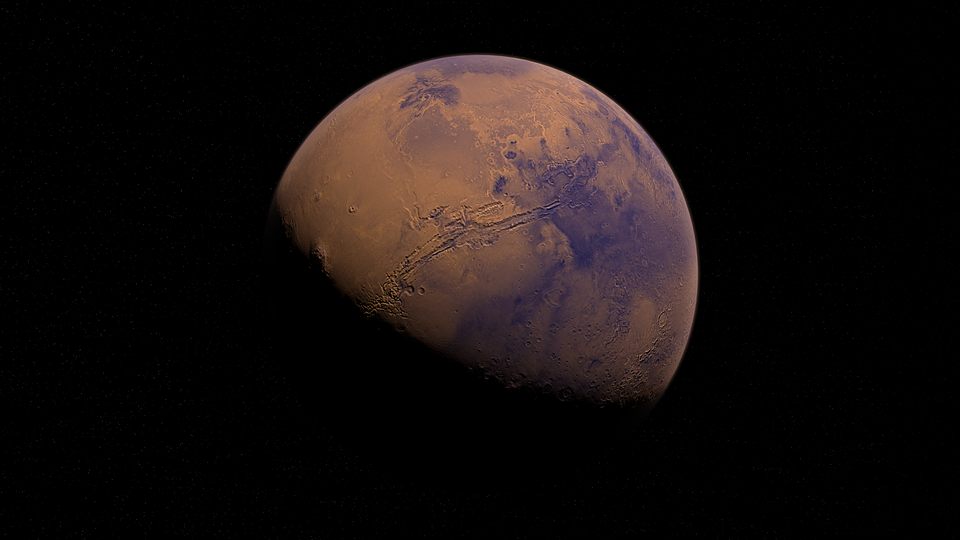
Many space agencies are turning to Mars in an effort to expand space exploration. Scientists recently revealed that water may indeed have been abundant on the Red Planet for thousands of years according to a study.
Researchers from the Netherlands and the United Kingdom analyzed satellite images of Mars from NASA’s Mars Reconnaissance Orbiter’s High-Resolution Imaging Science Experiment or HIRISE. They found one particular Martian cliff face that was formed by flowing water dating as far as four billion years ago. This suggests that the Red Planet was wet around the same time life was developing on Earth.
According to Dr. Joel Davis, a postdoctoral researcher at the Natural History Museum in the UK, “We’ve never seen an outcrop with this amount of detail on it that we can definitely say is so old...This is one more piece of the puzzle in the search for ancient life on Mars, providing novel insight into just how much water occupied these ancient landscapes.”
The scientists looked at photos of the Hellas Impact Crater, the biggest known crater in the entire Solar System that is found in the Red Planet’s southern hemisphere. Within the crater, the researchers found a stack of rocks that were 656 feet thick. This what they believe was formed by running water and that the rock formations turned out the way it did over time. Thus, this finding suggests that water was once flowing on Mars for a long period of time.
This fuels the belief that Mars was once like Earth, with a thick, inhabitable atmosphere and having abundant water. Today, the red planet is known for being a dry wasteland without any sign of life and a very thin atmosphere.
In other related news, US agency NASA is facing some budgetary setbacks which could put the Curiosity Rover’s mission on Mars in jeopardy. The White House initial budget request called to allocate $25 billion in funding for the agency with the objective of prioritizing certain missions such as the upcoming Artemis mission, all the while other projects will experience a cut in their funding. This would mean that the team behind the Curiosity Rover will have to work with only $40 million, taking a 20 percent cut in their usual funding.







