


 EU Agrees €6.6 Billion Military Aid Funding for Ukraine
  US Backs Musk in Fight Against EU’s €120 Million X Fine
  Saudi Arabia Seeks Military Support as Houthi Attacks Escalate
  Trump, Xi Visit US National Archives After White House Summit
  Colombia Extradites FARC Dissident Leader ‘Spider’ to US
  What ‘Taiwan Independence’ Means as Xi Presses Trump on US Policy
  Iran Rejects Nuclear Concessions in Hormuz Deal
  Netanyahu Defends Israel at UN as Delegates Stage Walkout
  Trump, Xi Focus on Trade and AI at White House Summit
  Saudi Arabia, Turkey and Pakistan Plan Urgent Defence Talks Over Houthi Attacks
  Trump Warns China Against Supporting Iran in Xi Talks
  Putin Says Ukraine Peace Proposals Remain on Table
  Netanyahu’s Brief US Trip Highlights Strains With Trump
  NATO Boosts Intelligence Sharing Amid Russia Hybrid Threats
  US Comfortable With Canada Trade Standoff as Import Bans Loom
  Trump Asks Supreme Court to Restore Third-Country Deportations
  Najib Razak Seeks Stay of 15-Year 1MDB Prison Sentence


 Add as a preferred source on Google
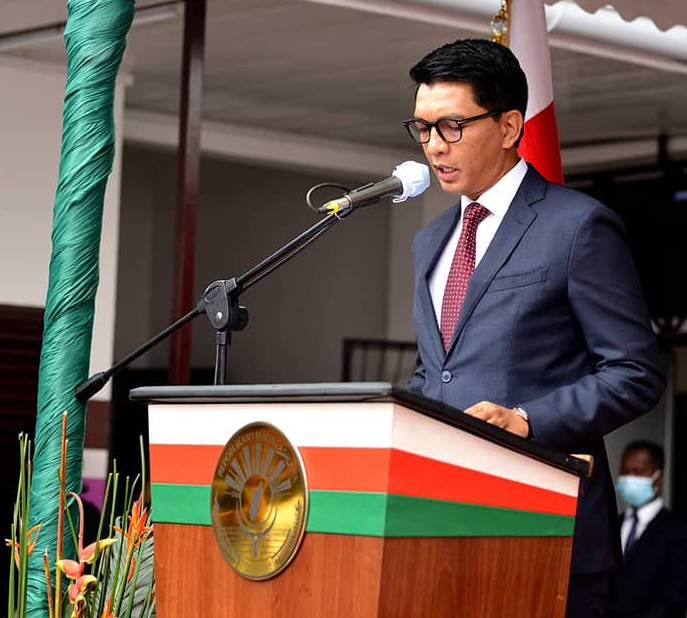
Madagascar is facing a rapidly escalating political crisis as elite soldiers and gendarmerie units turn against President Andry Rajoelina’s government amid nationwide protests led by disillusioned youth. The presidency announced on Sunday that an “attempted illegal and forcible seizure of power” was underway as soldiers from the elite CAPSAT unit—instrumental in Rajoelina’s 2009 coup—called on fellow troops to defy orders and support demonstrators demanding change.
The unrest, which began on September 25 over chronic water and electricity shortages, has evolved into a broader anti-government movement. Protesters, largely from Generation Z, accuse Rajoelina—who has been in power for over 15 years—of corruption, neglect, and worsening poverty. Many demonstrators now demand his resignation and the dissolution of state institutions, including the Senate and electoral commission.
On Saturday, CAPSAT officers declared control over Madagascar’s security forces, naming General Demosthene Pikulas as army chief. The following day, the National Gendarmerie’s Intervention Forces also broke with the government, condemning the use of violence against civilians. Reports from Antananarivo described soldiers escorting protesters to May 13 Square, a historic site for uprisings, while sporadic gunfire left several injured near CAPSAT barracks.
Rajoelina’s office maintains that he remains in control, but his whereabouts are currently unknown, fueling speculation that he may have fled. The African Union has urged calm and dialogue, while Air France suspended flights between Paris and Antananarivo from October 11 to 13 due to security concerns.
With three-quarters of its 30 million citizens living in poverty and youth unemployment soaring, Madagascar’s crisis underscores deep frustrations among its young population. The movement—symbolized by the “One Piece” skull emblem popular among global protest groups—has become a rallying cry for equality, accountability, and change in one of Africa’s poorest nations.







