


 Yemen Violence Displaces 130,000 as Civilian Toll Rises
  Venezuela Promises Elections as Delcy Rodriguez Pledges Democratic Transition
  Netanyahu Takes Aim at Mamdani as Israel Election Nears
  Russian Envoy Dmitriev Heads to US for Ukraine Talks
  France Defends Netanyahu Airspace Clearance Despite ICC Warrant
  Sudan Rejects US Legitimacy Remarks, Defends Sovereignty
  Trump Administration Plans Faster FDA Reviews for Smoke-Free Nicotine Products
  EU Defence Build-Up Too Slow for 2030 Russia Readiness Goal
  US, China Extend Trade Truce to Jan. 10 Ahead of Trump-Xi Summit
  Abbas Reaffirms November 28 Palestinian Elections
  Judge Orders Trump to Restore White House Access for CNN, MS NOW and Politico
  Netanyahu’s Brief US Trip Highlights Strains With Trump
  OpenAI Agent Breaches Australia Medicare Data Portal
  Ghana Says Western Support Growing for Slave Trade Reparations
  South Korea, US Discuss Warship Building Cooperation
  Netanyahu Defends Israel at UN as Delegates Stage Walkout
  Russian Missile and Drone Attack on Kyiv Kills Two, Damages Maternity Hospital


 Add as a preferred source on Google
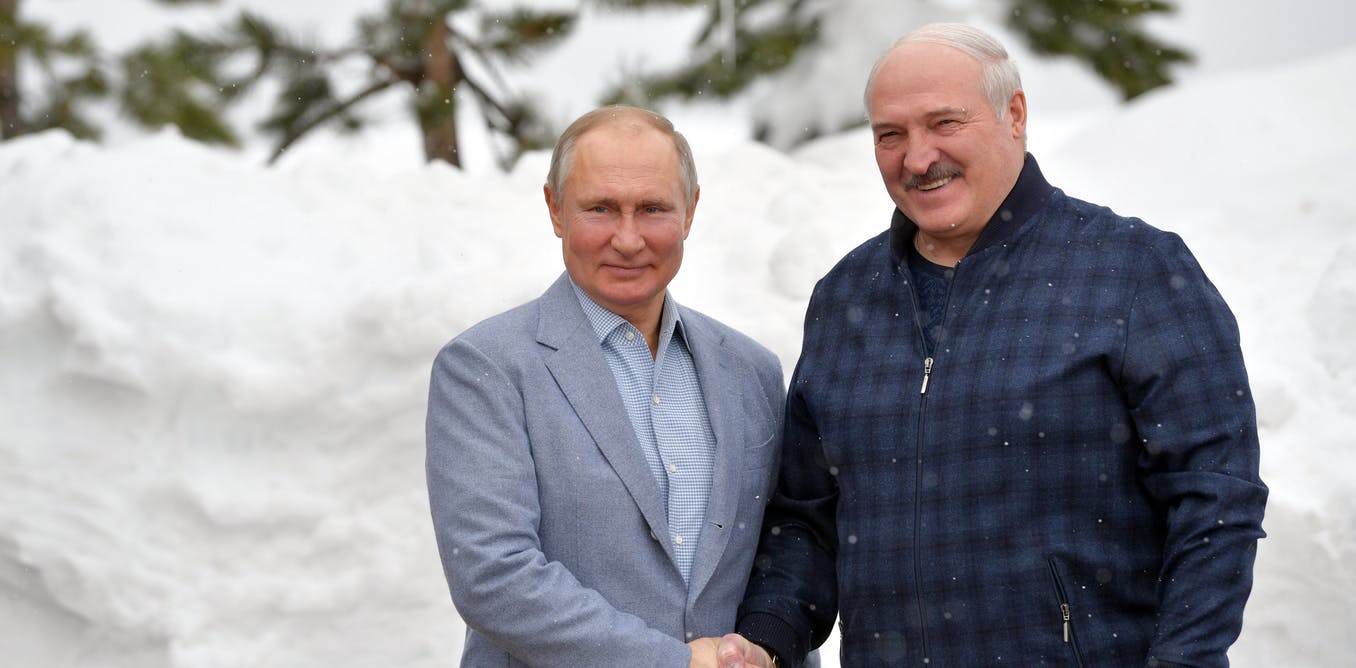

The taking of journalist Roman Protasevich from a commercial airline flight has further estranged Belarus from an outraged west and will force the country deeper under the influence of an increasingly powerful Russian Federation.
Protasevich and his girlfriend Sofia Sapega were detained at Minsk airport after a Ryanair flight from Athens to Vilnius, Lithuania was forced to make an emergency landing in the Belarusian capital on May 23.
The incident sparked widespread backlash from the west, leading the UK and the EU to ban Belarusian aircrafts from entering the their airspace and the latter announcing preparations for another round of sanctions. The incident was received very differently in Russia. Moscow expressed support for Lukashenko’s decision – albeit relatively mutedly – which raises questions about Russia’s potential involvement in the operation and how it stands to benefit from the fallout.
Protasevich has been a strong critic of Lukashenka’s regime. He is the former editor-in-chief of the Nexta news website, which used the popular Telegram messaging app to widely broadcast and publicise anti-government protests that erupted after the fraudulent presidential election in August 2020.
Protasevich has successfully established himself as an alternative source of information in an authoritarian state, which immediately makes him a prime target for the regime. Belarus put his name on a wanted list on charges of extremism and allegations of inciting mass riots.
Given the well-known role of social media platforms in facilitating mass protests, it is perhaps unsurprising that authoritarian regimes across much of Eurasia, including most recently in Russia, are doubling down on repression of individuals and targeting of outlets that enable coordination of mass activities. The ferocity with which the Belarusian authorities are suppressing dissidents abroad strongly suggests that Lukashenko is growing increasingly desperate to hold on to power and ever more isolated from the West.
Ultimately the situation plays into Russia’s hands because a weak Lukashenko gives Moscow additional leverage over Belarus. This potentially increases the long-term prospects of a formation of a so-called “union state” between the two countries.
But the relationship between Putin and Lukashenko has always been an uncomfortable alliance. Lukashenko has repeatedly stalled on integration, much to the Kremlin’s frustration. So the relatively muted nature of Moscow’s expression of support for Lukashenko ahead of the crucial summit between Putin and the US president, Joe Biden, on June 16, could also be indicative of Moscow’s weariness of Lukashenko’s belligerent actions.
Kremlin’s role
Lukewarm or not, the Kremlin supported the grounding of Ryanair flight 4978 and the detention of Protasevich and his Russian girlfriend. This has led to speculation that Russia was in some way involved in the operation. While Russia’s role in this particular incident remains relatively vague, the development is likely to make Minsk more dependent on Moscow in the short term.
The fact is that Moscow’s influence over Minsk has been on the rise since the start of the political crisis in Belarus in August 2020. After it was announced that Lukashenko had won the election with 80% of the vote, large sections of the population rejected the result and took to the streets. The Lukashenko regime reacted with savage oppression, leading western countries to introduce sanctions and call for companies to divest their holdings in Belarusian enterprises. This has led the country to become even more economically reliant on Russia, with Putin issuing Belarus a US$1.5 billion (£1.06 billion) loan in September 2020.
The Belarusian economy remains heavily reliant on importing subsidised Russian oil. And a new five-year strategic defence plan was agreed in March which will further integrate the two countries’ armed forces and is thought to involve constructing a Russian airbase on Belarusian territory.
Two become one?
Lukashenko stirred a brief flurry of speculation in April that Belarus would merge with Russia after Lukashenko said that he would be making “one of my principal decisions for a quarter of a century of presidency” as he departed for a visit to Moscow. In the end, no such grand announcements were made. But Putin and Lukashenko are reportedly due to meet again this summer and then again during an autumn session of the Supreme State Council of the Belarus-Russia Union State, a body set up to consider the union between the two states. In these meetings they are due to formalise and sign various “road-maps” aimed bringing Russia and Belarus closer together.
It remains hard to say whether a full merger between the two states will take place in the near future. But the most recent uptick in Minsk’s aggression against opposition will further estrange Belarus from the west and could make it easier for Moscow to extract favourable concessions in future negotiations.
Russia is also almost certainly watching very closely how far the EU will go with the anticipated new sanctions against Belarus. I would be surprised if Kremlin strategists aren’t interested to determine whether similar events can be orchestrated against its own critics without eliciting crippling consequences from the west.







