


 Trump Board of Peace Unveils $2.45 Billion Gaza Recovery Plan
  Taiwan Thanks US for Support Ahead of Trump-Xi Summit
  Ghana Says Western Support Growing for Slave Trade Reparations
  Scott Bessent Eyed as Trump’s New AI Czar
  Netanyahu Takes Aim at Mamdani as Israel Election Nears
  Gaza Faces Evacuation Crisis as War-Damaged Buildings Risk Collapse
  Venezuela Promises Elections as Delcy Rodriguez Pledges Democratic Transition
  Judge Orders Trump to Restore White House Access for CNN, MS NOW and Politico
  Marco Rubio to Meet Russia’s Lavrov in New York
  Sudan Rejects US Legitimacy Remarks, Defends Sovereignty
  Europe Warns Russia Is Escalating Hybrid Attacks Across NATO
  Trump Says ‘Freedom’ Is Coming to Cuba
  US Officials Split Over Response to Israeli West Bank Settlements
  Kremlin Says No Grounds Yet for Ukraine Peace Talks
  China Tightens Fentanyl Rules Ahead of Trump-Xi Summit
  Russian Missile and Drone Attack on Kyiv Kills Two, Damages Maternity Hospital
  Russian Envoy Dmitriev Heads to US for Ukraine Talks


 Add as a preferred source on Google
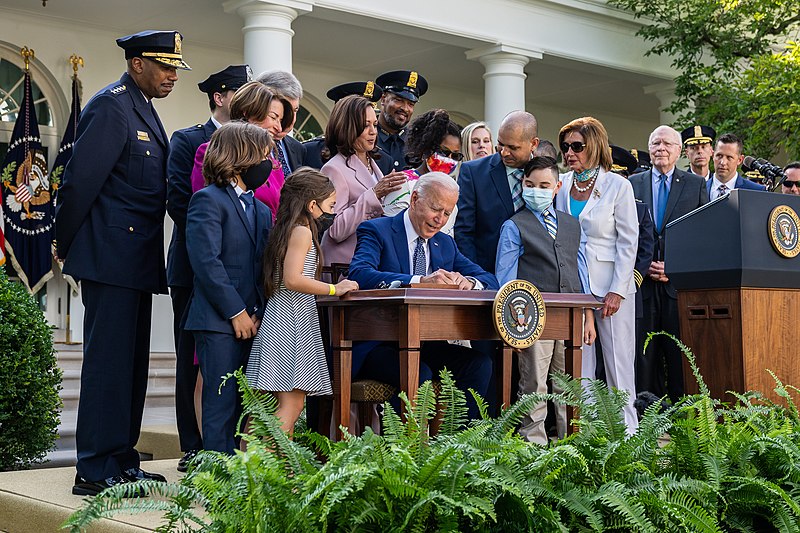
With an evenly divided Senate despite the Democratic party controlling the majority, the proposals that US President Joe Biden was keen on getting passed appeared to initially face an uphill battle. With a focus on pulling through with improving the country’s infrastructure, Biden praised the Senate’s bipartisan passage of the $1.2 trillion infrastructure bill.
Speaking from the White House, Biden praised the Senate for successfully passing the bipartisan infrastructure bill after weeks of discussions with key lawmakers. The bill received broad bipartisan backing, surpassing the filibuster threshold at 69 to 30, 19 Republican lawmakers joining their Democratic counterparts in support of the bill. Once the bill makes it through the House, Biden will have achieved another major legislative win within his first year as President.
“After years and years of ‘Infrastructure Week,’ we are on the cusp of an infrastructure decade that I truly believe will transform America,” said Biden. The US leader added that he never believed those who criticized him for his calls for bipartisanship in terms of implementing policies.
Biden also gave a shout-out to the Republican Senators who have voted in favor of the bill. “I know it wasn’t easy for the Republicans who supported this bill. You showed a lot of courage and I want to personally thank you for that, and I’ve called most of you on the phone to do just that. Today we proved that democracy can work.”
The Senate-approved bill will now proceed to the House for a vote. However, House Speaker Nancy Pelosi previously said that she will not bring the bipartisan proposal to a vote unless the $3.5 trillion Democratic-drafted proposal also makes it through the Senate. Nevertheless, Biden said he looked forward to getting House approval.
Meanwhile, the White House has announced that Biden will be hosting a virtual event called “Summit for Democracy” on December 9 and 10. Those invited to the conference would be made up of heads of state, civil society members, philanthropists, and some representatives of the private sector. The conference, according to the White House, will provide an opportunity for world leaders to listen to each other as well as their citizens while encouraging international collaboration and speaking about the challenges that their democracies are facing at this time.







