


 Super Micro Computer Stock Jumps 20% After Record AI Orders and Margin Surge
  OpenAI AI Agent Reportedly Breached Hugging Face, Raising AI Safety Concerns
  Bank of America Says These Overlooked AI Stocks Could Be the Next Winners
  Macquarie Names Greg Ward as CEO, Signaling Stability and Strategic Continuity
  Cathay Pacific Sees H1 Profit Surge on Strong Travel Demand
  Elon Musk Fuels SpaceX-Tesla Merger Speculation After Earnings Call
  Samsung Cuts U.S. Consumer Electronics Jobs as Headquarters Moves to Texas
  Nvidia Reveals 9.3% Stake in AI Cloud Firm Nebius Following $2 Billion Investment
  Alphabet Q2 Earnings Beat Estimates as AI Spending, Google Cloud Growth Fuel Outlook
  SpaceX Stock Slump Wipes Out Nearly $700 Billion From Elon Musk’s Paper Wealth
  Wistron Opens $700M Texas AI Factory to Build Nvidia Superchips in U.S.
  Judge Approves Anthropic’s $1.5 Billion AI Copyright Settlement With Authors
  Intel, AMD Seek Long-Term China Server CPU Deals as AI Demand Drives Supply Crunch
  Morgan Stanley Downgrades Adobe, Workday as AI Transition Raises Growth Concerns
  AMD Unveils Helios AI Servers to Challenge Nvidia as OpenAI Adopts New Platform


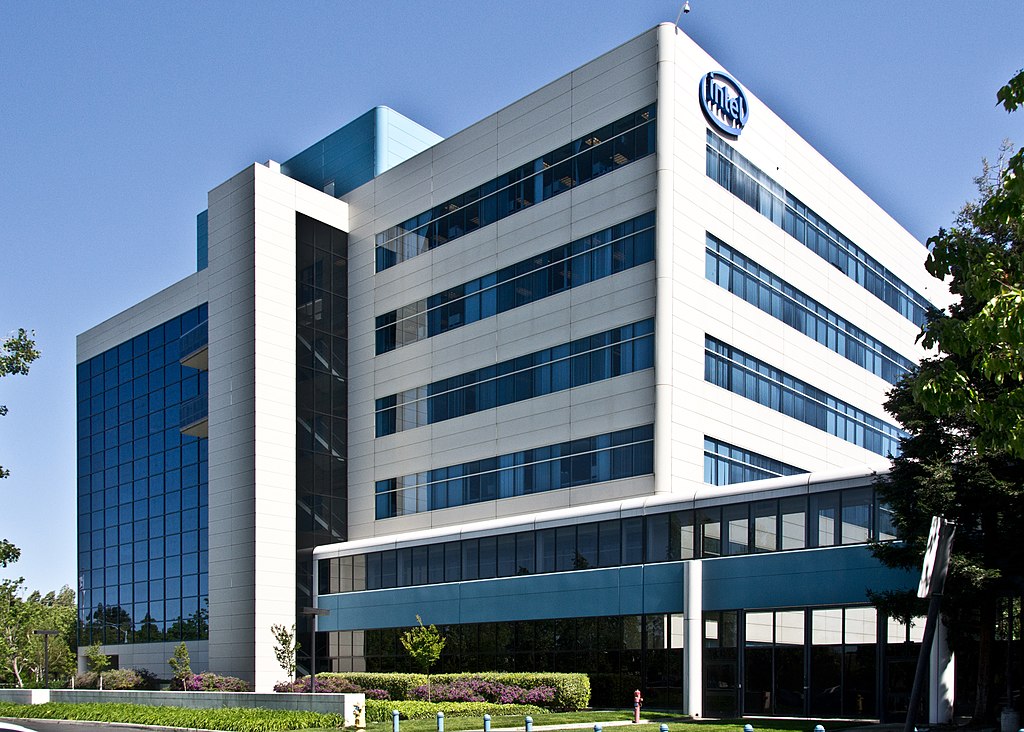
Intel (NASDAQ: INTC) shares fell Friday, giving up earlier gains as investors took profits following the chipmaker’s post-earnings rally, despite reporting its strongest quarterly revenue growth in more than 15 years and issuing an upbeat sales outlook fueled by artificial intelligence demand.
The stock dropped 3.5% by 11:05 a.m. ET after a report suggested Intel is seeking operating partners, rather than outright buyers, for its unfinished Ohio semiconductor fabrication plant. The report added fresh uncertainty to the company’s foundry strategy even as its core operations continue to improve.
Intel posted adjusted second-quarter earnings of $0.42 per share, comfortably beating Wall Street estimates of $0.21 per share. Revenue climbed 25% year over year to $16.13 billion, surpassing the consensus forecast of $14.33 billion.
Looking ahead, the company projected third-quarter revenue between $15.8 billion and $16.8 billion, above analysts’ expectations of $15.1 billion, while forecasting adjusted earnings of $0.38 per share.
The results indicate that CEO Lip-Bu Tan’s turnaround strategy is gaining traction as AI investment accelerates demand for Intel’s processors and chip manufacturing services. The company remains well-positioned in the AI infrastructure market through its CPU business and its domestic semiconductor fabrication network, an area the Trump administration has prioritized to strengthen U.S. chip production and reduce reliance on Asian manufacturers.
During the quarter, Intel expanded its AI portfolio by introducing new rack-scale AI systems, launching Xeon 6+processors built on its 18A manufacturing process, and broadening its physical AI software offerings. It also announced partnerships with Foxconn, Siemens, and Fortinet, while confirming high-volume production of select Panther Lake chips using ASML’s High-NA EUV technology. Intel also unveiled plans to invest €5 billion to increase Xeon manufacturing capacity.
Its data center and AI segment led growth, with revenue rising 59% to $6.3 billion. Client computing revenue increased 13% to $8.9 billion, while foundry revenue climbed 31% to $5.8 billion.
Intel also raised its expected 2026 capital expenditures to more than $20 billion, up from its previous $18 billionforecast, noting that investment will increase further next year as AI infrastructure spending continues across the technology sector.
Despite the strong performance, CFO David Zinsner told The Wall Street Journal that the rapid expansion of AI could eventually pressure demand for personal computer chips, even as the PC business posted 13% quarterly sales growth.







