


 Zelenskiy Warns Russia Preparing Major Attack on Ukraine
  US, Japan and South Korea Back Taiwan Ahead of Trump-Xi Summit
  Carney Condemns Belleville Synagogue Shooting That Wounded Police Officer
  Taiwan Vows to Advance US Arms Sales Ahead of Trump-Xi Meeting
  FCC Approves Foreign Investment in $110B Paramount-Warner Bros. Deal
  Australia Defends Social Media Algorithm Law Amid US Concerns
  Synthetic data could ease people’s concerns about privacy breaches. But who gets to create it?
  FDA Weighs Safety Standards for Psychedelic Therapies
  US Immigration Arrests Surge as Deportations Lag Behind
  Trump Board of Peace Unveils $2.45 Billion Gaza Recovery Plan
  Who should own the knowledge that underpins AI technology?
  Trump Administration Removes Confederate Memorial Criticism From Arlington Website
  Zelenskiy Meets CIA Chief John Ratcliffe at Ireland’s Shannon Airport
  Nvidia-Groq AI Chip Deal Faces U.S. Antitrust Probe
  Judge Blocks Trump Rule Limiting Foreign Student Visas
  DOJ Will Investigate AI-Related Crimes, Attorney General Blanche Says
  Iran Vows ‘Crushing’ Response as US Talks Continue


 Add as a preferred source on Google
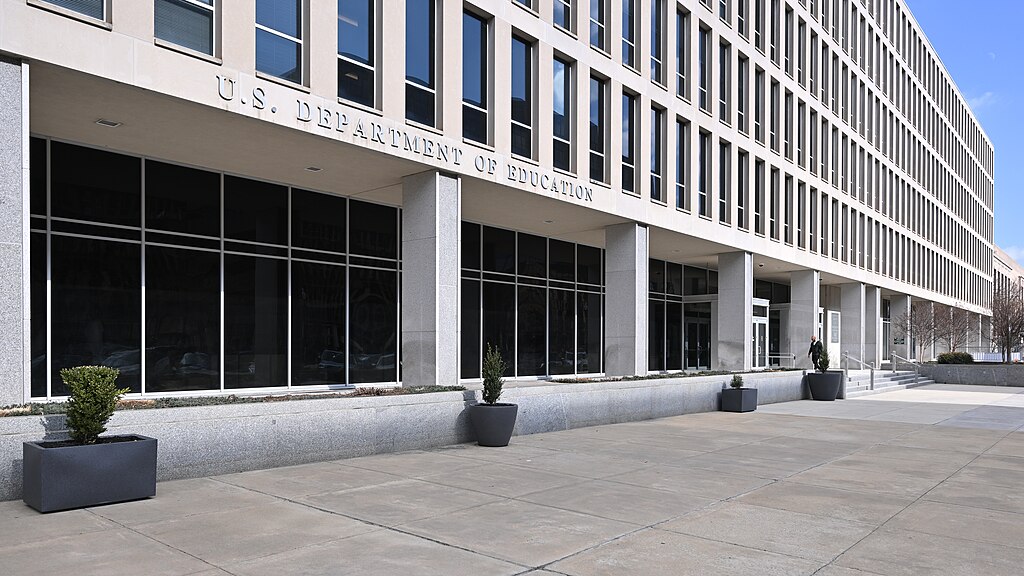
The U.S. Education Department announced Thursday that it is eliminating several long-standing disparate impactregulations, a move that has drawn strong criticism from civil rights organizations and marks another step in the Trump administration’s effort to roll back diversity-related policies.
Disparate impact rules have historically prohibited policies or practices that produce discriminatory effects, even when discrimination is not intentional. The regulations have been used for decades to challenge policies that disproportionately affect certain racial or ethnic groups.
The decision follows President Donald Trump’s April 2025 executive order directing federal agencies to stop enforcing disparate impact standards. The administration argues that such regulations encourage race-based decision-making and undermine merit-based policies.
According to the Education Department, the removed rules discouraged schools from taking appropriate disciplinary action against disruptive students from minority groups and pressured educational institutions to consider race when making policy decisions.
Assistant Secretary for Civil Rights Kimberly Richey said the changes would allow schools to maintain safe learning environments without concerns that federal anti-discrimination laws could be used against them. She argued that the administration’s approach prioritizes classroom safety over what she described as the left’s interpretation of "equity."
The policy shift immediately prompted backlash from a coalition of 60 civil rights and education organizations. In a joint statement, the groups said the eliminated regulations are essential for addressing systemic discrimination and ensuring equal educational opportunities for all students.
The organizations warned that seemingly neutral policies involving school discipline, closures, or resource allocation can disproportionately affect Black, Native American, Hispanic, Asian American, and Pacific Islander students. They argued that disparate impact protections help identify and remove barriers that unfairly disadvantage these communities.
The Education Department’s latest action reflects the broader Trump administration campaign to dismantle diversity, equity, and inclusion initiatives, which the president has argued are discriminatory and incompatible with merit-based standards. Civil rights advocates, however, contend that removing these safeguards weakens protections against systemic discrimination and could deepen educational inequalities across the United States.







