


 Abbas Reaffirms November 28 Palestinian Elections
  What ‘Taiwan Independence’ Means as Xi Presses Trump on US Policy
  NATO Boosts Intelligence Sharing Amid Russia Hybrid Threats
  North Korea Rejects Nuclear Test Warning, Calls Nuclear Status Irreversible
  Trump, Xi Visit US National Archives After White House Summit
  Trump, Xi Focus on Trade and AI at White House Summit
  France Defends Netanyahu Airspace Clearance Despite ICC Warrant
  Iran Rejects Nuclear Concessions in Hormuz Deal
  Trump Asks Supreme Court to Restore Third-Country Deportations
  Najib Razak Seeks Stay of 15-Year 1MDB Prison Sentence
  Colombia Extradites FARC Dissident Leader ‘Spider’ to US
  Xi Calls for Deeper U.S.-China AI Cooperation in Trump Talks
  EU Agrees €6.6 Billion Military Aid Funding for Ukraine
  Saudi Arabia, Turkey and Pakistan Plan Urgent Defence Talks Over Houthi Attacks
  Trump Warns China Against Supporting Iran in Xi Talks
  Ukrainian Drone Attacks Hit Russian Regions, Injuring at Least 12
  US Comfortable With Canada Trade Standoff as Import Bans Loom


 Add as a preferred source on Google
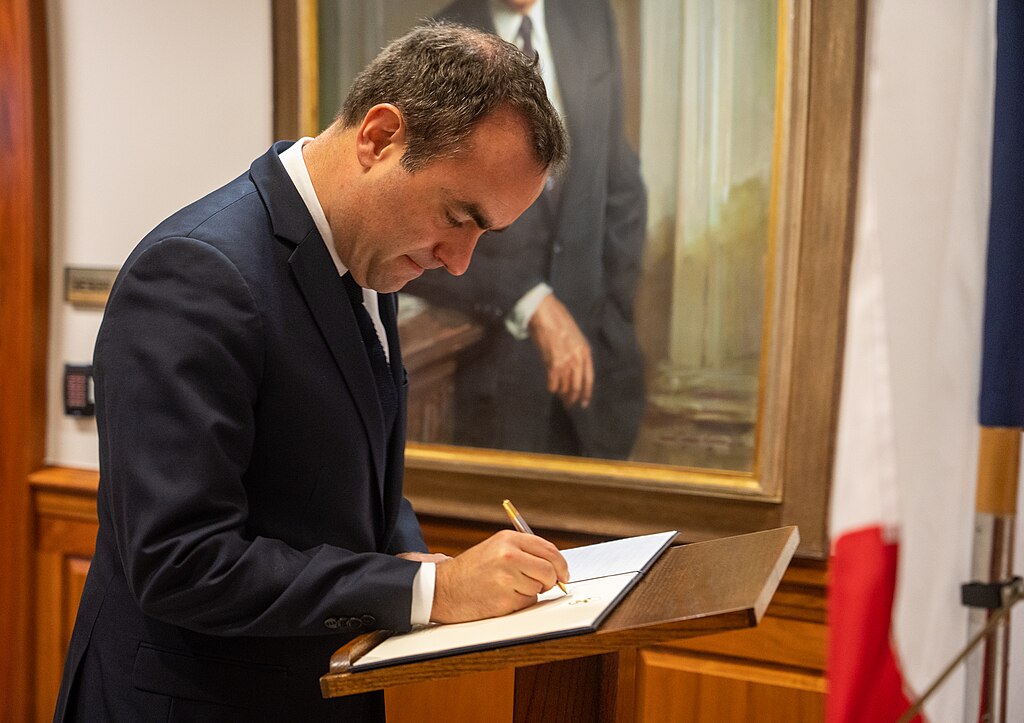
France is once again facing political instability following the sudden resignation of Prime Minister Sebastien Lecornu, only weeks after his appointment. Lecornu’s abrupt departure has plunged the French government into uncertainty and sparked concerns about the nation’s leadership direction amid growing economic and political challenges.
The resignation comes at a delicate moment for France, as President Emmanuel Macron’s administration continues to grapple with internal divisions, public dissatisfaction, and mounting pressure from opposition parties. Lecornu, who took office in an effort to restore confidence and bring stability to Macron’s government, leaves behind a political vacuum that will likely complicate ongoing efforts to manage France’s domestic and international affairs.
Market reactions were swift. The CAC 40 index, France’s leading stock market benchmark, extended its decline by more than 2% following the news. Investors appear unsettled by the fresh wave of uncertainty, reflecting broader concerns about the country’s economic direction and policy continuity.
Political analysts suggest that Lecornu’s resignation underscores deeper structural issues within the French government. His brief tenure reflects the challenges of maintaining unity within Macron’s administration, especially at a time when the government faces growing scrutiny over its handling of economic reforms and social unrest.
The search for a new prime minister is now underway, but the process is expected to be contentious. The next appointee will face the daunting task of stabilizing the government, regaining public trust, and steering France through an increasingly turbulent political landscape. As France struggles to find steady leadership, the coming weeks will be critical in shaping the nation’s political and economic future.







