


 US Supreme Court Revives Trump Administration Voter Citizenship Database
  Saudi Arabia, Turkey and Pakistan Plan Urgent Defence Talks Over Houthi Attacks
  Putin Says Ukraine Peace Proposals Remain on Table
  Pope Leo Backs Press Freedom After White House Media Ban
  Netanyahu’s Brief US Trip Highlights Strains With Trump
  Yemen Violence Displaces 130,000 as Civilian Toll Rises
  Trump Warns China Against Supporting Iran in Xi Talks
  Iran Rejects Nuclear Concessions in Hormuz Deal
  EU Defence Build-Up Too Slow for 2030 Russia Readiness Goal
  Trump Asks Supreme Court to Restore Third-Country Deportations
  US Backs Musk in Fight Against EU’s €120 Million X Fine
  Trump, Xi Visit US National Archives After White House Summit
  France Defends Netanyahu Airspace Clearance Despite ICC Warrant
  Pezeshkian Says US Must Choose When Iran War Ends
  Abbas Reaffirms November 28 Palestinian Elections
  Evan Gershkovich Says FSB Set Trap for 2023 Russia Arrest


 Add as a preferred source on Google
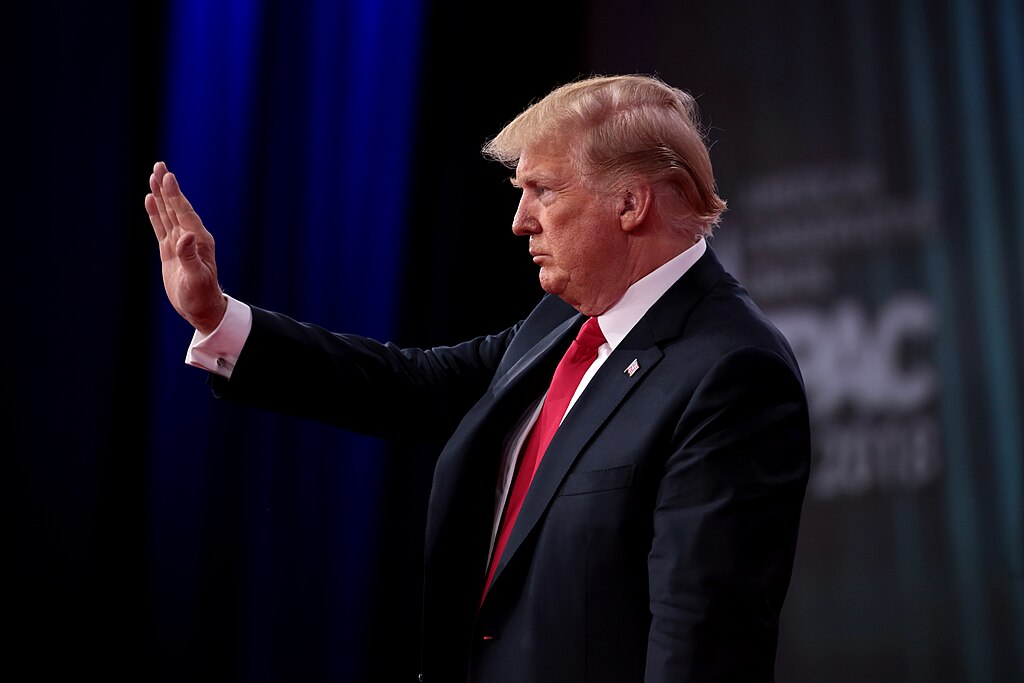
President-elect Donald Trump secured the presidency with 312 electoral votes, despite falling short of a popular vote majority, according to final election tallies. Trump garnered 77,297,721 votes, equating to 49.91% of the national vote. In contrast, non-Trump candidates collectively amassed 77,578,055 votes or 50.09%, raising questions about the dynamics of the U.S. electoral system.
Trump Wins Electoral College While Losing Popular Vote
Trump, representing the Republican Party, defeated Democratic candidate Kamala Harris, who secured 226 electoral votes with 75,009,338 votes, accounting for 48.4% of the popular vote. Third-party candidates, including Jill Stein of the Green Party, independent Robert Kennedy, and Libertarian Chase Oliver, collectively captured 1.9% of the vote but failed to win any electoral votes.
This marks another instance in U.S. history where a candidate achieved an electoral college victory without winning the popular vote. Analysts point to the structure of the electoral college system, which emphasizes state-level outcomes over national totals, as a key factor in this outcome.
Public Reaction to the Results
The final count has sparked widespread debate online. Twitter user @ElectionWatcher posted, "The electoral college undermines democracy. How can the majority vote against Trump, yet he still wins?" Meanwhile, @IndependentVoterUSA commented, "Third-party votes matter. Blaming non-Trump votes ignores the real issue—our outdated electoral system." User @DemocracyAdvocate added, "This is why we need to abolish the electoral college. Popular votes should determine our leaders."
Conversely, @AmericaFirst2024 defended the system, tweeting, "The electoral college ensures all states have a voice, not just large population centers." Another user, @FairVoteNow, wrote, "Blaming the electoral system is lazy. Campaign strategies focus on winning under existing rules." Lastly, @CivicEngagementNow observed, "This outcome highlights the need for voters to understand the electoral college's role in presidential elections."
A Broader Look at the Numbers
Beyond Trump and Harris, third-party candidates Jill Stein, Robert Kennedy, and Chase Oliver received 0.5%, 0.5%, and 0.4% of the vote, respectively. "Other candidates" collectively obtained 0.3%. While these votes represent a small fraction of the electorate, they illustrate a desire for alternatives beyond the two dominant parties.
Implications for the U.S. Electoral System
The divergence between the popular vote and the electoral outcome reignites debates about the efficacy and fairness of the electoral college. Advocates for reform argue that the system disproportionately favors smaller states and undermines the principle of one person, one vote. Critics of reform contend that it protects the federalist principles upon which the U.S. was founded.
As Trump prepares to take office, discussions about electoral reform are likely to persist. Meanwhile, the final results highlight the complexities of a system designed over two centuries ago.







