


 Germany’s 2026 Growth Outlook Strengthens on Fiscal Spending
  Canadian Dollar Faces Pressure as Fed-BoC Policy Gap Widens
  ECB May Stop Rate Hikes After December, Capital Economics Says
  European Stocks Fall as Bond Yields and Geopolitical Risks Weigh
  Europe’s AI Data Centre Boom Strengthens Case for Nuclear Power
  Wall Street Ends Flat as Oil, Treasury Yields and Fed Jitters Rattle Markets
  China Agrees to Buy 20 Million Tons of U.S. Coal
  U.S. Treasury Yields Surge as 30-Year Hits 22-Year High
  Asian Stocks Fall as Surging Bond Yields Rattle Markets
  Soybean Futures Slip as Traders Await Trump-Xi Trade Signals
  Gold Holds Near $4,275 as Rising Treasury Yields Fuel Fed Rate Hike Bets
  Oil Prices Jump 3% as Houthi Attack Revives Supply Fears
  China Consumer Stocks Near Decade Lows as AI Shares Surge
  Fed Unveils Stablecoin Rules Under GENIUS Act
  Trump to Ease U.S. Fuel-Economy Standards
  US Comfortable With Canada Trade Standoff as Import Bans Loom
  US Stocks Face Jobs, Inflation Test as Fed Rate Hike Bets Rise


 Add as a preferred source on Google
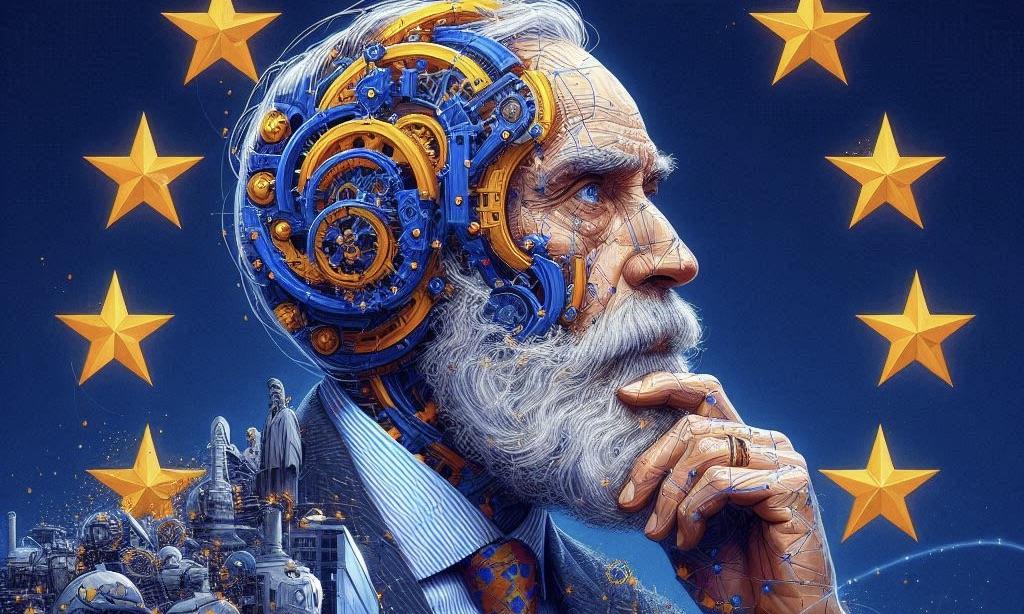
Nobel laureate Michael Spence warns that Europe is on the brink of economic stagnation due to a lack of innovation and lagging productivity. In an op-ed, Spence emphasizes the need for structural change and technological advancement to compete with the U.S. and China.
Nobel Laureate Warns Europe’s Economy Faces Stagnation Without Urgent Technological Innovation
According to Nobel laureate Michael Spence, Europe's economy is on the brink of stagnation due to a lack of innovation and lackluster productivity.
The economist stated in a Project Syndicate op-ed on August 21 that structural change, driven by technological innovation, is essential for long-term productivity development in advanced economies.
“This is where Europe’s principal problem lies: in a range of areas, from artificial intelligence to semiconductors to quantum computing, the U.S. and even China are leaving Europe in the dust,” he wrote.
For years, Europe has been experiencing a decline in its performance. The eurozone's GDP and the U.S. GDP were approximately equivalent in 2008. According to data from the World Bank, the U.S. economy is currently approximately 75% larger than that of the eurozone.
Indeed, the figures have been distorted by currency fluctuations. Over the past two decades, the E.U.'s productivity has fallen only 4% behind that of the U.S. when adjusted for purchasing power. German consumers are still optimistic despite Germany having the weakest major economy in Europe.
In the interim, investors have come to acknowledge the emergence of an era of "American exceptionalism"in the global economy and financial markets.
This starkly contrasts Europe's increasing recognition as a leisure destination. The influx of visitors has resulted in a backlash among locals tired of the clogged streets, inflated prices, and occupied homes.
Europe's Innovation Deficit Threatens Economic Future, Says Nobel Laureate, Urging Bold New Vision
According to Spence (via Fortune), a senior fellow at the Hoover Institution, Europe's innovation deficit is caused by underinvestment in an already decentralized R&D landscape, incomplete integration of the single market, lack of crucial infrastructure like computing power, and limited availability of V.C. and private equity funds.
He observed that Europe has significant advantages, including a social safety net that provides the economic security necessary for entrepreneurial risk-taking and the talent that emanates from its universities, which can surmount these obstacles.
He cautioned that traditional industrial sectors that are less innovative will continue to dominate. At the same time, the best and the brightest will migrate to other countries in the absence of a new economic vision.
“Europe must decide: it can remain on its current course, which is sure to lead to relative stagnation, or it can chart an entirely new path,” Spence wrote. “The latter approach is riskier, but it also holds far more upside potential.”
However, he stated that policymakers and voters need to prioritize this option. He encouraged leaders to comprehensively explain the implications of the status quo or a new economic vision.
He emphasized that Europe has already succeeded in pursuing new sustainable development models and can do so.
“But first, Europeans must answer a simple but critical question: What should the E.U. look like—in terms of innovation, the economy, security, and resilience—in a decade?”







