


 OpenAI Urges US-Led Global Standards for Frontier AI
  Westinghouse Targets $50 Billion Valuation in U.S. IPO
  Apple Pay Set for India Launch With Axis Bank
  Meta Partners With Shopify to Bring Shop Pay Checkout to Muse AI
  US Federal Register Drops Alibaba Qwen AI Search Tool
  Yen in Focus as BOJ, Fed Rate Hikes Reshape Currency Markets
  White House Bars CNN, MS NOW and Politico Reporters
  US-China Talks Target AI, Tariffs Ahead of Trump-Xi Summit
  SpaceX Nasdaq 100 Weight to More Than Double in Rebalance
  Cathie Wood Backs AI Slowdown as Safety Concerns Grow
  Vietnam Stocks Join FTSE Emerging Market Indexes, Unlocking Billions in Foreign Investment
  Petrobras Joins Brazil’s New Diesel Subsidy Program
  Guterres Urges Stronger Global AI Safeguards Ahead of UN Assembly
  Meta CEO Zuckerberg Backs Independent AI Safety Reviews Over Development Slowdown
  Asia Stocks Rise on AI Demand as Oil Eases
  Nvidia CEO Jensen Huang Expected at Trump-Xi State Dinner


 Add as a preferred source on Google
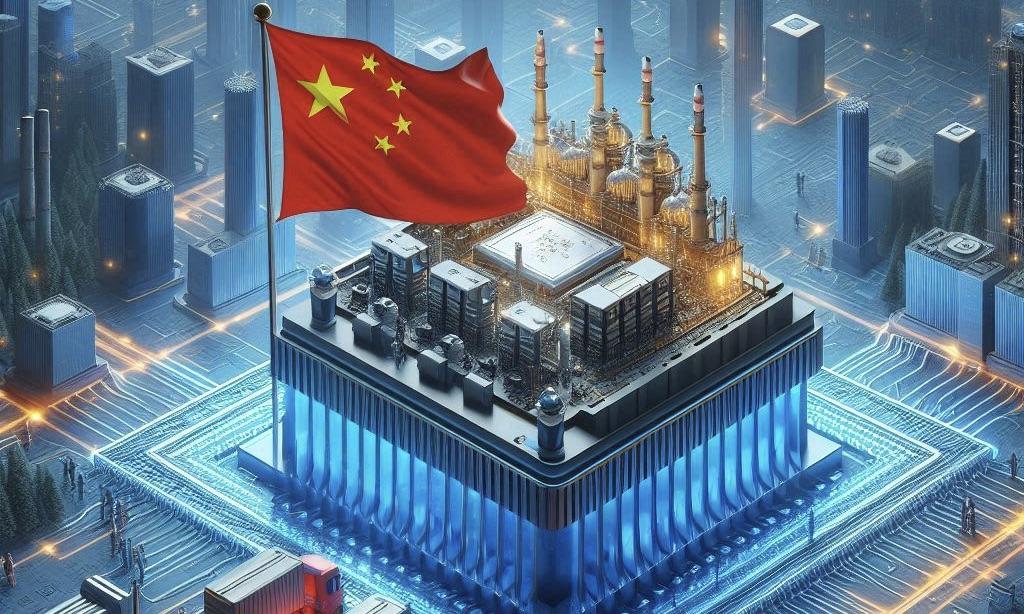
China's semiconductor equipment imports reached a record $26 billion by July 2024, driven by purchases of older-generation machinery. Companies like ASML, Tokyo Electron, and Applied Materials played key roles, despite ongoing U.S. sanctions aimed at curbing China's technological advancements.
China’s Semiconductor Equipment Imports Surge Amid U.S. Sanctions, Reaching a Record $26 Billion
According to government data compiled by Bloomberg, China continues to import semiconductor equipment at a record-setting pace, with most orders coming from older-generation machinery. Because of its critical role in facilitating advanced industries, including artificial intelligence and supercomputing, semiconductor equipment has become one of the world's most closely scrutinized industrial machinery.
The United States has imposed sanctions against China because it fears the potential misuse of technologies of American origin to undermine American national security. As a result of these constraints, China has been obliged to acquire obsolete equipment to match its domestic demand for semiconductor products.
A month following ASML's earnings report for the second quarter, which revealed that China was its largest customer for the second consecutive quarter, the August 25 report will be released. China accounted for 49% of ASML's shipments in Q1 and Q2 2024, a significant divergence from the shipments in 2022 and 2023. Even though 46% and 39% of the shipments were to the same country in Q3 and Q4 2023, the Dutch semiconductor manufacturing equipment maker's sales to China were 14% and 29% in 2022 and 2023, respectively.
According to Bloomberg's data, China acquired approximately $26 billion in semiconductor manufacturing equipment in July, a new record. The previous record was set in 2021 when the Asian nation acquired roughly $25 billion in equipment during the same period. ASML, Tokyo Electron, and Applied Materials, a US equipment manufacturer, are among the companies that sold apparatus to China. The private sector and the government have also experienced friction due to the accelerated US semiconductor sanctions on China under the Biden Administration.
Stringent U.S. Regulations Disrupt China's Access to Advanced Chipmaking Technology
The government has implemented some of the most stringent regulations, which have prohibited US citizens or permanent residents from working in companies that operate in China and ASML. Applied Materials is reportedly the subject of numerous criminal investigations for circumventing the Chinese sales restrictions.
In addition, due to the increase in sales, the Netherlands is the largest exporter of wafer production equipment to China, classified under the HS-8486 heading. Due to US restrictions, ASML cannot ship its most recent extreme ultraviolet (EUV) machines, which are indispensable for the production of the most sophisticated chips, including those utilized in artificial intelligence computers. EUV machines are appropriate for these applications because ultraviolet light has a shorter wavelength than conventional machines.
Nevertheless, it is feasible to fabricate sophisticated chips with older machinery, provided that manufacturers can employ multiple design elements through masks during manufacturing. This results in an increase in production time and operation intricacy. An alternative approach to mitigate these drawbacks is to operate multiple machines concurrently.
The older DUV machines have also been affected by US sanctions against China; however, these are restricted to many factories. China has endeavored to maintain its parity with global semiconductor manufacturing standards in the face of the tightening noose; however, its advancement has been impeded. Reports have indicated that only one in five chips satisfy the necessary quality criteria, despite the media hype surrounding Huawei's Ascend 910B AI chip, which is purportedly in competition with NVIDIA's A100.







