


 Soybean Futures Slip as Traders Await Trump-Xi Trade Signals
  Trump Asks Supreme Court to Restore Third-Country Deportations
  What ‘Taiwan Independence’ Means as Xi Presses Trump on US Policy
  U.S. Treasury Yields Surge as 30-Year Hits 22-Year High
  Japan Private-Sector Growth Slows as Domestic Demand Weakens
  Xi Calls for Deeper U.S.-China AI Cooperation in Trump Talks
  Dollar Holds Near Two-Month High as Yen Approaches 160
  Abbas Reaffirms November 28 Palestinian Elections
  EU Defence Build-Up Too Slow for 2030 Russia Readiness Goal
  North Korea Warns South Korea Over US-Led Defense Role
  Netanyahu’s Brief US Trip Highlights Strains With Trump
  US Backs Musk in Fight Against EU’s €120 Million X Fine
  Oil Prices Surge as U.S.-Iran Diplomacy Hopes Fade
  Taiwan Thanks US for Support Ahead of Trump-Xi Summit
  US, China Extend Trade Truce to Jan. 10 Ahead of Trump-Xi Summit
  Russian Missile and Drone Attack on Kyiv Kills Two, Damages Maternity Hospital


 Add as a preferred source on Google
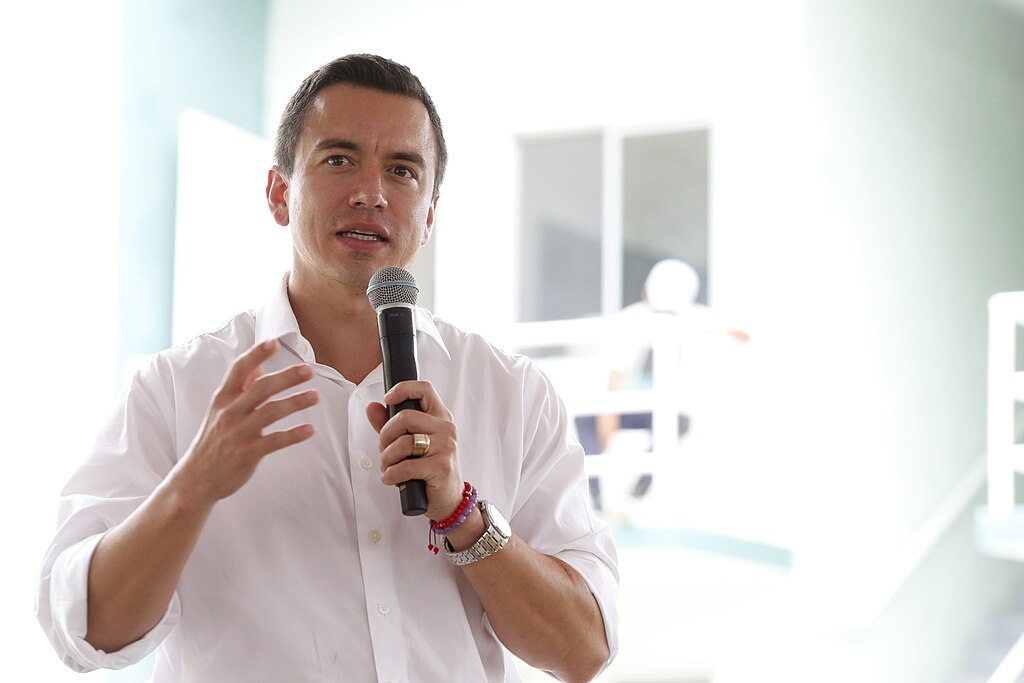
Ecuador President Daniel Noboa has announced a 30% punitive import duty on goods from Colombia, a move set to take effect on February 1, as part of efforts to pressure the neighboring country into strengthening border security and cooperation. The decision comes amid growing concerns over drug trafficking, illegal mining, and rising violence along the Ecuador-Colombia border.
In a statement shared on X, President Noboa said Ecuador has made “real efforts at cooperation with Colombia” while enduring an annual trade deficit of more than $1 billion. He criticized what he described as insufficient commitment from Colombia, noting that Ecuador’s armed forces are increasingly engaged in combating criminal groups linked to drug trafficking along the border. According to Noboa, the new import tariff will remain in place until Colombia demonstrates a “real commitment” to jointly confronting drug trafficking networks and illegal mining operations.
The two countries share a 600-kilometer border that has long been a major transit route for Colombian cocaine. In recent years, cocaine production in Colombia has surged, while Ecuador has emerged as a key global hub for drug smuggling. This shift has fueled a sharp rise in violent crime in Ecuador, including murders, kidnappings, and extortion, placing border security at the center of national policy debates.
Trade ties between Ecuador and Colombia are significant. Data from Colombia’s national statistics agency shows that Colombian exports to Ecuador reached $1.7 billion through November. Ecuador imports a range of goods from Colombia, including critical electricity supplies, raising concerns about the economic impact of the new tariff on both countries.
Following Noboa’s announcement, Colombia’s defense ministry highlighted ongoing bilateral security cooperation, reporting that joint military operations resulted in the seizure of 2.2 tons of marijuana in a recent border operation. The ministry emphasized continued information sharing and coordinated action to combat transnational drug trafficking and insecurity.
The introduction of the 30% tariff underscores rising diplomatic and economic tensions between Ecuador and Colombia, while also signaling Noboa’s hardline stance on security, trade balance issues, and cross-border crime.







