


 Sudan Rejects US Legitimacy Remarks, Defends Sovereignty
  Trump Administration Plans Faster FDA Reviews for Smoke-Free Nicotine Products
  Marco Rubio to Meet Russia’s Lavrov in New York
  Lula and Flavio Bolsonaro Tied in Brazil Runoff Poll
  Venezuela Promises Elections as Delcy Rodriguez Pledges Democratic Transition
  Europe Warns Russia Is Escalating Hybrid Attacks Across NATO
  Scott Bessent Eyed as Trump’s New AI Czar
  Canada Unveils Bill to Fast-Track Major Resource Projects
  Trump to Press Xi on Release of US Nuclear Expert Held in China
  Russian Strikes Kill Eight Across Ukraine as Energy Sites Hit
  Burnham Eyes UK Leadership Role in AI Ahead of Trump Meeting
  Taiwan Vows to Advance US Arms Sales Ahead of Trump-Xi Meeting
  US Invites Putin to Miami G20, Opening Door to Trump Summit
  Vietnam, US Trade Deal Could Be Signed Soon, To Lam Says
  Trump Says U.S.-Iran Peace Deal Near After UN Talks
  US Officials Split Over Response to Israeli West Bank Settlements
  US, China Extend Trade Truce to Jan. 10 Ahead of Trump-Xi Summit


 Add as a preferred source on Google
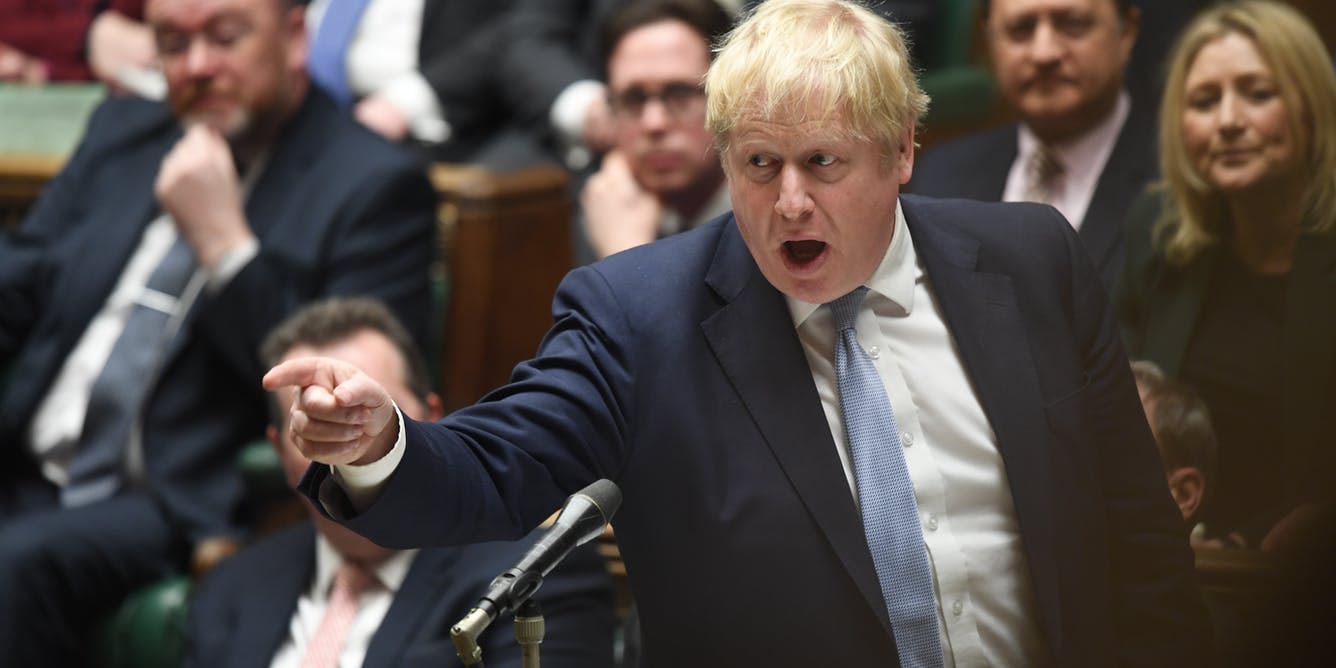

“I get it and I will fix it,” declared Boris Johnson in parliament as he delivered his response to the initial findings from an inquiry into partying at Downing Street during pandemic lockdowns. After weeks of frenzied criticism and emotional responses from the public about their own suffering during the period in question, Johnson was promising change.
Clearly Sue Gray’s findings confirm what many had been anticipating: behaviour that is “difficult to justify”, and “a serious failure” to observe the standards expected of government officials. Judgement on whether the gatherings were illegal awaits, with police investigations ongoing.
Johnson, however, had seized on the more administrative elements of the findings, such as the assertion that, “The structures that support the smooth operation of Downing Street … have not evolved sufficiently.” This could be viewed as an attempt to get off the hook. Embrace selected aspects of the report – especially the least dramatic findings – and promise cultural reform, thereby avoiding having to accept any personal culpability. The problem can be resolved with better lines of reporting.
But culture cannot be separated from questions of leadership and ethics. Culture is what encourages people to behave a certain way in the workplace and what prevents them from doing it. A change of leadership is the first and only substantial thing that really matters here.
Gray may be trying to tell us that Johnson’s personal leadership failings have caused this situation – and that this is what needs to change in Downing Street. Certainly the extensive literature on organisation culture clearly puts the leader front and centre. There are “organisational” issues but these are rarely set apart from the ethical failings of leaders.
Drinking culture
Gray concluded that there was a drinking culture and said, “The excessive consumption of alcohol is not appropriate in a professional workplace at any time.” She added that, “Every government department should have a clear and robust policy in place covering the consumption of alcohol.”
This concern about a drinking culture in British politics has a lengthy history. But again, these excesses come down to leadership. Gray’s warnings about alcohol are an eye-catching part of the report but they have the potential to be used as another red herring. Johnson can ban alcohol at the office and claim to have addressed the problem but the underlying issue was not drinking, it was rule-breaking.
Johnson is a leader with the charisma and credo to never apologise, never explain. He has well-documented history of at least cicrumventing rules without facing consequences. Even now, questions remain about how refurbishments to his flat were paid for.
The most unacceptable outcome for many in this case would be if this episode becomes another example of a leader feeling unchallengeable and emboldened as a rule-breaker. Leaders are moral role models, and the evidence tells us that if leaders are less than respectful of the rules, the culture will flow from them.
The fact that some staff felt unable to speak up about the events is a very strong signal of leadership failings. As Gray highlights: “Some staff wanted to raise concerns about behaviours they witnessed at work but at times felt unable to do so.”
Missing the point
Instead of feeling that the behavior documented by Gray might require his resignation, Johnson is instead proposing changes to how Downing Street and the Cabinet Office are run. He says he will create a new office of the prime minister. There will be a review the civil service code of conduct. Number 10 will be “slimmed down and streamlined”.
But in announcing these changes, Johnson also revealed: “We will make sure that there is a new permanent secretary, who will be accountable to me.” If he is the problem and doesn’t acknowledge his failings as leader, his personal control and oversight over this new role is a real problem. It suggests that there is no substance to the drive for cultural change.
Organisation restructuring is legitimate and Gray’s call for new structures should be welcomed. But we must see Johnson’s enthusiasm for reform for what it really is – an attempt to shift the focus away from him as a leader and debate around the need for change at the very top.







