


 Trump Administration Releases New UFO Files and Apollo Mission Records
  NASA's Artemis II Mission: First Crewed Lunar Journey Since Apollo
  NASA Artemis II: First Crewed Moon Mission Since Apollo Takes Four Astronauts on 10-Day Lunar Journey
  Blue Origin New Glenn Rocket Explodes During Launch Pad Test, Delaying Space Ambitions
  FDA Adds Fatal Risk Warning to J&J and Legend Biotech’s Carvykti Cancer Therapy
  Neuralink Expands Brain Implant Trials with 12 Global Patients
  Eli Lilly’s Inluriyo Gains FDA Approval for Advanced Breast Cancer Treatment
  Trump Administration to Launch Autism Initiatives Targeting Acetaminophen Use and New Treatment Options
  SpaceX Prioritizes Moon Mission Before Mars as Starship Development Accelerates
  Trump Signs Executive Order to Boost AI Research in Childhood Cancer
  SpaceX Pivots Toward Moon City as Musk Reframes Long-Term Space Vision
  Blue Origin’s New Glenn Achieves Breakthrough Success With First NASA Mission
  Trump and Merck KGaA Partner to Slash IVF Drug Costs and Expand Fertility Coverage


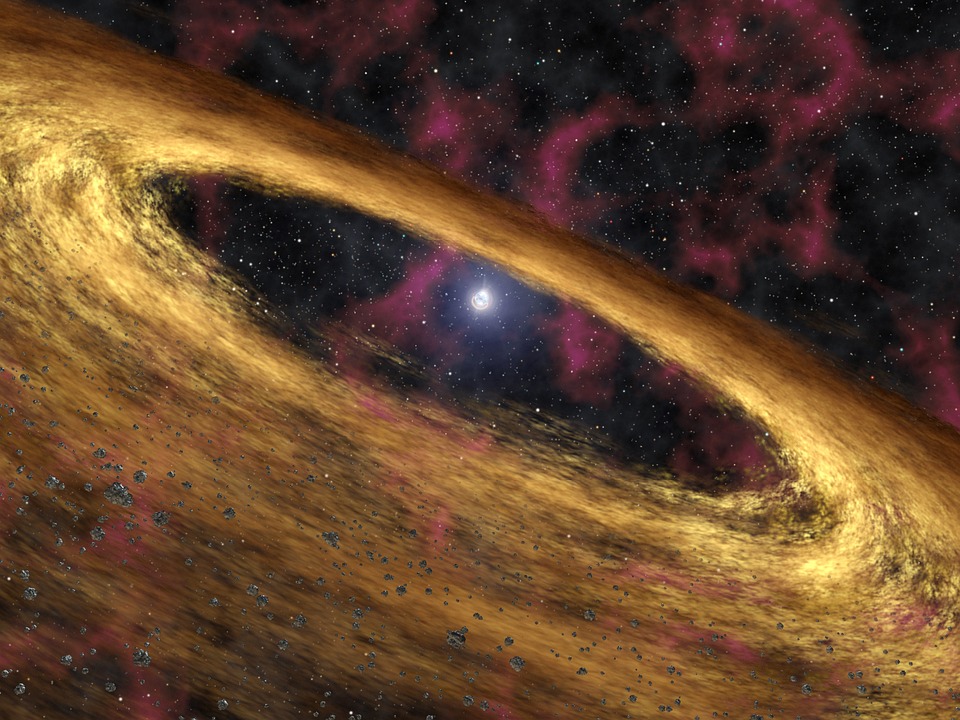
When scientists find black holes, these enigmatic space objects are usually found hundreds, if not thousands, of light-years away from Earth. However, astronomers have recently announced that there is a black hole close by to the planet.
Express reports that scientists were able to discover a black hole within the star system HR 6819. The black hole, also known as LB-1, is now the closest black hole to Earth, at a distance of 1,011 light-years away, overtaking the previous black hole by 2,500 light-years. According to astronomers at the European Southern Observatory, this black hole that was found is relatively small, with the size of being four times as big as the Sun.
Petr Hadrava of the Academy of Sciences of the Czech Republic and co-author of the study that was published in the Astronomy & Astrophysics journal said, “We were totally surprised when we realized that this is the first stellar system with a black hole that can be seen with the unaided eye.”
According to ESO Scientist Thomas Rivinius, who led the study, “This system contains the nearest black hole to Earth that we know of.”
The researchers were initially studying a binary star system found within the cluster when they came across a third, invisible entity that also appeared to be interacting with the stars. After analyzing its interaction with the nearby stars, they were able to predict the entity’s mass. This led Dr. Rivinius to conclude that the invisible entity would be a black hole.
“An invisible object with a mass at least four times that of the Sun can only be a black hole,” said the astronomer.
Black holes have always been a mystery to scientists, especially as these entities can have an immensely powerful gravitational pull that not even light can escape it. How black holes could also grow to supermassive sizes is also a mystery, and scientists have to figure out ways of understanding why these space objects grow to be so big.
Scientists have since brought up theories as to how black holes as big as the ones seen today by astronomers came to be. One new theory was that a large amount of gas and dust clumped up together in one part of the universe and, due to their own gravitational pull, collapsed in on themselves.







