


 Eli Lilly’s Inluriyo Gains FDA Approval for Advanced Breast Cancer Treatment
  Neuralink Expands Brain Implant Trials with 12 Global Patients
  NASA and SpaceX Target Crew-11 Undocking From ISS Amid Medical Concern
  SpaceX Prioritizes Moon Mission Before Mars as Starship Development Accelerates
  Blue Origin New Glenn Explosion Could Delay Launch Operations Until 2028
  SpaceX Pivots Toward Moon City as Musk Reframes Long-Term Space Vision
  NASA Artemis II: First Crewed Moon Mission Since Apollo Takes Four Astronauts on 10-Day Lunar Journey
  Trump Signs Executive Order to Boost AI Research in Childhood Cancer
  Cogent Biosciences Soars 120% on Breakthrough Phase 3 Results for Bezuclastinib in GIST Treatment
  Trump and Merck KGaA Partner to Slash IVF Drug Costs and Expand Fertility Coverage
  FDA Pilot Program Eases Rules for Nicotine Pouch Makers
  Blue Origin’s New Glenn Achieves Breakthrough Success With First NASA Mission
  SpaceX Delays Starship V3 Launch Ahead of Potential Record IPO


 Add as a preferred source on Google
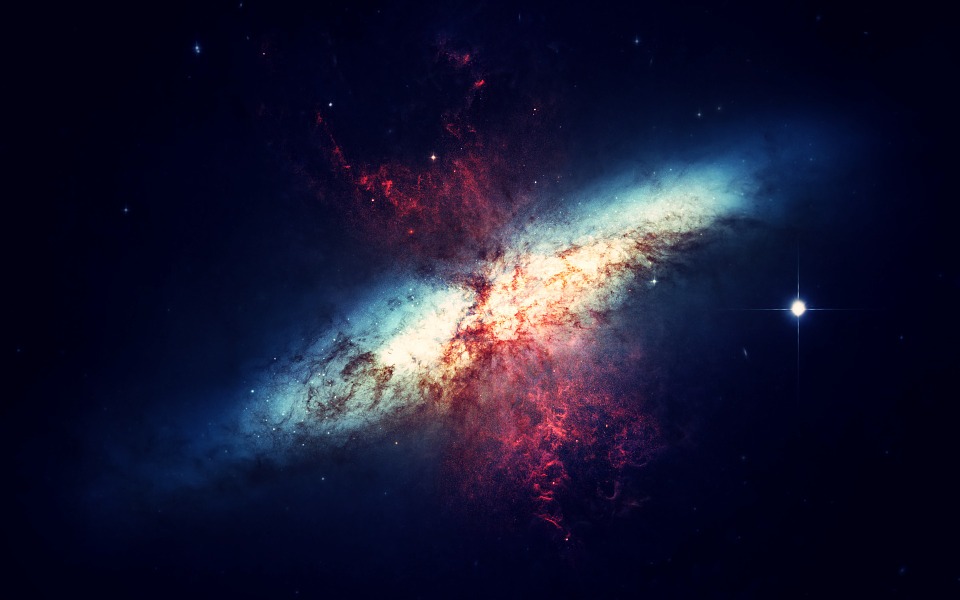
It is common knowledge that the gravitational pull of black holes is incredibly strong, so strong that not even light could escape. But a new discovery reveals how the magnetic fields play a part in what makes black holes so bright.
When people think of black holes, people assume that it is located in a very dark part of the galaxy, or having no light at all that makes them go unnoticed. On the contrary, black holes also emit very powerful and vivid lights that make them shine in the middle of the galaxy. However, Express reports that scientists from Columbia University in New York were able to simulate to determine how powerful the lights that come out from the black hole are. Their findings revealed that the magnetic turbulence that surrounds the black hole goes into a frenzy as a result of electrons getting sucked inside.
Therefore, the frenzy created by the gravitational pull of the electrons produces a large magnetic field that results in the creation of very energetic waves of radiation. Everything is then joined together in a heated frenzy that channels materials into jets and produces light millions of light-years into space.
According to the study’s first author, Luca Comisso, explained, “The region that hosts black holes and neutron stars is permeated by an extremely hot gas of charged particles, and the magnetic field lines dragged by the chaotic motions of the gas, drive vigorous magnetic reconnection.”
Assistant professor of Astronomy at Columbia University and the study’s principal investigator Lorenzo Sironi also revealed that they made use of a very precise technique which is a particle in cell method in order to calculate the trajectories of hundreds of billions of charged particles that self-dictate the electromagnetic fields within. This would explain how the particles within would move. Thus, the radiation that comes from the black holes and neutron stars is what makes them emit very powerful lights.
Regarding their findings, Comisso expressed that this discovery is usually the result of a large collaborative effort that would take more than a few scientists to work on, especially in this aspect of science.







