


 Netanyahu Defends Israel at UN as Delegates Stage Walkout
  White House Bars CNN, MS NOW and Politico Reporters
  Trump Administration Plans Faster FDA Reviews for Smoke-Free Nicotine Products
  Trump, Xi Visit US National Archives After White House Summit
  Netanyahu Takes Aim at Mamdani as Israel Election Nears
  Trump Bans CNN, MS NOW and Politico From White House
  Trump Administration Removes Confederate Memorial Criticism From Arlington Website
  Judge Orders Trump to Restore White House Access for CNN, MS NOW and Politico
  FAA Allows Boeing to Sell 35 More 777F Freighters Beyond 2028
  Russian Missile and Drone Attack on Kyiv Kills Two, Damages Maternity Hospital
  Taiwan Thanks US for Support Ahead of Trump-Xi Summit
  NATO Boosts Intelligence Sharing Amid Russia Hybrid Threats
  Sudan Rejects US Legitimacy Remarks, Defends Sovereignty
  US Northeast Airports Resume Operations After Telecom Outage Disrupts Thousands of Flights
  Saudi Arabia Shuts East-West Oil Pipeline After Drone Attack
  What ‘Taiwan Independence’ Means as Xi Presses Trump on US Policy
  US Backs Musk in Fight Against EU’s €120 Million X Fine


 Add as a preferred source on Google
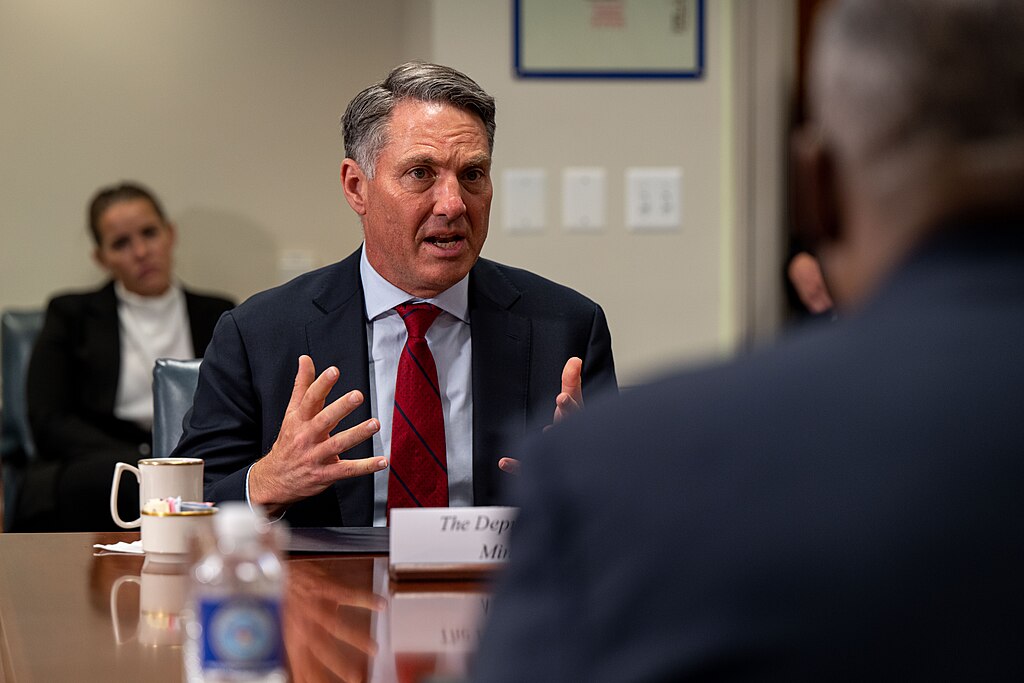
Australia is intensifying efforts to advance the AUKUS nuclear submarine program, with Defence Minister Richard Marles stressing that the nation is being “very self-critical” as it works to overcome key challenges, particularly in developing a skilled workforce. His comments come ahead of a crucial meeting between defence ministers from Australia, the United States, and the United Kingdom in Washington, where accelerating the program’s progress will be a central focus.
A recent Pentagon review of AUKUS—though not yet publicly released—identified improvements to ensure the partnership remains on the “strongest possible footing,” according to a U.S. official. Since its announcement in 2021, AUKUS has become Australia’s most significant defence investment. The agreement includes hosting U.S.-commanded Virginia-class submarines from 2027, purchasing several Virginia submarines from around 2030, and collaborating with the U.K. to design and build a new generation of AUKUS nuclear-powered submarines.
Marles acknowledged concerns highlighted in the review, including whether Australia is progressing quickly enough to build the necessary submarine infrastructure and whether the U.S. can produce enough Virginia-class submarines to meet both domestic and AUKUS commitments. Despite these doubts, he expressed confidence that Australia will be ready to host four U.S. submarines at its Perth naval base by the end of 2027, noting that achieving this goal requires an “enormous uplift” in capability.
One of the most pressing challenges, he said, is expanding and training Australia’s workforce to support submarine construction and long-term maintenance. Marles emphasized the need for detailed planning, continuous assessment, and transparent evaluation of progress. He also pointed to wider issues affecting the AUKUS program, such as strengthening supply chains and increasing U.S. submarine production rates.
As the trilateral defence meeting approaches, Marles reiterated Australia’s commitment to moving the AUKUS program forward with urgency while ensuring long-term sustainability and strategic readiness.







