


 Trump Administration Releases New UFO Files and Apollo Mission Records
  NASA's Artemis II Crew Arrives in Florida for Historic Moon Mission
  SpaceX Pivots Toward Moon City as Musk Reframes Long-Term Space Vision
  Trump Signs Executive Order to Boost AI Research in Childhood Cancer
  Neuralink Plans High-Volume Brain Implant Production and Fully Automated Surgery by 2026
  Blue Origin New Glenn Explosion Could Delay Launch Operations Until 2028
  SpaceX’s Starship Completes 11th Test Flight, Paving Way for Moon and Mars Missions
  Blue Origin’s New Glenn Achieves Breakthrough Success With First NASA Mission
  Tabletop particle accelerator could transform medicine and materials science
  NASA Artemis II: First Crewed Moon Mission Since Apollo Takes Four Astronauts on 10-Day Lunar Journey
  Trump Administration to Launch Autism Initiatives Targeting Acetaminophen Use and New Treatment Options
  SpaceX Delays Starship V3 Launch Ahead of Potential Record IPO


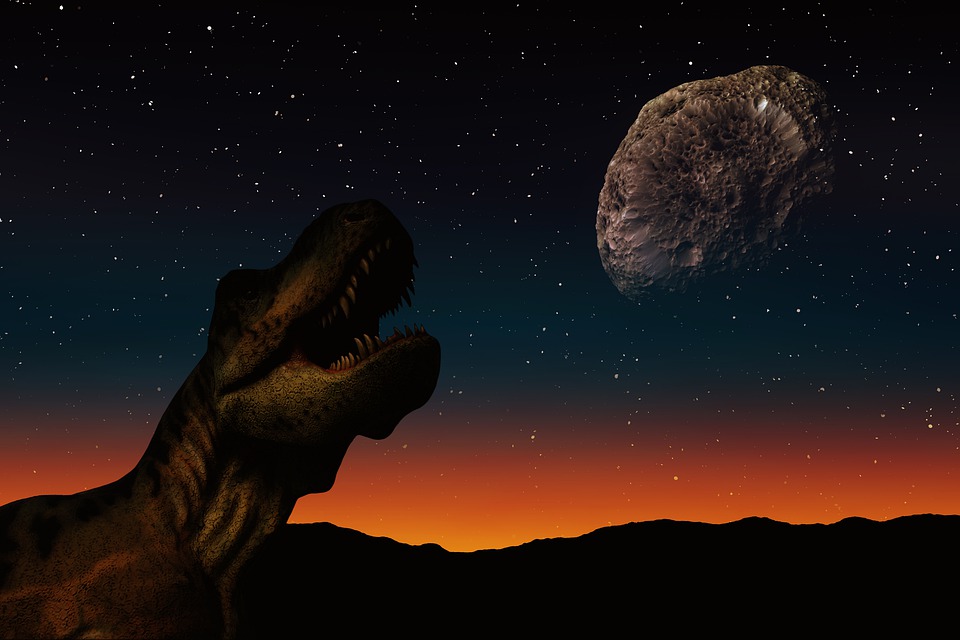
The dinosaurs are known to have gone extinct due to an asteroid collision millions of years ago. And although chances of an asteroid strike such as that are very slim, it is still possible, especially as NASA recently tracked down a potentially hazardous asteroid that is moving Earthbound.
Express reports that the agency has kept tabs on this particular asteroid that is coming in for a close approach. The rock is formally known as 1998 OR2 and is moving towards the Earth’s orbit at a speed of 31, 320 kilometers per hour. NASA predicts that it will be approaching Earth by the 29th of April. OR2 measures somewhere between 1.5 kilometers and 4.1 kilometers, and thus it is classified as a Potentially Hazardous Object or PHO aside from being a Near-Earth Object or NEO. This would be the second sighting of the space rock as it was first spotted by NASA back in 1987.
As OR2 is labeled potentially hazardous, the consequences should the asteroid collide with Earth will be on a global scale. Large asteroids such as that one can trigger natural calamities such as tsunamis and earthquakes. Entire cities or civilizations could be wiped out in case the asteroid does not fall into the water. It bears noting that the asteroid that killed the dinosaurs was measured at 10 kilometers in diameter.
Fortunately, by the time OR2 approaches the Earth, it will only pass by the planet. The closest the asteroid will get to the Earth is at a distance of 0.04025 astronomical units or 6.29 million kilometers away. It may be extremely far away, but it is close enough to be detected.
Meanwhile, an astronomer discovered an exoplanet that can potentially be inhabited. A student from the University of British Columbia, Michelle Kunimoto, was studying data from the agency’s Kepler space probe. Upon closer study, she found that among the 17 exoplanets that the Kepler space probe discovered, one exoplanet has the same size as that of Earth. According to Kunimoto, the planet she found was located 1,000 light-years away. “But this is a really exciting find since there have only been 15 small, confirmed planets in the Habitable Zone in the Kepler data so far.”







