


 US Northeast Airports Resume Operations After Telecom Outage Disrupts Thousands of Flights
  SpaceX Nasdaq 100 Weight to More Than Double in Rebalance
  Cathie Wood Backs AI Slowdown as Safety Concerns Grow
  FCC Approves Foreign Investment in $110B Paramount-Warner Bros. Deal
  White House Bars CNN, MS NOW and Politico Reporters
  NASA, Boeing Discuss Expanding Starliner Missions
  Who should own the knowledge that underpins AI technology?
  Supertanker Orders Surge as US-Iran War Reshapes Oil Trade
  Meta Partners With Shopify to Bring Shop Pay Checkout to Muse AI
  Meta CEO Zuckerberg Backs Independent AI Safety Reviews Over Development Slowdown
  AI is supercharging money scams – here’s what you can do to protect yourself
  Japan, U.S. Discuss $19 Billion GlobalFoundries Chip Plant
  Westinghouse Targets $50 Billion Valuation in U.S. IPO
  China Reviews Broadcom Switch Use in State Data Centres
  SoftBank Launches $11 Billion Bond Sale to Fund OpenAI Investment
  Hyundai CEO Warns Chinese Automakers Could Disrupt US Market
  Scott Bessent Eyed as Trump’s New AI Czar


 Add as a preferred source on Google
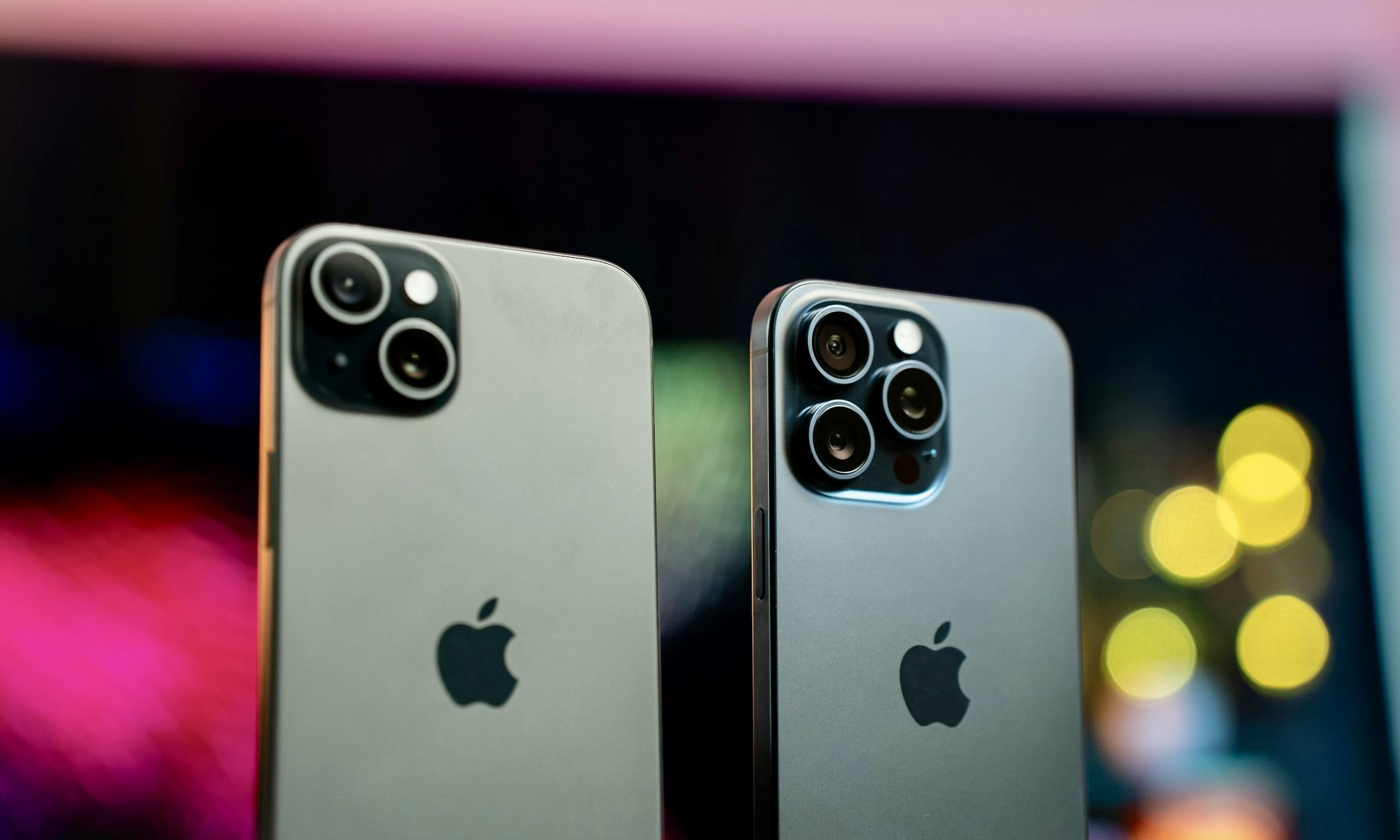
Apple's A18 Pro and A18 chips, featured in the iPhone 16 lineup, are remarkably similar except for a single core difference in the GPU. The use of chip binning is part of Apple's strategy to maintain performance standards across models while emphasizing key distinctions.
Apple's Chip Binning Strategy for the iPhone 16
The 16-series iPhones use TSMC's 3nm technology, which is the second generation.
So, to sum up, Apple is treating the cheaper models as flagships in this area, but to make the 'Pro' and 'non-Pro' versions stand out, the company used chip binning, which is standard procedure in the industry.
A18 and A18 Pro: One Core Difference
As per WCCFTECH, there is one notable distinction between the A18 and A18 Pro systems on a chip (SoC). This distinction becomes apparent when one peruses the technical specifications of the iPhone 16, iPhone 16 Plus, iPhone 16 Pro, and iPhone 16 Pro Max, with the goal of understanding the number of CPU and GPU cores that differentiate the two.
Both have a total of six CPU cores, two of which are optimized for performance and four for power efficiency. A recent benchmark leak suggests that Apple has probably maintained the same architecture, since the performance core's clock speed does not exceed 4.04GHz.
Apple’s 16-Core Neural Engine for AI Processing
The A18 and A18 Pro are identical in another respect: they also use the same 16-core Neural Engine, which is developed by Apple and used for generative AI and machine learning. A 6-core GPU powers the iPhone 16 Pro and iPhone 16 Pro Max, while a 5-core component is located inside the less expensive models; this is the part that differentiates the two systems on a chip.
It is probable that the A18 Pro was mass-produced with the help of chip binning; nevertheless, the exact magnitude of the performance disparity will have to wait until next year. It is becoming more difficult to manufacture a perfect chip with modern technology since manufacturing wafers is a complex process.
If this comes as a surprise to anyone, keep in mind that Apple has tried something similar before; all four models of the iPhone 13 series had the same A15 Bionic.







