


 North Korea Warns South Korea Over US-Led Defense Role
  North Korea Rejects Nuclear Test Warning, Calls Nuclear Status Irreversible
  US Supreme Court Revives Trump Administration Voter Citizenship Database
  Trump, Xi Visit US National Archives After White House Summit
  Saudi Arabia Seeks Military Support as Houthi Attacks Escalate
  Xi Calls for Deeper U.S.-China AI Cooperation in Trump Talks
  Iran Rejects Nuclear Concessions in Hormuz Deal
  EU Defence Build-Up Too Slow for 2030 Russia Readiness Goal
  Pezeshkian Says US Must Choose When Iran War Ends
  Netanyahu’s Brief US Trip Highlights Strains With Trump
  Netanyahu Defends Israel at UN as Delegates Stage Walkout
  Trump, Xi Focus on Trade and AI at White House Summit
  NATO Boosts Intelligence Sharing Amid Russia Hybrid Threats
  What ‘Taiwan Independence’ Means as Xi Presses Trump on US Policy
  France Defends Netanyahu Airspace Clearance Despite ICC Warrant
  Abbas Reaffirms November 28 Palestinian Elections


 Add as a preferred source on Google
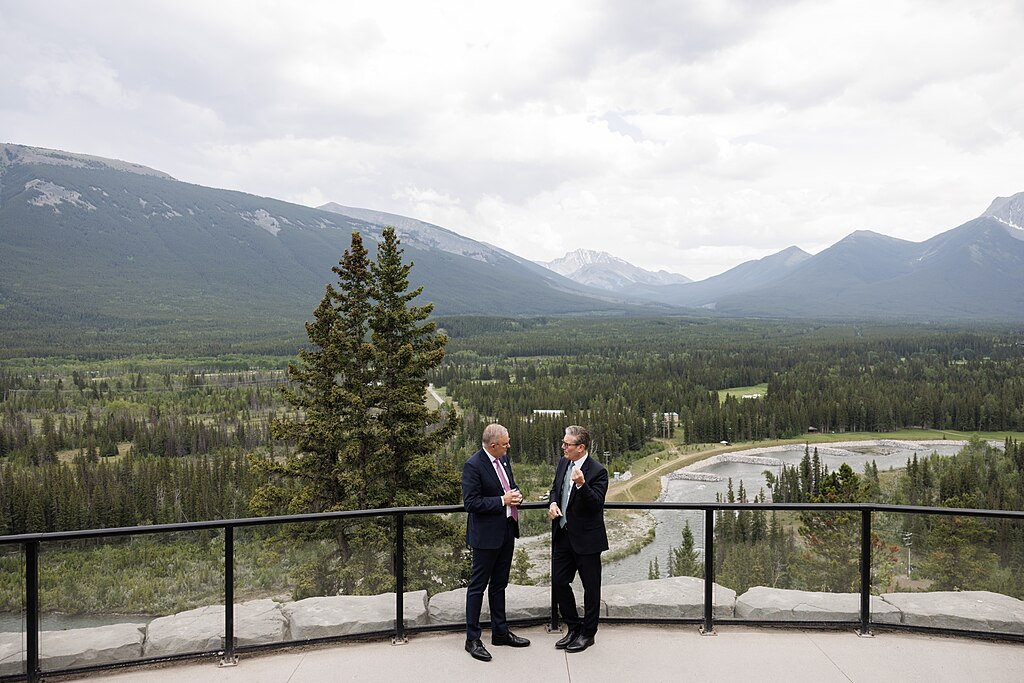
Australian Prime Minister Anthony Albanese expressed strong confidence on Friday that the AUKUS nuclear submarine pact with the United States and the United Kingdom will move forward, even as Washington conducts a formal review of the agreement. Speaking in London after meeting British Prime Minister Keir Starmer, Albanese emphasized that support for the trilateral security alliance is “strongly building” among allies.
The AUKUS agreement, signed in 2021, is designed to provide Australia with nuclear-powered attack submarines beginning in the next decade. The pact is seen as a key strategic move to counter China’s growing influence and military ambitions in the Indo-Pacific region. Under the arrangement, Australia will purchase several U.S.-made Virginia-class submarines before collaborating with Britain to build a new-generation AUKUS-class submarine.
Despite questions about U.S. President Donald Trump’s position on the deal, Albanese insisted he remains confident in its continuation. He noted that every discussion with American officials has reinforced positive momentum for AUKUS. Meanwhile, Trump’s administration has tasked Elbridge Colby, a Pentagon policy expert and outspoken critic of the pact, with leading the review, raising concerns about potential shifts in U.S. commitment.
The submarine deal, valued at hundreds of billions of dollars, also includes a July treaty between Australia and the UK that commits both nations to 50 years of cooperation under AUKUS. This long-term defense partnership underscores the shared objective of strengthening security in one of the world’s most strategically important regions.
Albanese’s visit to London also includes an audience with King Charles, Australia’s official head of state. The meeting highlights the broader diplomatic ties underpinning the security pact, reinforcing Australia’s role as a vital partner in maintaining stability across the Indo-Pacific.
By securing commitments from both London and Washington, Albanese is signaling Canberra’s determination to move ahead with AUKUS as a cornerstone of its defense strategy and regional security posture.







