


 Prudential Financial Reports Higher Q4 Profit on Strong Underwriting and Investment Gains
  SpaceX Pushes for Early Stock Index Inclusion Ahead of Potential Record-Breaking IPO
  American Airlines CEO to Meet Pilots Union Amid Storm Response and Financial Concerns
  SpaceX Prioritizes Moon Mission Before Mars as Starship Development Accelerates
  Missouri Judge Dismisses Lawsuit Challenging Starbucks’ Diversity and Inclusion Policies
  Weight-Loss Drug Ads Take Over the Super Bowl as Pharma Embraces Direct-to-Consumer Marketing
  Sony Q3 Profit Jumps on Gaming and Image Sensors, Full-Year Outlook Raised
  Global PC Makers Eye Chinese Memory Chip Suppliers Amid Ongoing Supply Crunch
  TSMC Eyes 3nm Chip Production in Japan with $17 Billion Kumamoto Investment
  Hims & Hers Halts Compounded Semaglutide Pill After FDA Warning
  Washington Post Publisher Will Lewis Steps Down After Layoffs
  CK Hutchison Launches Arbitration After Panama Court Revokes Canal Port Licences
  Nvidia, ByteDance, and the U.S.-China AI Chip Standoff Over H200 Exports
  Nasdaq Proposes Fast-Track Rule to Accelerate Index Inclusion for Major New Listings
  Uber Ordered to Pay $8.5 Million in Bellwether Sexual Assault Lawsuit
  Tencent Shares Slide After WeChat Restricts YuanBao AI Promotional Links
  Once Upon a Farm Raises Nearly $198 Million in IPO, Valued at Over $724 Million


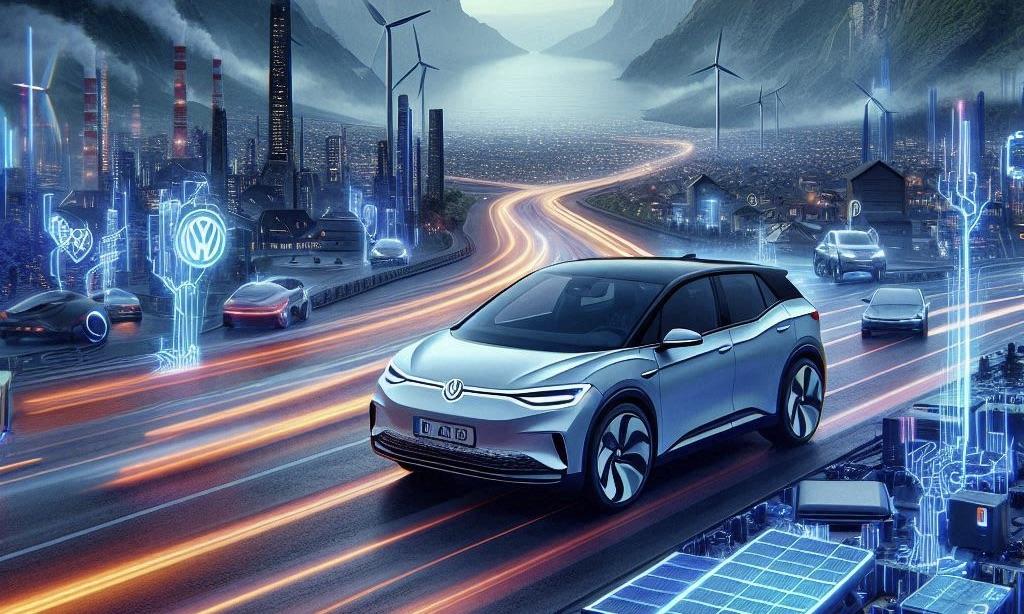
Due to persistent software-related issues, Volkswagen is facing delays in its next-generation vehicle models, including the electric ID.4. Initially scheduled for 2028, the ID.4's release has been postponed to 2029, impacting Volkswagen's plans for autonomous driving advancements.
Volkswagen Faces Software Issues, Delays Next-Gen ID.4 and T-Sport EVs to 2029 and 2031
Volkswagen is experiencing persistent software-related complications, which have postponed numerous next-generation vehicle models, including the electric ID.4.
According to a report published by the German outlet Handelsblatt earlier this month, Volkswagen's Scalable System Platform (SSP) software is causing a delay in the development of the next-generation ID.4. The initial SSP-based vehicles were anticipated to be introduced in 2028. However, the ID.4 is now scheduled to be released in 2029 at the latest, and the electrified T-Sport has been postponed from 2028 to at least 2031.
The SSP, initially anticipated to be implemented on nearly all of Volkswagen's 2025 and subsequent models held great promise. However, over the past few years, the automaker has encountered consistent complications with its software subsidiary, Cariad, leading to delays and restructuring.
The SSP, a key component in Volkswagen's roadmap to achieving Level 4 autonomous driving, was expected to be adopted by Audi and Porsche, Volkswagen's other brands. The Level 4 autonomous driving capability would have allowed the vehicle to perform all driving functions under certain conditions, significantly reducing the need for human intervention. However, the launch of the next-generation ID. 4 is now approximately 15 months behind schedule due to the delay in SSP development.
Software Issues Lead to Delays and Workforce Cuts at Volkswagen's Cariad, Impacting Partnerships and Product Launches
The software issues that have plagued ID. 4 since its inception have not only led to significant delays and a workforce reduction of up to 2,000 at Cariad, Volkswagen's software subsidiary, but they have also impacted the company's partnerships. These issues have caused delays in product launches, affecting the company's ability to deliver on its commitments.
Last month, Volkswagen and Rivian announced a $5 billion investment in the electric vehicle manufacturer. This investment is part of Volkswagen's strategy to develop next-generation software-defined vehicle (SDV) platforms compatible with their respective electric cars. Volkswagen is commencing its investment with a $1 million banknote that will be converted into Rivian stock following the pair's official approval in Germany to establish a joint venture to manufacture electric vehicles (EVs).













