


 Colombia Earthquake Death Toll Hits 265 as President Announces Emergency Fund
  Zelenskiy Sends Peace Plan to U.S., Warns of New Russian Mobilisation
  Iran War Escalates as US, Houthis Target Ships Near Key Oil Routes
  Trump Reveals Secret Plane Switch Amid Iran Assassination Threat
  Taiwan Slams ‘Dangerous’ China-Indonesia Naval Drill Near Island
  Putin Visits Japan-Claimed Iturup Island, Drawing Strong Protest From Tokyo
  Nigel Farage Faces Count Binface in Clacton Election Test
  Trump Signs Order to Cut Routine Childhood Vaccines
  Trump Weighs Capital Gains Tax Cuts Ahead of Midterms
  North Korea Slams Japan’s 2026 Defense White Paper
  Bashar al-Assad Sentenced to Death by Syrian Court
  Darline Graham Advances to South Carolina Senate Runoff
  Houthi Attack on Yemen’s Mocha Port Kills 7, Injures 30
  Bashar al-Assad Sentenced to Death After Syria Regime Collapse
  Judge Blocks Trump Mail Voting Order Ahead of 2026 Midterms
  U.S. Military Operations Killed 153 Civilians in 2025, Pentagon Says


 Add as a preferred source on Google
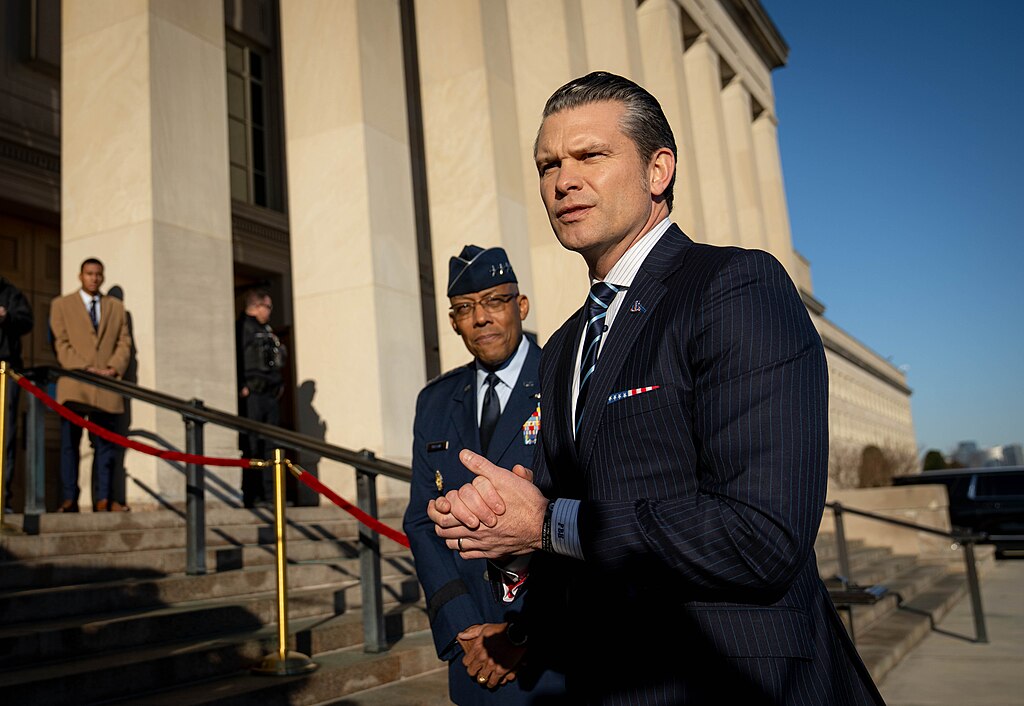
U.S. Defense Secretary Pete Hegseth has raised the possibility of joint U.S.-Colombia military strikes against armed groups as Washington expands its counter-narcotics campaign across Latin America.
Speaking Wednesday at the U.S.-led Americas Counter-Cartel Coalition meeting in Panama, Hegseth said Colombia had authorized joint military operations targeting terrorist organizations and networks. Asked whether discussions included potential strikes against groups such as the National Liberation Army (ELN) and remnants of the Revolutionary Armed Forces of Colombia (FARC), Hegseth confirmed the issue had been discussed.
He said designated terrorist organizations could become legitimate U.S. targets when Washington operates alongside partner governments.
The development comes as President Donald Trump broadens his Latin America security policy beyond earlier concerns surrounding the Panama Canal. U.S. forces have conducted military strikes against suspected drug-smuggling vessels since September, while Washington has increasingly portrayed narcotics trafficking organizations as national security threats.
Hegseth compared major drug traffickers to terrorist organizations such as al Qaeda and Islamic State. He also promoted what he has called the “Donroe Doctrine,” a Trump-era reinterpretation of the Monroe Doctrine focused on protecting the Western Hemisphere from drug trafficking and foreign influence.
Colombia’s new conservative President Abelardo De La Espriella has pledged a major security crackdown following his inauguration last week. His administration has received strong backing from Washington, which recently announced plans for $1 billion in U.S. security assistance.
De La Espriella has promised to eradicate illicit crops and join Trump’s Shield of the Americas initiative. Colombian Defense Minister Jorge Eduardo Mora said the country could play a central role in fighting narcotics trafficking along its Pacific and Caribbean coasts.
A U.S. official said the emerging security partnership could exceed the cooperation achieved under Plan Colombia, the major anti-narcotics program launched in the early 2000s.
Panamanian President Jose Raul Mulino also backed regional cooperation, calling drug trafficking the region’s biggest security threat and rejecting concerns that the U.S.-led coalition would undermine national sovereignty.







