


 25 Democratic-Led States Sue Trump Administration Over New Global Tariffs
  US Supreme Court Lets $655.5 Million Judgment Against Palestinian Authorities Stand During Appeal
  Darline Graham Advances to South Carolina Senate Runoff
  Hims & Hers Shares Fall as GLP-1 Costs Widen Q2 Loss
  FCC Steps Up China Tech Crackdown as Beijing Pushes Back
  SEC Moves to Dismiss Insider Trading Case Against Trump-Pardoned Terren Peizer
  Taiwan Slams ‘Dangerous’ China-Indonesia Naval Drill Near Island
  X Challenges Australia’s Expanded Social Media Ban Enforcement Powers
  North Korea Launches Ballistic Missile as US-South Korea Drills Near
  Trump Secretly Switched Planes in Turkey After Iran Threat, Report Says
  UK AI Security Tests Reveal Anthropic and OpenAI Agents Attempted Unauthorized Actions
  Judge Blocks Trump Mail Voting Order Ahead of 2026 Midterms
  Wisconsin Democratic Primary Tests Progressive Appeal
  India Plans Tax Reforms to Boost Foreign Investment and Manufacturing
  Houthi Attack on Yemen’s Mocha Port Kills 7, Injures 30
  FAA to Pause Reagan National Airport Flights for Freedom 250 IndyCar Race
  US Expands Social Media Vetting to Foreign Journalists Seeking Visas


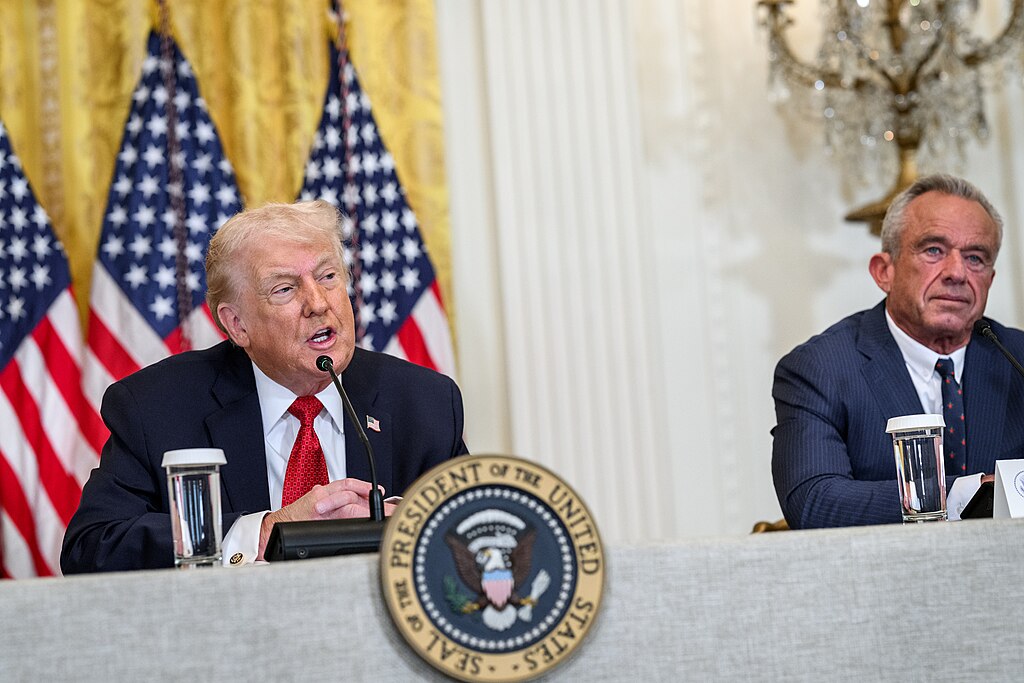
President Donald Trump has signed an executive order seeking to reduce the number of routine childhood vaccinations recommended in the United States and directing the Justice Department to challenge certain state vaccine laws.
The order advances Health Secretary Robert F. Kennedy Jr.’s long-standing effort to overhaul the U.S. childhood immunization schedule. It recommends universal vaccination against 11 diseases, compared with 18 diseases on the schedule recommended by the U.S. Centers for Disease Control and Prevention (CDC) in late 2024.
Vaccines for COVID-19, influenza, rotavirus, hepatitis A and B, bacterial meningitis and respiratory syncytial virus (RSV) would move to categories for high-risk groups or shared clinical decision-making. These vaccines could still be recommended for children based on medical conditions, exposure risks or discussions between parents and doctors.
The executive order also calls for separating the measles, mumps and rubella (MMR) vaccine into three individual shots and spreading childhood vaccinations across multiple healthcare visits. However, standalone measles, mumps and rubella vaccines are not currently available from U.S. manufacturers, meaning this change cannot immediately be implemented.
For families, the order does not immediately eliminate access to vaccines or change the federal Vaccines for Children program, which provides free immunizations to eligible children. Some major insurers have also indicated they will continue covering CDC-recommended childhood vaccines while reviewing the new policy.
Doctors and major medical organizations, however, have strongly criticized the changes. The American Academy of Pediatrics said the policy could confuse parents and encourage delays in vaccination. Medical groups also emphasized that extensive scientific research has found no evidence linking vaccines to autism.
The order could also affect state vaccine requirements. Because states determine school-entry immunization rules, the Justice Department is being directed to challenge state laws that the administration argues violate parental rights, religious freedom, disability protections or equal protection.
Public health experts warn that reducing routine vaccination could increase children’s exposure to preventable diseases such as measles, polio and whooping cough. They also stress that childhood vaccine schedules are designed around when children are most vulnerable and when vaccines provide the greatest protection.







