


 Gold Prices Climb as Middle East Ceasefire Talks Stir Market Optimism
  Iran-Israel Missile Strikes Continue Amid Mixed Signals on U.S.-Iran Diplomacy
  Middle East War Rattles Global Markets as Oil Tops $100 and Dollar Surges
  Bank of Japan Eyes April Rate Hike Despite Inflation Dip, ING Says
  Gold Prices Surge on U.S.-Iran Ceasefire Reports
  US Accelerates Taiwan Arms Deliveries Amid Rising China Threat
  US-Iran Ceasefire Talks Underway: What You Need to Know
  WTO Reform Talks Begin in Cameroon Amid Global Trade Tensions
  Trump Administration Opens Two New Investigations Into Harvard Over Discrimination and Antisemitism
  Denmark Election 2026: Frederiksen Eyes Third Term Amid Trump-Greenland Tensions
  Bachelet Pushes Forward With UN Secretary-General Bid Despite Chile's Withdrawal
  U.S. Stock Futures Steady as Iran Reviews U.S. Ceasefire Proposal
  UK Consumer Confidence Weakens Amid Middle East Conflict and Rising Living Costs
  Asian Markets Rally as Oil Prices Tumble and Middle East Peace Hopes Emerge
  Cuba Receives Humanitarian Aid Convoy Amid U.S. Sanctions
  ECB Eyes Rate Hike Amid Iran Conflict-Driven Energy Price Surge
  Trump Tariffs Show Minimal Economic Impact but Boost Federal Revenue, Study Finds


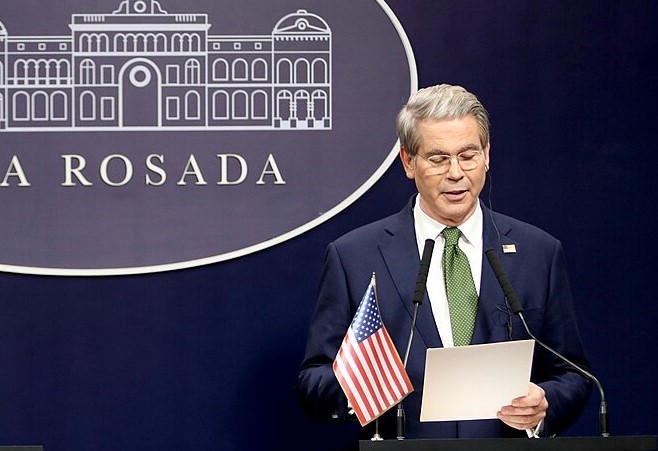
The United States has announced a $20 billion financial support package for Argentina, signaling strong backing for President Javier Milei’s economic reform agenda. U.S. Treasury Secretary Scott Bessent emphasized that the initiative is not a bailout but a strategic investment aimed at stabilizing Argentina’s struggling economy. He stated that the Argentine peso is currently undervalued and that the U.S. is actively purchasing pesos to support its exchange rate, affirming that the existing exchange rate band is appropriate.
Bessent underscored that stabilizing Argentina is a top priority for Washington, describing the move as part of a broader effort to strengthen regional stability and counter rising Chinese influence in Latin America. “We don’t want another failed or China-led state in Latin America,” he remarked, highlighting the geopolitical motivations behind the financial package.
In response, a spokesperson for the Chinese Embassy in Argentina criticized the U.S. approach, urging Washington to focus on genuine development efforts in Latin America and the Caribbean rather than hindering other nations’ cooperation. The spokesperson reiterated that the region is “not anyone’s backyard” and insisted that China’s partnerships with Latin American nations are based on mutual respect and shared growth.
Meanwhile, global trade tensions escalated after former President Donald Trump threatened to impose a “massive increase” in tariffs on Chinese imports. Trump’s warning followed Beijing’s new export controls on rare earth minerals—materials vital to the tech and defense industries. He also hinted that he might cancel his upcoming meeting with Chinese President Xi Jinping amid the rising dispute.
The developments underscore a growing U.S.-China rivalry extending beyond trade into global finance and geopolitical influence, with Argentina now emerging as a key focal point in this power struggle.













