


 Nvidia and Microsoft to Launch AI-Powered Windows PCs at Computex 2026
  Snowflake Stock Soars 30% After Q1 Earnings Beat and Major AWS AI Partnership
  US Quantum Stocks Surge After $2 Billion Government Investment
  Meta Subscription Push Could Add Billions in Recurring Revenue, Says Rosenblatt
  Samsung Workers Approve Wage Deal, Avoiding Major Strike and Boosting Chip Supply Confidence
  SoftBank to Invest €75 Billion in France AI Data Center Expansion by 2031
  Salesforce Q1 FY2027 Earnings Beat Expectations Despite Soft Q2 Revenue Outlook
  SpaceX IPO Hype Raises Questions as Many Major Stock Debuts Underperform Market
  Samsung Union Dispute Escalates Over Semiconductor Bonus Vote
  Nvidia Unveils RTX Spark AI PC Chips, Expands Challenge to Intel, AMD, and Apple
  Kentucky School District Secures $27 Million in Social Media Addiction Lawsuit Settlements
  Mega IPOs Like SpaceX and OpenAI Could Reshape S&P 500 and Nasdaq 100 Portfolios in 2026
  HP Q2 2026 Earnings Beat Expectations Despite Memory Chip Pressure
  Synopsys Q2 FY2026 Earnings Beat Driven by AI and Semiconductor Demand
  Marvell Stock Rises After Record Q1 FY2027 Earnings Fueled by AI Demand
  SpaceX IPO Could Become Largest in History with $1.8 Trillion Valuation Target


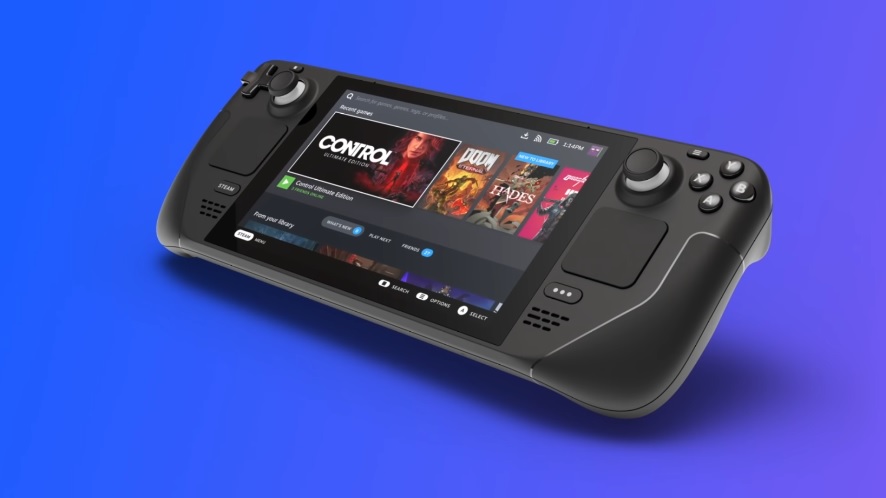
Valve’s upcoming gaming hardware, Steam Deck, is the latest tech product to be delayed because of the ongoing supply chain shortages. Instead of being released this year, shipments are now anticipated to begin in early 2022.
The company announced the Steam Deck delay in a blog post on Thursday, confirming that the launch has been pushed by two months. It can be recalled that the first shipments of the portable PC gaming device were expected to be delivered sometime in December. But the recent announcement means it is no longer expected to start until February 2022.
“We’re sorry about this—we did our best to work around the global supply chain issues, but due to material shortages, components aren’t reaching our manufacturing facilities in time for us to meet our initial launch dates,” Valve wrote. Customers who were able to secure their place in the Steam Deck reservation queue are assured that they get to keep it despite the delay.
Those who got reservations for the supposed December shipments can now expect their Steam Deck to arrive in February. “All reservation holders keep their place in line but dates will shift back accordingly,” the company added.
Gaming fans who are just checking out Steam Deck now will have to wait longer. The official page for Steam Deck currently indicates that new reservations for customers in the United States are anticipated to be available “after Q2 2022.” That applies to all three variants of Steam Deck. Meanwhile, it is unclear how the recent delay will affect Steam Deck’s launch worldwide. Valve is currently only accepting reservations from customers in select regions.
Steam Deck will be powered by an AMD Zen 2 APU with a CPU clocked at 2.4-3.5GHz. It also has a standard 16GB LPDDR5 RAM. It will feature a 7-inch IPS LCD with a 16:10 aspect ratio and 1280 x 800 resolution. But it can also be connected to external monitors through its official dock, which will be sold separately.
As mentioned, the Steam Deck will be available in three variants, starting with a $399 model with 64GB eMMC storage. Gamers can also opt for units with NVMe SSD with 256GB and 512GB configurations for $529 and $649, respectively.







