


 Trump Slams Super Bowl Halftime Show Featuring Bad Bunny
  Anutin’s Bhumjaithai Party Wins Thai Election, Signals Shift Toward Political Stability
  Nicaragua Ends Visa-Free Entry for Cubans, Disrupting Key Migration Route to the U.S.
  Trump Allows Commercial Fishing in Protected New England Waters
  Japan Election 2026: Sanae Takaichi Poised for Landslide Win Despite Record Snowfall
  Trump Congratulates Japan’s First Female Prime Minister Sanae Takaichi After Historic Election Victory
  China Overturns Death Sentence of Canadian Robert Schellenberg, Signaling Thaw in Canada-China Relations
  Antonio José Seguro Poised for Landslide Win in Portugal Presidential Runoff
  Netanyahu to Meet Trump in Washington as Iran Nuclear Talks Intensify
  Bangladesh Election 2026: A Turning Point After Years of Political Suppression
  Jack Lang Resigns as Head of Arab World Institute Amid Epstein Controversy
  Trump Says “Very Good Talks” Underway on Russia-Ukraine War as Peace Efforts Continue
  U.S. Lawmakers to Review Unredacted Jeffrey Epstein DOJ Files Starting Monday
  Ohio Man Indicted for Alleged Threat Against Vice President JD Vance, Faces Additional Federal Charges
  Sydney Braces for Pro-Palestine Protests During Israeli President Isaac Herzog’s Visit
  Trump Signs Executive Order Threatening 25% Tariffs on Countries Trading With Iran
  Bosnian Serb Presidential Rerun Confirms Victory for Dodik Ally Amid Allegations of Irregularities


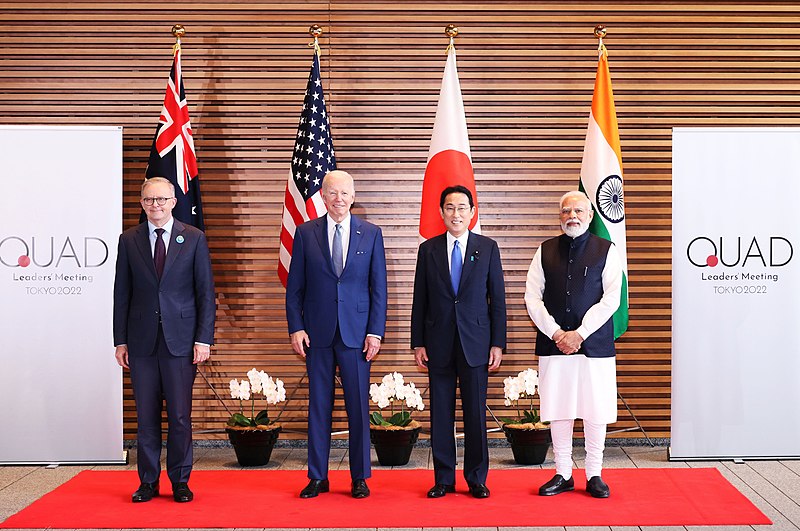
With China’s growing influence over the Indo-Pacific region, the countries that make up the Quad grouping are establishing a surveillance plan that is believed to counter China. The plan would allow countries in the region to track down illegal fishing and incursions by Chinese vessels.
The Quad grouping of nations - made up of the US, Australia, India, and Japan - announced Tuesday last week the surveillance plan for the Indo-Pacific, also known as the Indo-Pacific Partnership for Maritime Domain Awareness or IPMDA.
The IPMDA plan would help countries in the Indo-Pacific – Southeast Asian and Pacific nations, including nations in the Indian Ocean – track illegal fishing and other illegal activities in their waters in real-time.
While the alliance did not mention China directly, analysts said that the initiative would address the long-running complaints from the countries in the region about unauthorized fishing and activities by China in their waters, as well as incursions made by Chinese militia ships in the disputed South China Sea.
A US official told the Financial Times that the grouping plans to fund commercial satellite tracking services to provide maritime intelligence to Indo-Pacific countries for free.
In monitoring radio frequencies and signals, the plan would also help countries monitor boats even when they try to avoid detection by turning off transponders. The intelligence would then be shared across a network of regional surveillance centers in India, Singapore, Vanuatu, and the Solomon Islands.
Chinese vessels have long been accused of unauthorized fishing at least 237 times between 2015 and 2019, according to the Environmental Justice Foundation. Several Chinese vessels have also been detained for illegal fishing or incursions in Vanuatu, Palau, Malaysia, and South Korea in recent years. Hundreds of Chinese boats were also discovered fishing for squid in North Korean waters.
Back in January, the US State Department established a report refuting China’s claims to the majority of the South China Sea, deeming its activities in the body of water as a grave undermining of the rule of law in the oceans and in all provisions of international law that are universally-recognized.
The overall effect of China’s claims over the body of water, according to the report, is that Beijing “unlawfully claims sovereignty or some form of exclusive jurisdiction over most of the South China Sea.” The report also noted that Beijing has not provided evidence that can justify its so-called “historic” claims over the waters.













