


 Ohio Man Indicted for Alleged Threat Against Vice President JD Vance, Faces Additional Federal Charges
  South Korea Assures U.S. on Trade Deal Commitments Amid Tariff Concerns
  Trump Endorses Japan’s Sanae Takaichi Ahead of Crucial Election Amid Market and China Tensions
  Missouri Judge Dismisses Lawsuit Challenging Starbucks’ Diversity and Inclusion Policies
  Federal Judge Restores Funding for Gateway Rail Tunnel Project
  Norway Opens Corruption Probe Into Former PM and Nobel Committee Chair Thorbjoern Jagland Over Epstein Links
  Trump Lifts 25% Tariff on Indian Goods in Strategic U.S.–India Trade and Energy Deal
  Japan Election 2026: Sanae Takaichi Poised for Landslide Win Despite Record Snowfall
  Trump Signs “America First Arms Transfer Strategy” to Prioritize U.S. Weapons Sales
  Trump Backs Nexstar–Tegna Merger Amid Shifting U.S. Media Landscape
  TrumpRx.gov Highlights GLP-1 Drug Discounts but Offers Limited Savings for Most Americans
  U.S. Lawmakers to Review Unredacted Jeffrey Epstein DOJ Files Starting Monday
  U.S. to Begin Paying UN Dues as Financial Crisis Spurs Push for Reforms
  China Warns US Arms Sales to Taiwan Could Disrupt Trump’s Planned Visit
  India–U.S. Interim Trade Pact Cuts Auto Tariffs but Leaves Tesla Out
  U.S.-India Trade Framework Signals Major Shift in Tariffs, Energy, and Supply Chains
  Trump’s Inflation Claims Clash With Voters’ Cost-of-Living Reality


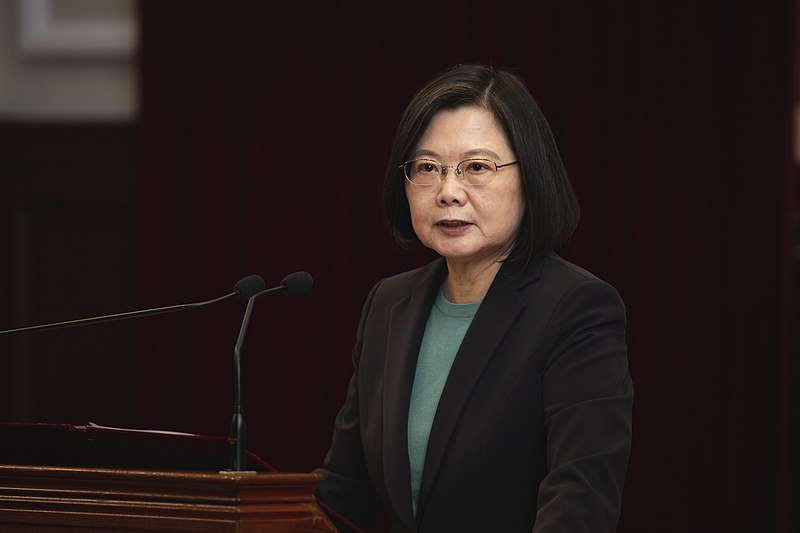
This week, Taiwan has expressed its desire to join the Indo-Pacific Economic Framework in a senior minister’s exchange with US Trade Representative Katherine Tai. The island nation reiterated its aspiration to be part of the framework as it continues to face possible threats from China.
Reuters reports that Taiwan’s chief trade negotiator John Deng spoke with Tai in a one-hour virtual call Monday. Deng said that the island nation supports the US’ Indo-Pacific Economic Framework and wants to join, according to Deng’s spokesperson Hsiao Chen-Jung. The island nation has supported the IPEF as its democratic government seeks to counter the economic and military coercion by Beijing in the region.
“Regional trade issues are of concern to both sides,” Hsiao told reporters following the virtual meeting between Deng and Tai.
A statement from Tai’s office did not mention Taiwan’s intention to join the IPEF but said that both parties discussed the progress on trade matters and the mutual interest in working together on key issues both regionally and in organizations such as the World Trade Organization. Last month, Tai declined to say whether the island nation would be invited to join the IPEF, which the US Senate criticized as a missed opportunity.
China, which claims Taiwan as its breakaway province, condemned the US-Indo-Pacific plan, accusing Washington of creating “exclusive clubs.” The US is obligated by treaty to provide arms to Taiwan and has increasingly shown support for the island nation in recent years. Taiwan’s possible participation in the economic framework will draw the ire of China, as it has often condemned any meeting between officials of the island nation and other governments.
Taiwan’s foreign ministry said in a statement last week in light of the sudden military drills Beijing ordered around the area in the midst of the visit by a group of US lawmakers to the island. The foreign ministry said that China’s military threats against Taiwan will only lead to more support for the island nation by Washington and other democratic countries.
“The threat of force by the Chinese Communist Party’s totalitarian government against Taiwan will only strengthen the Taiwanese people’s will to defend freedom and democracy, and will also attract support for democratic Taiwan from the United States and even more democratic partners,” said the statement.













