


 Crypto Market Selloff Wipes Out $100B as Bitcoin Falls Below $83K
  US Stock Futures Flat as Fed Minutes, Earnings Loom
  Oil Prices Slip as Trump Rules Out Iran Strike Before Midterms
  Deere, CNH and AGCO Stocks Fall as FTC Launches Farm Equipment Probe
  Gold Prices Fall Amid Rate Jitters; Copper Steady as China Stimulus Eyed
  US Dollar Rises for Fourth Week as Fed Rate Hike Bets Grow
  US Dollar Hits 18-Month High as Fed Signals More Rate Hikes
  Mike Rogers Calls for End to US-Canada Tariff War
  US, EU Push for Action Against Asia’s Excess Factory Capacity


 Add as a preferred source on Google
There are great extent of debates going among economists, analysts and market participants over whether Yuan will get devalued significantly in 2016 or not.
Those favoring devaluation arguments, suggesting, Yuan will get devalued significantly (greater than 6%) in 2016 as it is in China's interest to devalue the Yuan to improve upon its falling exports. Moreover, PBoC will increase policy accommodation further in 2016, which would be Yuan negative at a time when FED reserve will hike rates further. China's high corporate debt and declining reserve will add to the mix.
Others suggest, despite lessening grip over Yuan's movement, PBoC would nevertheless would manage with an iron fist and improvement in global growth would improve China's export and economic outlook in 2016. Lower commodity prices including energy, would boost China's domestic consumption significantly. They expect, Yuan to go through more controlled depreciation, lower than 5% and in line with this year's 4% decline.
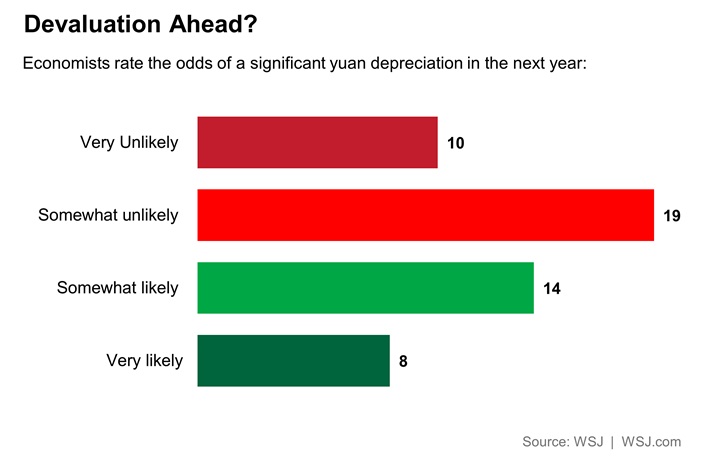
According to result, poll conducted by Wall Street Journal (WSJ), only 43% of economists think significant devaluation is likely, while about 16% think it's very likely, compared to 20% considering it to be very much unlikely.
Yuan is down for seventh consecutive day today, trading at 6.468 per Dollar.







