


 Trump Calls for Zelenskyy Replacement Amid Russian Diesel Deal
  Bank of America Predicts Yen Rebound as USD/JPY Faces Risks
  RBI Raises Repo Rate to 5.50% in Hawkish Shift on Inflation Risks
  Gold Prices Fall as Fed Signals Another Rate Hike
  Deere, CNH and AGCO Stocks Fall as FTC Launches Farm Equipment Probe
  Best Gold Stocks to Buy Now: AABB, GOLD, GDX
  Mike Rogers Calls for End to US-Canada Tariff War
  Fed Minutes Signal Another Rate Hike by Year-End
  Oil Prices Rise as Hormuz Risks Offset IEA Stock Release
  Dollar Near 18-Month High as Euro, Yen and Pound Weaken
  Oil Prices Trim Gains After Trump Rules Out Iran Strikes Before Midterms


 Add as a preferred source on Google
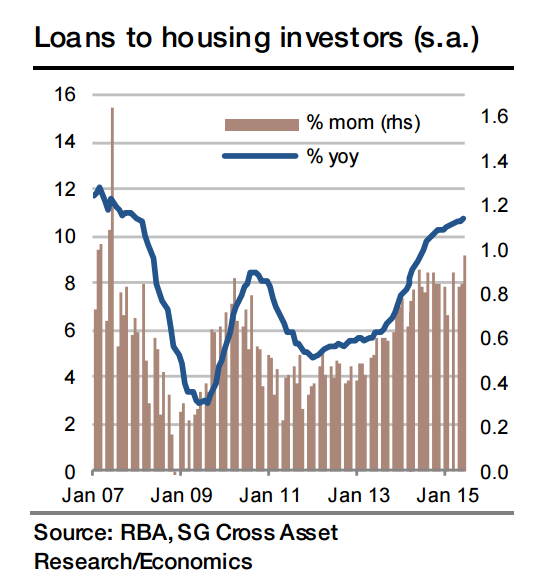
Two key developments are expected to shape the monthly credit data for July. One is the beginning of a moderation in credit growth to housing investors as a result of regulatory pressure. Banks have raised mortgage rates to such investors, and will also be more restrictive in their lending policy given warnings by the regulator (APRA) that banks which exceed the 10% guidance on maximum growth in this segment will be subject to special attention and potentially be forced to make additional provisions. This may begin to affect the data in July or in any case soon, after a particularly strong expansion in June (12.3% mom annualised). Two, some revival in credit growth is expected to businesses which has been weak for the last four months.
"In light of recent legislation encouraging small investment activity through tax breaks, a pick-up in credit demand ought to materialise - and we are in any case rather optimistic about non-resource investment activity", says Societe Generale.
As to the mainstay of credit growth, lending to owner-occupiers for house purchasing, steady growth of 5 -6% is expected in annualised terms. In short, easy monetary policy is expected to remain effective in supporting credit growth.

- News

- Economy

- Central Banks
- Investing
- Research
- Roundups
- Digital Currency
- Insights
- Technical Analysis
- Technology
- Business
- Law
- Health
- Nature
- Fintech
- Science
- Topic
- Opinions
- ©Econometrics LLC . All Rights Reserved.
Regulatory pressure beginning to slow Australian housing investor credit
Monday, August 31, 2015 12:52 AM UTC
Editor's Picks



- Market Data
Most Popular




