


 Trump Presidential Library: Miami Tower Plans Revealed with AI-Generated Vision
  Trump's Name Spreads Across America: Airports, Warships, and Currency
  U.S. Senators Challenge FCC Chair Over Nexstar-Tegna Merger Approval
  Trump Signs Executive Order Tightening Mail-In Voting Rules Amid Legal Backlash
  Canada's Arctic Military Expansion Sparks Hope and Concern Among Indigenous Communities
  Trump Attends Supreme Court Hearing on Birthright Citizenship Restrictions
  Iran Strikes Oil Tanker Near Dubai Amid U.S. Threats and Ongoing Middle East Conflict
  Trump Signals U.S. Military Exit From Iran Within Weeks After Declaring Nuclear Mission Accomplished
  Ukraine Open to Energy Ceasefire Amid Global Oil Crisis
  Rubio Directs U.S. Diplomats to Use X and Military Psyops to Counter Foreign Propaganda
  WTO Ministerial Collapse Leaves Global Digital Trade Rules in Limbo
  U.S.-Iran War Talks Emerge Amid Ongoing Strikes and Economic Fallout
  Trump Threatens Federal Intervention in Los Angeles Ahead of 2026 World Cup
  U.S.-Iran War: Rubio Says Finish Line Is Visible as Diplomatic Talks Begin
  Trump Weighs Ending Iran Campaign With Strait of Hormuz Still Closed
  Rubio Calls for Democratic Transition and Free Elections in Venezuela
  U.S. Senator Pushes to Permanently Block Chinese Automakers from American Market


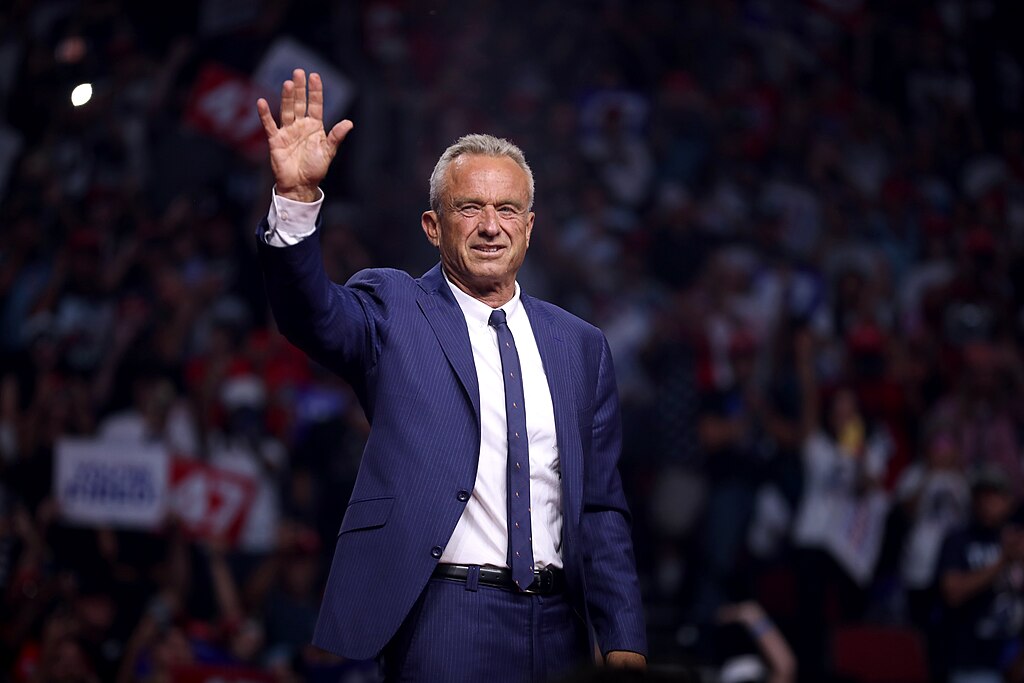
Robert F. Kennedy Jr. announced that a Trump administration would launch an aggressive restructuring of public health agencies on its very first day. Speaking to supporters and media, Kennedy stated that Trump’s team is prepared to either fire or radically relocate government health officials they view as unfit for their roles.
Kennedy, who has recently emerged as a controversial figure within the political sphere and a vocal critic of public health policies, detailed that the Trump administration’s strategy would involve “changing the personnel” at key public health agencies. He underscored that this initiative will start immediately, describing the plan as a necessary intervention to restore trust in health institutions that he claims have failed the American people.
‘Ship Them to Guam’ if They Can’t Be Fired, Says Kennedy
One of Kennedy’s most provocative assertions centered around what to do with officials whom Trump’s team might struggle to remove from their posts. “If we can’t fire them, we can ship them to a new HHS headquarters in Guam,” Kennedy stated, referring to the U.S. territory thousands of miles away from the mainland. The idea, though likely symbolic, emphasizes the Trump team’s commitment to clearing out those they perceive as obstacles to a reformed public health agenda.
The mention of Guam immediately stirred reactions, with critics labeling the proposal as an unorthodox and extreme approach to addressing personnel issues. Supporters, however, praised the statement, interpreting it as evidence of a no-nonsense approach to bureaucratic reform.
Kennedy’s suggestion highlights a stark departure from traditional bureaucratic reform measures and signals a potentially intense future for public health agencies under a Trump administration. Public health officials and political analysts alike have expressed concerns about the logistics and legalities of such a move, with some pointing out that forced relocations to remote locations could be legally challenged.
Sweeping Changes for Public Health on ‘Day One’
Kennedy’s remarks were not limited to relocation; he outlined a larger agenda aimed at overhauling institutions that many in Trump’s circle believe are overdue for a reset. Trump’s administration, according to Kennedy, plans to “restore integrity” to public health agencies by ensuring that personnel decisions align with their vision of government accountability.
“We’ve seen what happens when health agencies become unaccountable,” Kennedy asserted, alluding to the public distrust that emerged during the COVID-19 pandemic. He argued that these reforms are necessary to bring about a “new era of transparency” within agencies like the Centers for Disease Control and Prevention (CDC) and the Department of Health and Human Services (HHS).
The plan to alter the leadership and operational dynamics within these agencies follows repeated criticisms from Trump and his allies, who claim that public health institutions were compromised by what they describe as partisan or ineffective bureaucrats. Trump supporters argue that this shake-up will reinvigorate public trust, while opponents fear it could destabilize critical health infrastructure.
Supporters Cheer, Critics Alarmed
Kennedy’s proposals have fueled division along partisan lines. Supporters see the initiative as a long-overdue reset, hailing Kennedy and Trump for what they consider to be a bold stand against entrenched bureaucrats. “It’s about time someone takes action against these unaccountable officials,” said one Trump supporter in Washington.
On the other hand, critics argue that relocating staff to remote locations like Guam is extreme and could result in a “brain drain” from key health agencies, leaving Americans vulnerable in times of crisis.
As Trump’s allies continue to reveal more of their agenda for public health agencies, the proposal to “ship them to Guam” serves as a stark reminder of the potentially radical changes on the horizon. For many, this “day one” plan is both a call to action and a point of deep concern, setting the stage for a public health overhaul unlike any seen before in U.S. history.







