Anthropic Nears $800 Billion Valuation as Investor Confidence Surges
  Sam Altman Moves to Dismiss Punitive Damages in Sister's Sexual Abuse Lawsuit
  Pentagon Taps Auto Giants to Supercharge U.S. Weapons Production
  NiSource Signs Long-Term Energy Deals with Alphabet and Amazon to Power Indiana Data Centers
  CATL Stock Hits Record High After Q1 2025 Earnings Surge
  Qantas Raises Fuel Cost Forecast Amid Middle East Oil Crisis
  Texas AG Investigates Lululemon Over "Forever Chemicals" in Activewear
  Iran War Drives Asia's Plastic Crisis — and a Green Packaging Boom
  Japan Opens Arms Export Floodgates: New Policy Draws Global Defense Interest
  Hermès Q1 2026 Sales Miss Expectations Amid Iran War and China Slowdown
  CSN's Cement Unit Sale Could Exceed $2 Billion as Global Giants Circle
  Elon Musk's Terafab Foundry Courts Top Chipmaking Giants for AI Self-Sufficiency Push
  AEVEX Raises $320 Million in IPO Amid Surging Defense Sector Demand
  KKR's $820M Investment Fuels Samsung SDS AI Expansion, Sending Group Shares Soaring
  Uber Bets Big on Autonomous Vehicles with $10 Billion Commitment
  Japan to Subsidize Sony's Image Sensor Plant in Kumamoto with $380 Million
  Netflix Q2 Profit Warning Sends Shares Tumbling as Reed Hastings Exits


MILLWOOD, VA., April 6, 2016 -- Project HOPE, the global health organization, is experiencing great success in India in its role in Project UDAY (which means "dawn" or "sunrise" in Hindi), a comprehensive diabetes and hypertension prevention and management program supported by Eli Lilly and Company under the Lilly NCD Partnership.
|
||||||||||
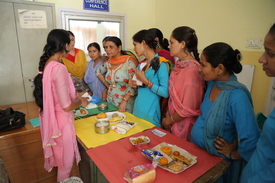
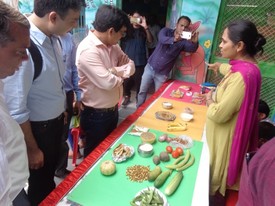
According to the International Diabetes Federation, India has the second largest population living with diabetes in the world, second only to China. Higher incomes, more sedentary lifestyles and diets heavy in starches and sugars as well as high blood pressure are all factors contributing to the spread of the disorder.While today there are about 65 million people with diabetes in India, the number is expected to increase to 109 million by 2030.
Launched in 2012, Project UDAY is led by the Public Health Foundation of India (PHFI), New Delhi in partnership with Population Services International (PSI) and Project HOPE. UDAY comprises a priority set of five synergistic ecosystem interventions with the overarching goal to prevent, detect, and reduce the risk of iabetes and hypertension and to improve the management of individuals with either of these conditions in two study sites. These sites are two geographically and culturally distinct areas (South and North India) located in Vishakhapatnam (Vizag) in the state of Andhra Pradesh and Sonipat in Haryana.
Project HOPE's main focus is to address the magnitude of diabetes and hypertension by developing skilled health care professionals and noncommunicable diseases (NCD) patient networks for community empowerment. As the capacity building partner, Project HOPE is focused on advancing knowledge for transformative action towards early detection, prevention, management and timely referrals of NCDs. This involves understanding and responding to the specific needs of the community towards NCD care and management.
To maximize learning, Project HOPE has crafted its training methodology on the VIPP (Visualization in Participatory Programs) approach which involves adult participatory learning. Extensively participatory, it pivots around case scenario build-ups, informative live sessions, demonstrations and role plays and interactive exercises and games. The methodology creates a technology independent environment that is conducive to staying engaged throughout for advanced learning.
Adaptable to audience requirements, it has been successful in enhancing the capacity of health workers for community interaction and counseling, and in motivating them to promote opportunistic screenings in different socio-cultural contexts. This package has been complemented with advocacy efforts to secure increased attention and involvement of the government for scaling up and mainstreaming NCD related activities. For the first time in India, our unique, evidence-based approach will be applied to create effective patient networks in the field of noncommunicable disease. This will enable the community to identify successful behaviors and strategies, and develop action plans to adopt them.
"India's greatest national treasure is our people. We cannot afford to neglect their wellbeing and allow so many of our citizens to face the consequences of NCDs. Project HOPE's approach in UDAY is mobilizing patients through patient networks and at the same time strengthening the service delivery via health care workers," said Cheena Malhotra, Program Manager for Project HOPE India. "Project HOPE has been very pleased with the success of the program where participating health workers showed 95% of improvement in knowledge on the posttest verses 15% at the beginning of the training."
"Through UDAY, we are bringing meaningful, long-term changes that benefit people with diabetes today and will hopefully prevent its onset with others moving forward," said Craig Waugh, Global Leader, Lilly NCD Partnership. "Our ultimate goal is to use the research coming out of projects like UDAY to advocate for wider scale up in order to positively impact more people in India."
Watch a video on the UDAY program in India.
About Project HOPE
Founded in 1958, Project HOPE (Health Opportunities for People Everywhere) is dedicated to providing lasting solution to health problems with the mission of helping people to help themselves. Identifiable to many by the SS HOPE, the world's first peacetime hospital ship, Project HOPE now provides medical training and health education, and conducts humanitarian assistance programs in more than 30 countries. Visit our website projecthope.org and follow us on Twitter @projecthopeorg.
Photos accompanying this release are available at:
http://www.globenewswire.com/newsroom/prs/?pkgid=39752
http://www.globenewswire.com/newsroom/prs/?pkgid=39753
CONTACT: Geraldine Carroll
         Tel. 540-257-3746
         [email protected]