


 Trump Lifts 25% Tariff on Indian Goods in Strategic U.S.–India Trade and Energy Deal
  Trump Administration Appeals Court Order to Release Hudson Tunnel Project Funding
  Trump Congratulates Japan’s First Female Prime Minister Sanae Takaichi After Historic Election Victory
  Japan’s Prime Minister Sanae Takaichi Secures Historic Election Win, Shaking Markets and Regional Politics
  Nicaragua Ends Visa-Free Entry for Cubans, Disrupting Key Migration Route to the U.S.
  Jack Lang Resigns as Head of Arab World Institute Amid Epstein Controversy
  Japan Election 2026: Sanae Takaichi Poised for Landslide Win Despite Record Snowfall
  New York Legalizes Medical Aid in Dying for Terminally Ill Patients
  Antonio José Seguro Poised for Landslide Win in Portugal Presidential Runoff
  China Warns US Arms Sales to Taiwan Could Disrupt Trump’s Planned Visit
  Netanyahu to Meet Trump in Washington as Iran Nuclear Talks Intensify
  Trump Signs “America First Arms Transfer Strategy” to Prioritize U.S. Weapons Sales
  U.S. Lawmakers to Review Unredacted Jeffrey Epstein DOJ Files Starting Monday
  Federal Judge Restores Funding for Gateway Rail Tunnel Project
  TrumpRx.gov Highlights GLP-1 Drug Discounts but Offers Limited Savings for Most Americans
  U.S.-India Trade Framework Signals Major Shift in Tariffs, Energy, and Supply Chains
  Ohio Man Indicted for Alleged Threat Against Vice President JD Vance, Faces Additional Federal Charges


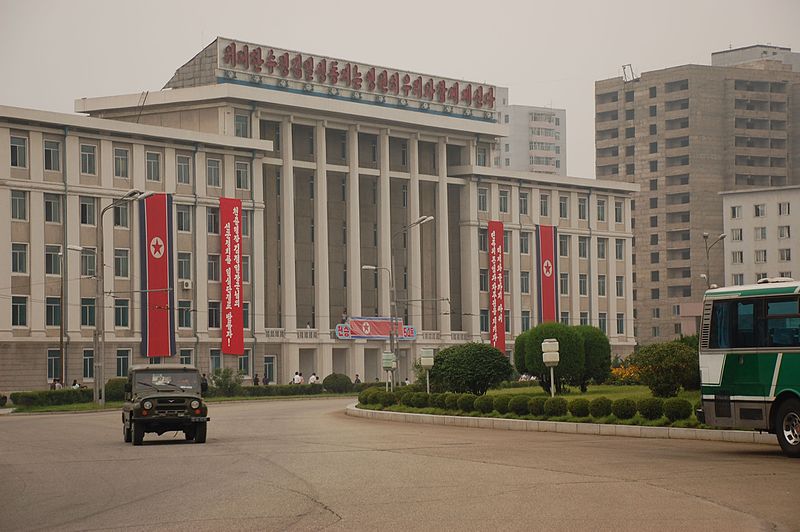
Last week, the United States said its policy on North Korea remains the same. The clarification from Washington follows a remark by a senior US official responsible for nuclear policy that the US is open to engaging in arms control talks with North Korea.
US State Department spokesperson Ned Price said Friday last week that Washington’s policy on North Korea has not changed even after the comments by the agency’s undersecretary of arms control Bonnie Jenkins regarding potential arms control talks with Pyongyang.
“I want to be very clear about this. There has been no change to US policy,” said Price, adding that Washington’s policy on Pyongyang is still its complete denuclearization and that they are still willing to pursue diplomacy with North Korea.
“We will continue to be open to diplomacy with the DPRK, we continue to reach out to the DPRK, we’re committed to pursuing a diplomatic approach. We’re prepared to meet without preconditions and call on the DPRK to engage in serious and sustained diplomacy,” said Price, referring to North Korea by the initials of its official name, the Democratic People’s Republic of Korea.
Another State Department arms control official, Alexandra Bell, also echoed Price’s comments on US policy. Speaking at the same conference that Jenkins addressed, Bell stressed that there was no change in US policy on North Korea. Bell was pressed on whether it was time to accept that North Korea is a nuclear state, the official said no and that they are still open to talks with North Korean officials.
Asia Society’s Daniel Russel, who previously served as Barack Obama’s top US diplomat, said that Jenkins fell for North Korean leader Kim Jong-un’s “trap.”
“Kim would love nothing better than to push his risk reduction agenda – the withdrawal of US troops from Korea,” said Russel.
On the same day, Pyongyang fired two short-range ballistic missiles off the east coast, according to the South Korean military, as South Korean forces were wrapping up nearly two weeks of military drills aimed at deterring North Korea. The missiles were fired from North Korea’s Tongchon in the Gangwon province, four days after both sides exchanged warning shots off the west coast of the peninsula.













