


 Coles “Down Down” Ruling Sparks Fresh Scrutiny of Australian Supermarket Pricing
  Supreme Court Asked to Reinstate Mail-Order Access to Abortion Pill Mifepristone
  Judge Orders Release of Family After Longest ICE Detention Under Trump Administration
  TikTok Nears $400 Million Settlement With Trump Administration Over Child Privacy Lawsuit
  Dollar Surges as Inflation Data Fuels Fed Rate Hike Expectations
  Aung San Suu Kyi Moved to House Arrest Amid Myanmar Political Crisis
  Bolsonaro Discharged After Shoulder Surgery Amid Ongoing Legal Troubles
  Taiwan Court Fines Tokyo Electron Unit $4.78M in Major TSMC Trade Secrets Case
  Asian Currencies Hold Steady as Strong U.S. Inflation Data Boosts Dollar
  BOJ Rate Hike Expectations Grow as Board Member Signals Hawkish Stance
  Argentina Court Upholds Cristina Kirchner Asset Seizure in Corruption Case
  Trump DOJ Challenges Colorado’s Large-Capacity Magazine Ban in Second Amendment Lawsuit
  Trump Pushes China Market Access During High-Stakes Xi Summit
  Federal Appeals Court Allows Texas SB4 Immigration Law Enforcement to Proceed
  ASX Names Former Euronext Executive Anthony Attia as New CEO
  Gold Prices Hold Steady as Investors Monitor U.S.-Iran Tensions and Trump-Xi Summit
  Gold Prices Steady Ahead of Trump-Xi Meeting as Inflation and Oil Concerns Persist


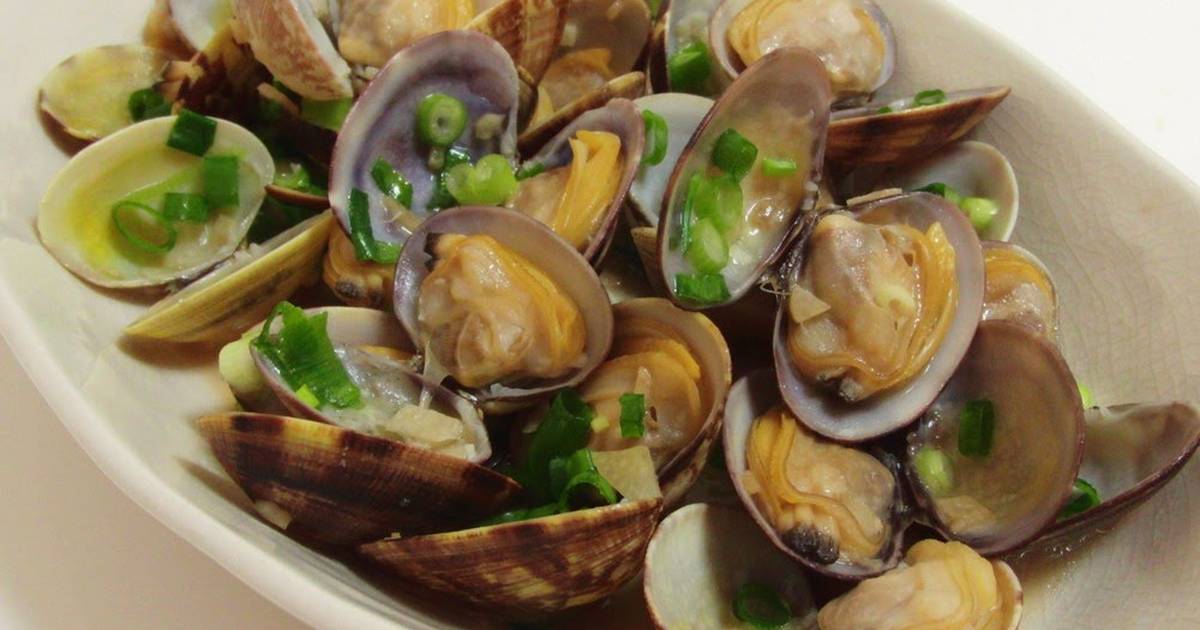
The clam harvest figure in Kumamoto Prefecture didn’t add up to a ministry's survey, raising suspicions that clams from South Korean and Chinese waters were being passed off as locally caught.
Kumamoto Prefecture is renowned for producing some of Japan’s plumpest and tastiest “asari.”
Consequently, shipments of local “tennen-iki asari” clams harvested in local waters will be suspended for about two months, effective Feb. 8 while an investigation by the central government into false labeling is being sought.
During the suspension period, prefectural authorities will ask retailers to check the origin of clams sold as “produced in Kumamoto.”
Kumamoto Governor Ikuo Kabashima emphasized that there will be no future for the Kumamoto brand unless falsification issues are rooted out immediately.
He added that the Kumamoto federation of fisheries cooperative associations will cooperate in the prefectural government’s efforts.
A Ministry of Agriculture, Forestry and Fisheries survey on sales of fresh clams at supermarkets nationwide released Feb. 1 revealed that the volume of clams on offer as “produced in Kumamoto” far exceeded the annual haul in Kumamoto Prefecture.
From October to December last year, the ministry targeted around 1,000 supermarkets that operate in multiple prefectures, including Tokyo, for investigation on suspicions of false labeling of fresh clams.
Based on the findings, 3,111 tons, or 99.1 percent, of 3,138 tons of clams sold during the period were sold as “domestically produced,” with 2,485 tons, or 79.2 percent, being labeled as coming from Kumamoto Prefecture.
But the annual tonnage of clams in 2020 harvested in Japan as a whole came to 4,400 tons, of which clams produced in Kumamoto Prefecture came to a mere 21 tons.
About 35,000 tons of clams were imported from China and South Korea that year.
The findings prompted the ministry to purchase 31 packages of clams labeled as produced in Kumamoto Prefecture for DNA testing.
It discovered that all but one of the packages contained clams originating from China or South Korea.
The ministry also vowed to investigate distribution routes through on-site inspections of wholesalers to determine if laws were broken.
The ministry notified supply chain organizations such as supermarkets and fishery wholesale companies to thoroughly check the origin of their purchases.







